


What to tell your stylist before a haircut is not about bringing a photo or naming a style.
Understanding what to tell your stylist before a haircut requires clarity about structure, not preference.
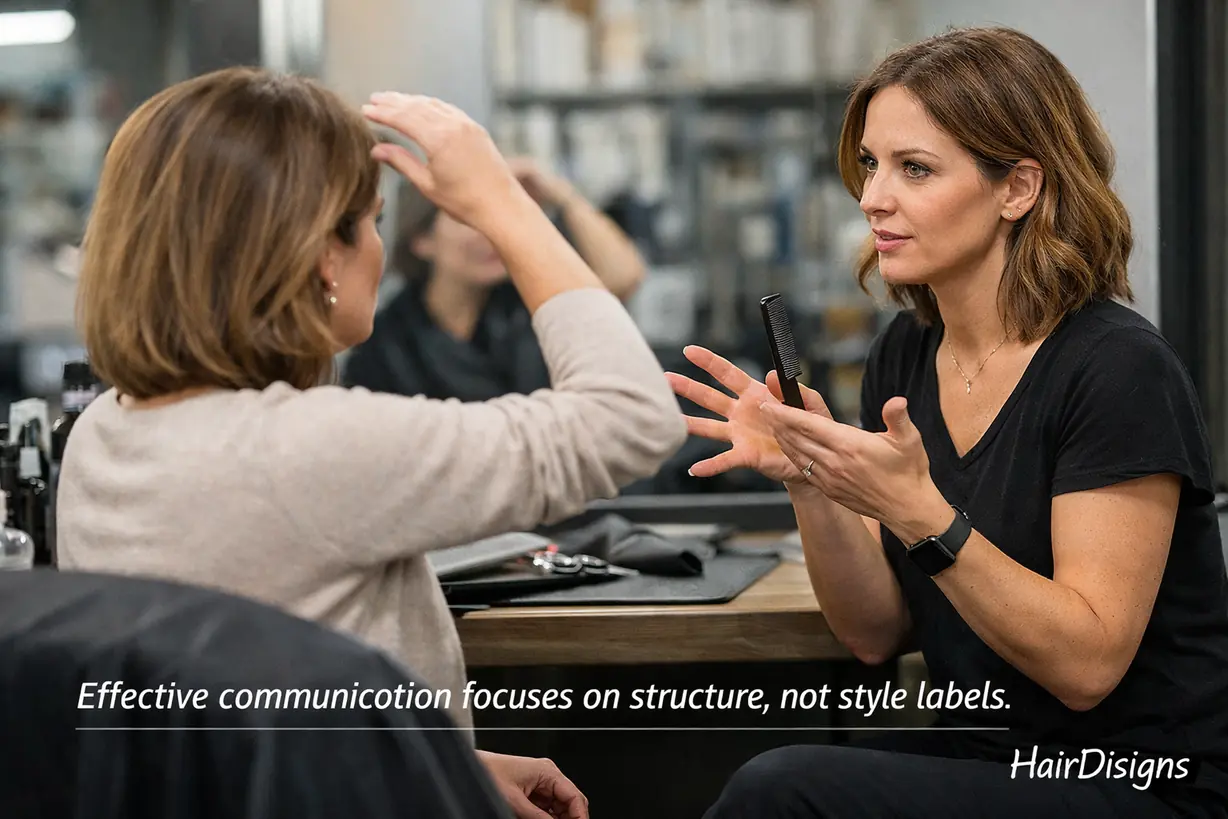
Most communication failures happen because the client describes appearance, while the stylist works with structure.
A haircut is not defined by how it looks in a reference image, but by how it behaves after cutting—how it grows, moves, and distributes weight.
This article explains what to tell your stylist before a haircut from a structural perspective, focusing on communication that leads to stable results rather than temporary visual similarity.
In This Guide
Haircut Communication Is About Structure, Not Style Names
Style names are inconsistent. Structure is not.
When you tell a stylist “I want layers” or “a bob,” the interpretation varies depending on technique, density, and hair behavior.
Instead, communication should focus on:
- Where volume should sit
- How weight should be distributed
- How the shape should behave over time
For example, instead of asking for a specific style, describe the outcome:
- “I want less width on the sides”
- “I want volume to stay at the crown”
- “I don’t want the ends to feel heavy”
This aligns your expectation with structural decisions.
For structural foundation, see:
haircut vs hairstyle structural difference.
Explain Your Daily Behavior, Not Just Your Goal
A haircut must match how you manage your hair daily.
Before a haircut, you should clearly tell your stylist:
- How much time you spend styling
- Whether you use heat tools
- Whether you prefer natural drying
This is critical because structure determines maintenance.
A precise shape often requires consistent styling. A flexible structure tolerates neglect.
Without this information, the stylist may design a haircut that looks correct initially but fails in daily use.
For deeper context:
why structure reduces daily styling.
Clarify What You Do NOT Want
Negative constraints are often more useful than positive references.
Many clients cannot describe the correct structure, but they can identify failure conditions.
For example:
- “I don’t want it to look flat after washing”
- “I don’t want too much bulk on the sides”
- “I don’t want to rely on daily styling”
This helps the stylist eliminate structurally incompatible options.
For common failures:
common haircut mistakes people don’t realize.
Describe Your Hair Behavior, Not Just Its Appearance
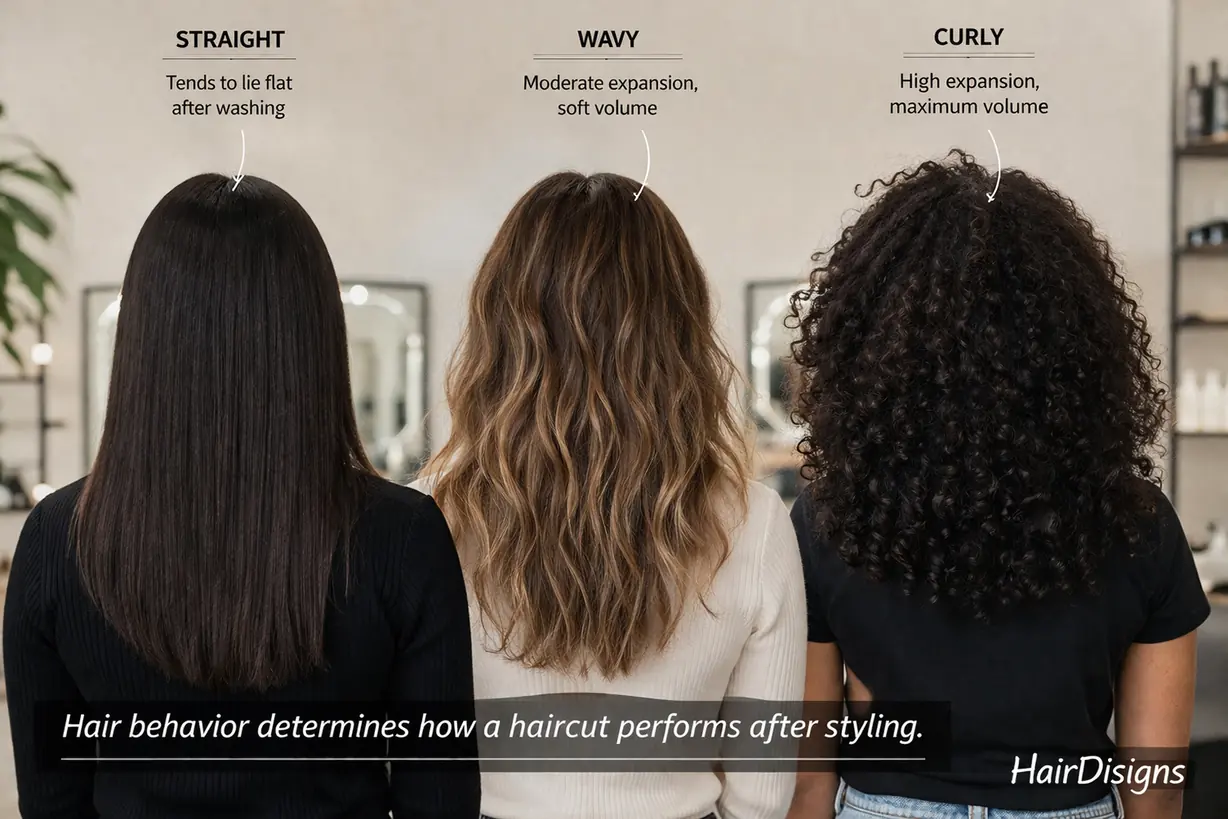
Hair type changes how structure performs.
You should communicate:
- Whether your hair expands or collapses when dry
- Whether it holds shape or loses it quickly
- Whether density creates heaviness or flatness
Two identical haircuts behave differently depending on hair type.
This is explained in:
how hair type changes the way a haircut looks.
If this is unclear, start with:
identify your hair type.
Align the Haircut With Face Structure (Not Trends)
Face shape affects proportion, not style preference.
You should communicate concerns such as:
- “I feel my face looks too wide”
- “I want to reduce length visually”
- “I want better balance around the jawline”
This allows the stylist to adjust structure rather than follow trends.
For structural logic:
how face shape affects haircut choices.
Understand the Difference Between Maintenance and Change
Before your appointment, clarify your intention:
- Maintenance: preserving the existing structure
- Change: redesigning the structure
Confusion between these leads to miscommunication.
For example, saying “just trim it” while expecting a shape correction creates conflict.
This distinction is explained in:
haircut vs hairstyle structural difference.
FAQ: What to Tell Your Stylist Before a Haircut
Should I bring reference photos?
Yes, but use them as visual direction only. Always explain what you like structurally (volume, length, weight), not just the image.
What if I don’t know how to describe my hair?
Describe behavior instead: how it dries, how it holds shape, and what problems you experience daily.
Can I rely on the stylist to decide everything?
Partially. But without clear input about your habits and constraints, even a technically correct haircut may not suit your lifestyle.
Closing Perspective: Communication Defines the Result
What to tell your stylist before a haircut is ultimately about translating expectation into structure.
A successful haircut is not created by copying a look, but by aligning:
- Hair behavior
- Structural design
- Maintenance reality
If these are clearly communicated, the result becomes predictable and stable.
For a broader decision framework:
how to choose a haircut that fits your lifestyle.