


Thin hair long face structural strategy is not about adding volume randomly, but about controlling how limited volume interacts with vertical facial proportions.
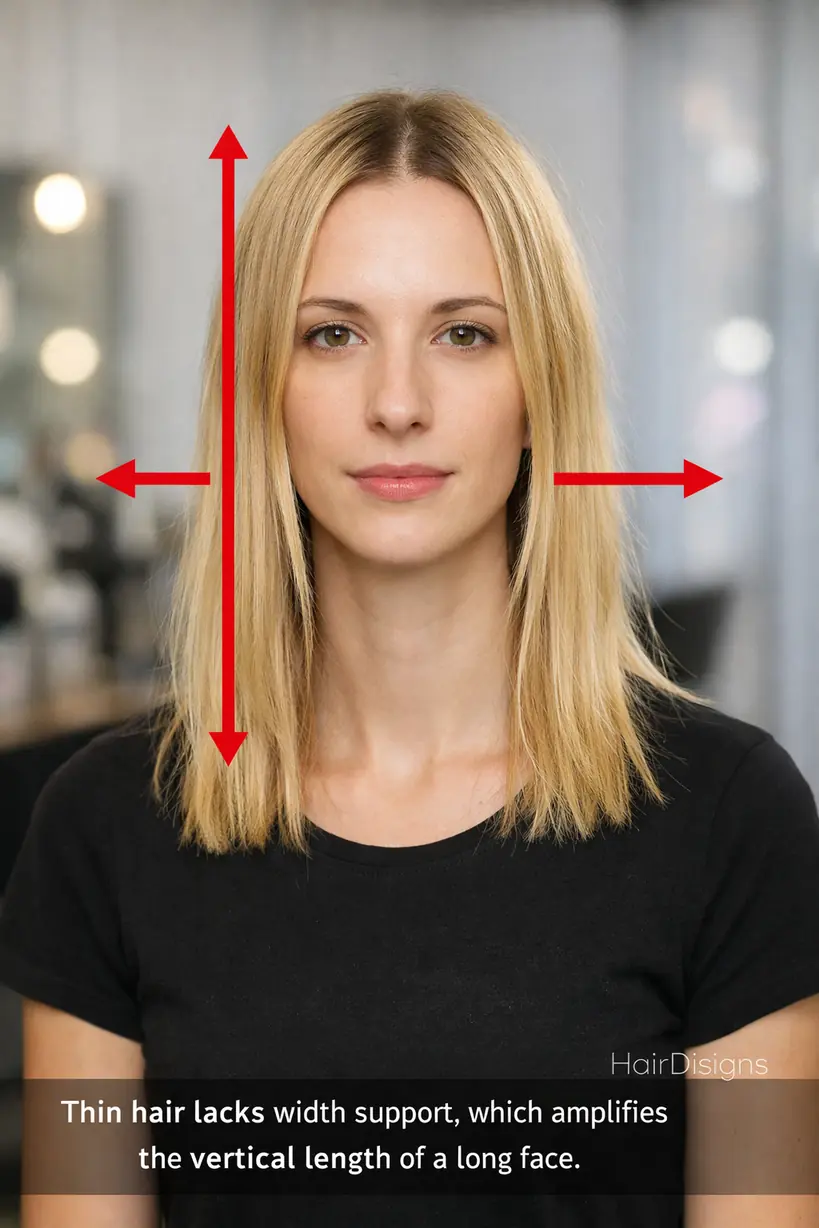
Thin hair lacks natural density and expansion. A long face already emphasizes vertical length. When these two factors combine without structure, the result is an elongated and visually narrow appearance.
This article explains thin hair long face structural strategy from a structural perspective. Instead of recommending styles, it focuses on how hair density and face shape interact to influence visual balance.
In This Guide
Thin Hair Long Face Structural Strategy: The Core Conflict
A long face is characterized by increased vertical length and relatively reduced width.
Thin hair behaves differently from thick or curly hair. It tends to collapse rather than expand, creating a flat silhouette with minimal lateral support.
When combined, this creates two structural effects:
- Vertical length is visually exaggerated
- Width appears insufficient to balance proportions
This explains why thin hair often makes long faces appear longer and less structured.
This interaction is part of a broader principle explained in how hair type changes the way a haircut looks.
Why Adding Volume Is Not the Real Solution
For thin hair, the common advice is to “add volume.” Structurally, this is incomplete.
Volume alone does not correct proportion. If volume is placed incorrectly, it can reinforce vertical imbalance rather than fix it.
For long faces, the key is not maximum volume, but strategic width creation.
Effective adjustments include:
- Introducing controlled width at mid-face level
- Reducing excessive height at the crown
- Creating horizontal balance without collapsing structure
This connects to how proportions shift with length, as explained in how hair length changes face proportions.
The Role of Width: Breaking Vertical Dominance
The primary structural goal for thin hair long face structural strategy is to interrupt vertical continuity.
This is achieved by introducing horizontal expansion at controlled points.
Balance occurs when:
- The silhouette is not dominated by height
- Width is present near cheek or jaw level
- The outline shifts toward a more oval proportion
Without width, the face appears stretched. With controlled width, proportions become balanced.
Why Blunt Cuts Often Fail on Thin Hair and Long Face
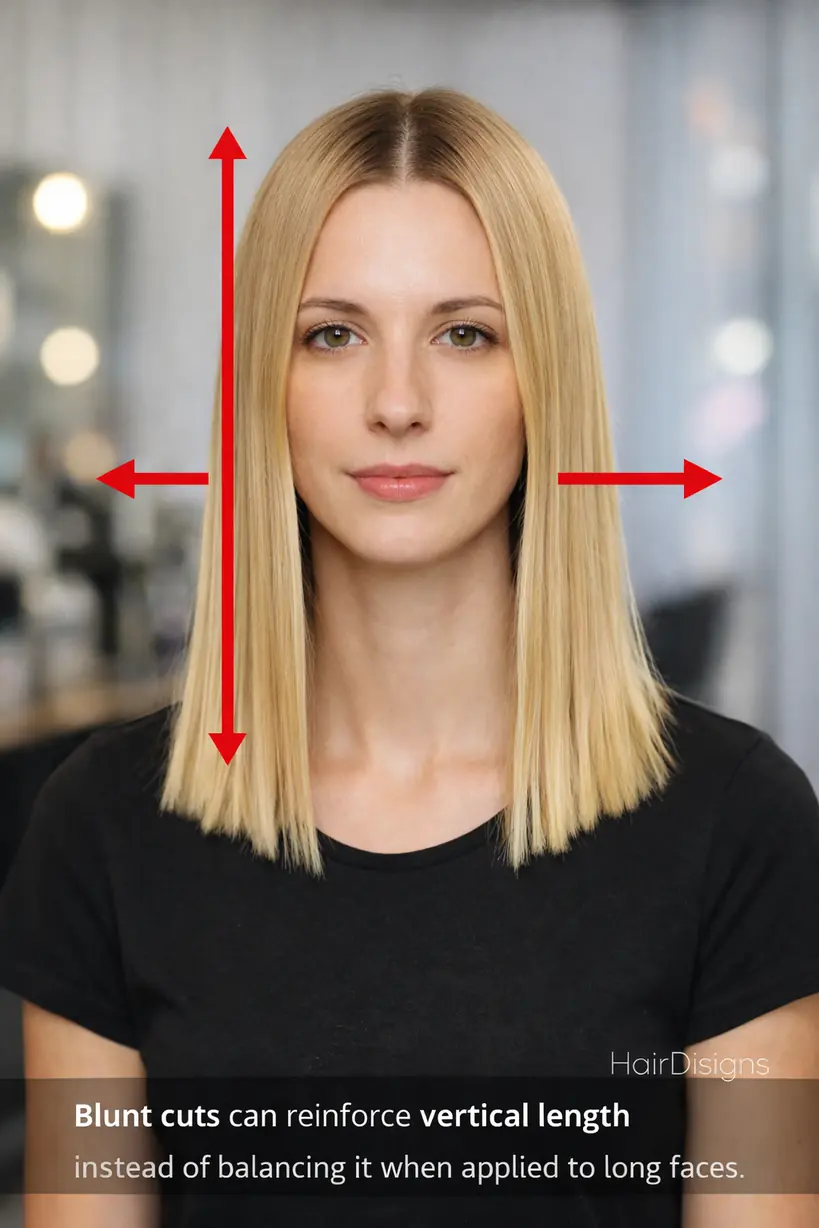
Blunt cuts are commonly recommended for thin hair because they preserve density.
However, for long faces, blunt lines can reinforce vertical direction instead of correcting it.
This leads to:
- A rigid vertical outline
- Lack of lateral expansion
- Increased facial elongation
The structural limitation of blunt shapes is explained in blunt haircuts structural failure.
Layering: Controlled vs Excessive Removal
Layering in thin hair must be approached with precision.
Unlike thick hair, thin hair cannot afford aggressive weight removal. Excessive layering reduces density and weakens structure.
Incorrect layering results in:
- Loss of visible fullness
- Increased transparency at the ends
- Weakened overall shape
Correct layering, however, can introduce subtle width without sacrificing density.
This structural logic is explained in layered haircuts structural logic.
Where Balance Comes From: Controlling Height vs Width
The most critical factor is the relationship between height and width.
For long faces:
- Height must be reduced or controlled
- Width must be introduced strategically
- The widest point should not sit too low or too high
This aligns with broader proportion rules explained in haircuts for long face structural mistakes.
When Thin Hair Works Well with Long Face
Thin hair is not inherently unsuitable for long faces.
It works when:
- Width is intentionally created
- Vertical elongation is interrupted
- The silhouette avoids a narrow outline
In this context, thin hair can create a clean and balanced shape rather than an elongated one.
FAQ: Thin Hair and Long Face Structure
Does thin hair always make a long face look longer?
No. It depends on structure. Without width, the face appears longer. With controlled width, balance can be achieved.
Is shorter hair better for thin hair and long face?
Not always. Short hair can lack width if poorly structured. Length matters less than how volume is distributed.
Should thin hair avoid layers completely?
No. Layers can work if they are minimal and controlled. Excessive layering reduces density and weakens structure.
Closing Perspective: Balance Direction, Not Just Density
Ultimately, thin hair long face structural strategy is about proportion, not volume alone.
Thin hair does not provide natural width. Long faces require it. The solution is not adding more hair, but structuring how it occupies space.
When height dominates, the face elongates. When width is introduced, balance emerges.
Haircut design, therefore, is not about increasing volume, but about redistributing it in a way that corrects proportion.
Scientific understanding of hair density and fiber behavior also supports how thin hair distributes volume differently across face shapes, as explained in studies of human hair structure.