


Short haircuts for round face shapes often trigger strong opinions.
Some stylists claim short hair “makes the face look rounder,” while others insist it can create balance.
The truth is structural.
Hair length changes visual proportions — the relationship between facial width, vertical lines, and hair volume.
This guide explains the pros and cons of short haircuts for round face structures, not as fashion advice but as a matter of geometry and balance.
In This Guide
What Defines a Round Face Structurally
A round face is primarily defined by similar width and length proportions.
Unlike oval or long faces, the visual structure tends to emphasize horizontal balance rather than vertical extension.
Several characteristics commonly appear together:
- Cheekbones often appear as the widest point
- The jawline is rounded rather than angular
- The face length and width appear visually similar
If you are unsure whether your structure fits this pattern, see how to identify your face shape at home.
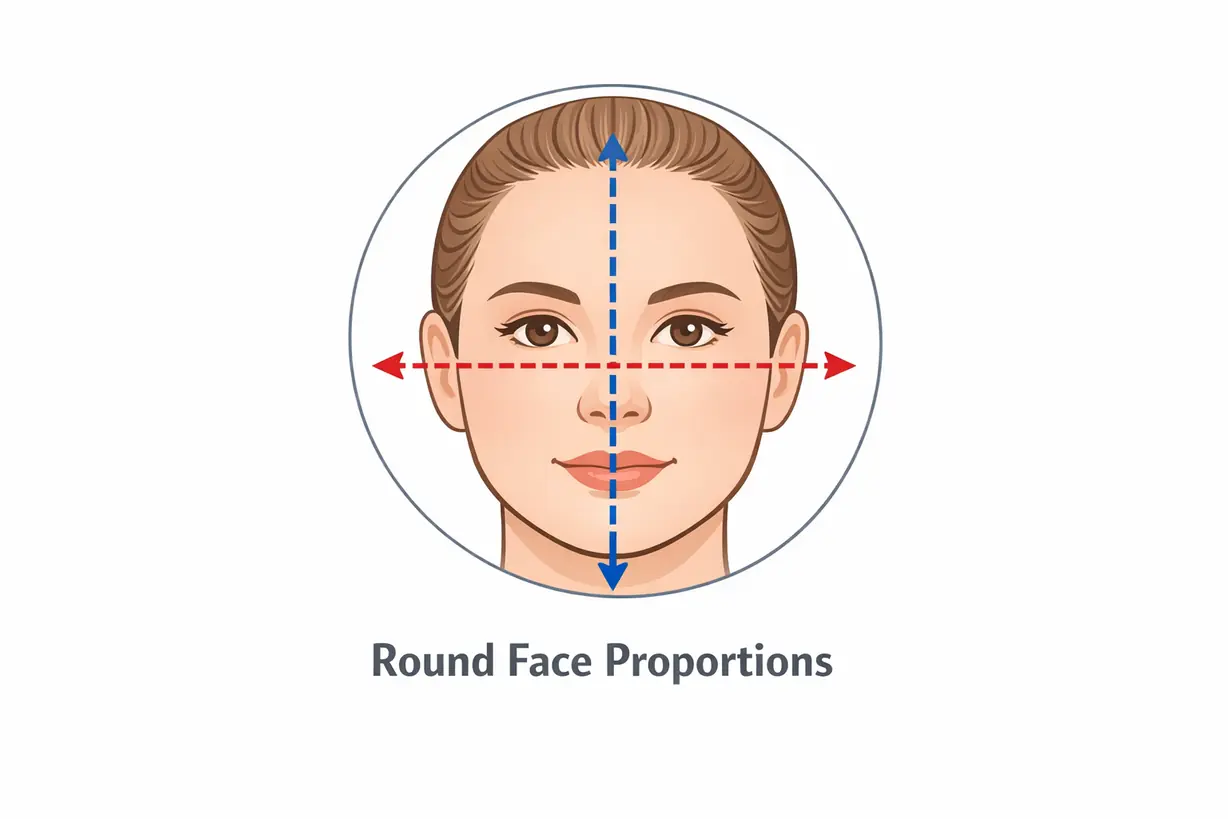
Round face proportion structure
How Hair Length Changes Facial Proportions
Haircuts alter face perception through visual framing.
Long hair usually creates vertical lines that extend the perceived length of the face.
Short hair removes that vertical extension.
When hair ends near the cheek or jaw level, the viewer’s eye naturally follows the horizontal line — which can emphasize facial width.
This interaction between hair length and facial geometry is explained in more depth in how hair length changes face proportions.
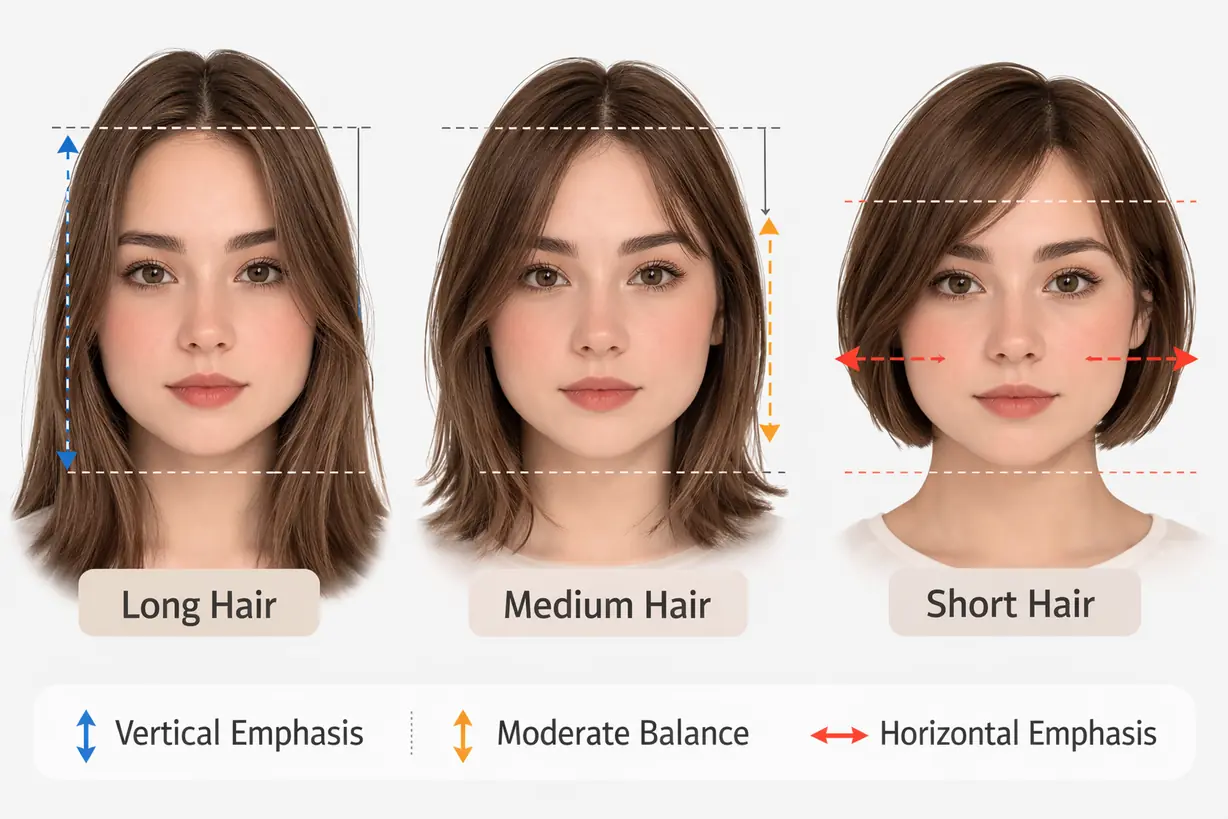
Hair length and face proportion interaction
The Structural Advantages of Short Haircuts
Short haircuts are not automatically problematic for round faces.
Under the right conditions, they can actually improve balance.
The key mechanism is controlled vertical emphasis.
Certain short haircuts introduce height, angles, or directional movement that visually extend the face.
Examples include:
- Volume concentrated above the crown
- Asymmetrical shapes that break horizontal lines
- Layering that creates vertical texture movement
These elements shift the viewer’s attention upward rather than outward.
Haircuts designed with structural intention behave very differently from cuts based purely on trends — a difference explored in haircut vs hairstyle: structure vs temporary form.
When Short Haircuts Can Emphasize Roundness
Problems appear when a haircut reinforces the same proportions already present in the face.
Several design choices tend to increase horizontal emphasis:
- Hair ending exactly at cheekbone width
- Heavy volume on both sides of the face
- Blunt horizontal perimeters
These elements create a visual frame that mirrors facial width.
The result is not that short hair is “bad,” but that the haircut repeats the same geometry already present in the face.
This is similar to the structural failures discussed in blunt haircuts: when they fail.
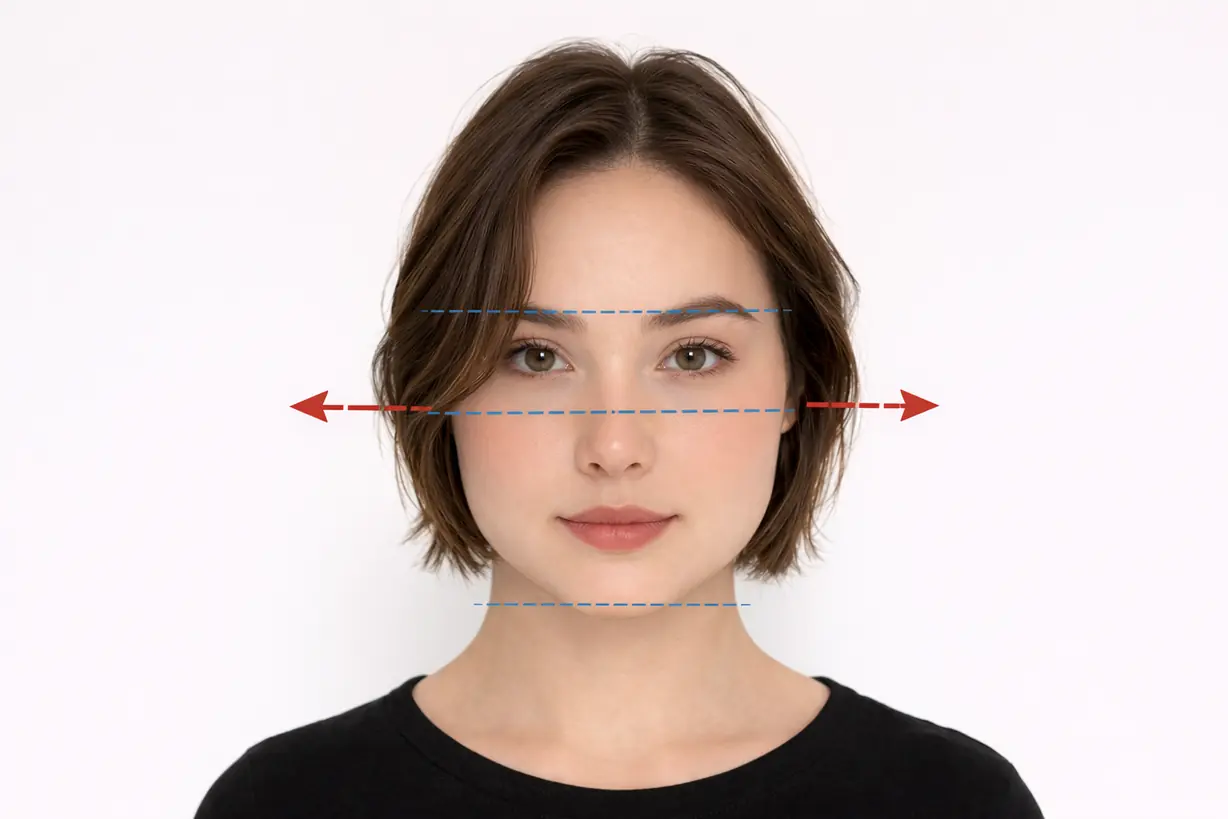
Horizontal lines can emphasize width
The Role of Volume Distribution
Hair volume placement is often more important than hair length itself.
For round faces, the goal is usually to avoid volume concentrated at the cheek level.
Instead, balance improves when volume is redistributed toward:
- The crown area
- The upper sides of the head
- Subtle vertical layering
Layered structures often help create this effect because they shift visual weight upward — an idea explored further in layered haircuts and structural weight distribution.
Why Face Shape Alone Cannot Decide a Haircut
Face shape is only one variable.
Hair density, texture, lifestyle, and maintenance habits influence how a haircut actually behaves.
Two people with the same face shape can experience completely different results from the same haircut.
This is why professional haircut design considers multiple structural variables rather than relying on a single rule.
A broader explanation appears in how face shape affects haircut choices.
Conclusion: Balance Is Structural, Not Length-Based
Short haircuts for round faces are neither inherently flattering nor inherently problematic.
The outcome depends on how the haircut redistributes visual weight.
If the design introduces vertical movement, angles, or upward volume, short hair can create balance.
If the haircut repeats horizontal width, the face can appear rounder.
Understanding the structure behind these effects allows haircut decisions to be based on geometry rather than trends.
FAQ
Do short haircuts always make a round face look wider?
No.
Width appears when the haircut introduces horizontal lines at cheek level.
Short styles that add crown height or directional texture can visually elongate the face.
Are bobs suitable for round face shapes?
Some are.
Bobs that include asymmetry, layers, or vertical movement tend to work better than blunt horizontal versions.
Should people with round faces avoid short hair completely?
Not at all.
The question is not length, but structure.
Well-designed short haircuts can balance round faces effectively.
This article was written and optimized with the assistance of AI, then reviewed and refined to maintain a clear, educational, non-commercial tone.