


Understanding how short haircuts interact with square face structures.
Short haircuts for square face shapes often create confusion.
Some stylists recommend keeping hair long to soften strong jawlines, while others argue that shorter hair can highlight facial structure in a positive way.
The difference usually comes down to geometry rather than trend.
Haircuts influence how the eye interprets facial angles, width, and vertical proportion.
Short hair changes where visual lines begin and end around the face.
This article explains the structural logic behind short haircuts for square face shapes and why some designs balance the face while others exaggerate its angles.
In This Guide
What Defines a Square Face Structurally
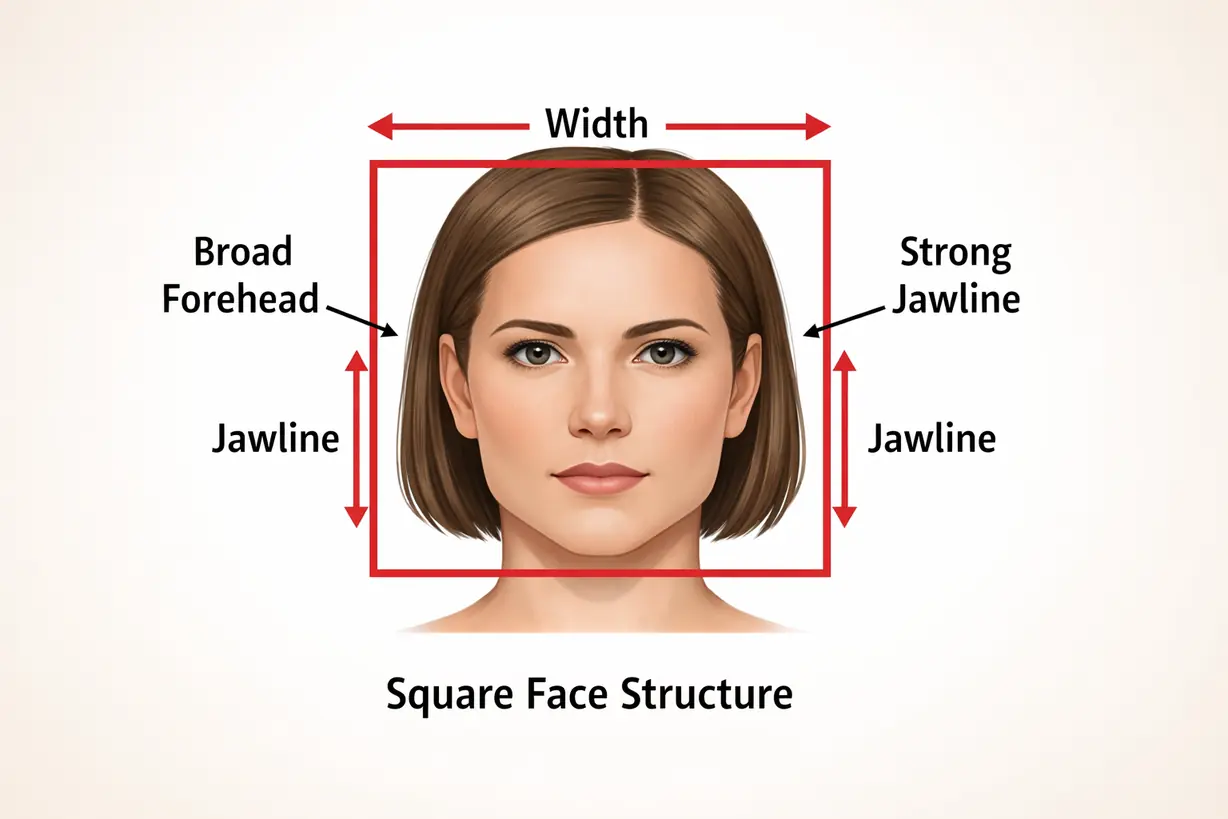
A square face is typically identified by strong horizontal and angular proportions.
Unlike oval faces, where curves dominate, square faces emphasize straight lines and defined corners.
Common characteristics include:
- A broad forehead
- Strong, clearly defined jawlines
- Face width that appears similar from forehead to jaw
The geometric characteristics of facial shapes are widely discussed in facial morphology studies.
For additional reference, see the overview provided by
facial shape classification.
The most noticeable feature is often the jaw angle, which creates a rectangular or square outline.
If you are unsure about your own structure, you can follow the method explained in
how to identify your face shape at home.
How Short Hair Changes Facial Geometry
Hair length influences how visual frames are created around the face.
Long hair tends to introduce vertical lines that soften angular structures.
Short hair removes much of that vertical extension.
When hair ends near the jawline, the haircut may either:
- Emphasize the jaw angle
- Redirect attention toward the crown
- Create contrast through texture and layering
Because square faces already contain strong horizontal elements, the placement of the haircut perimeter becomes especially important.
A more detailed explanation of this relationship appears in
how hair length changes face proportions.
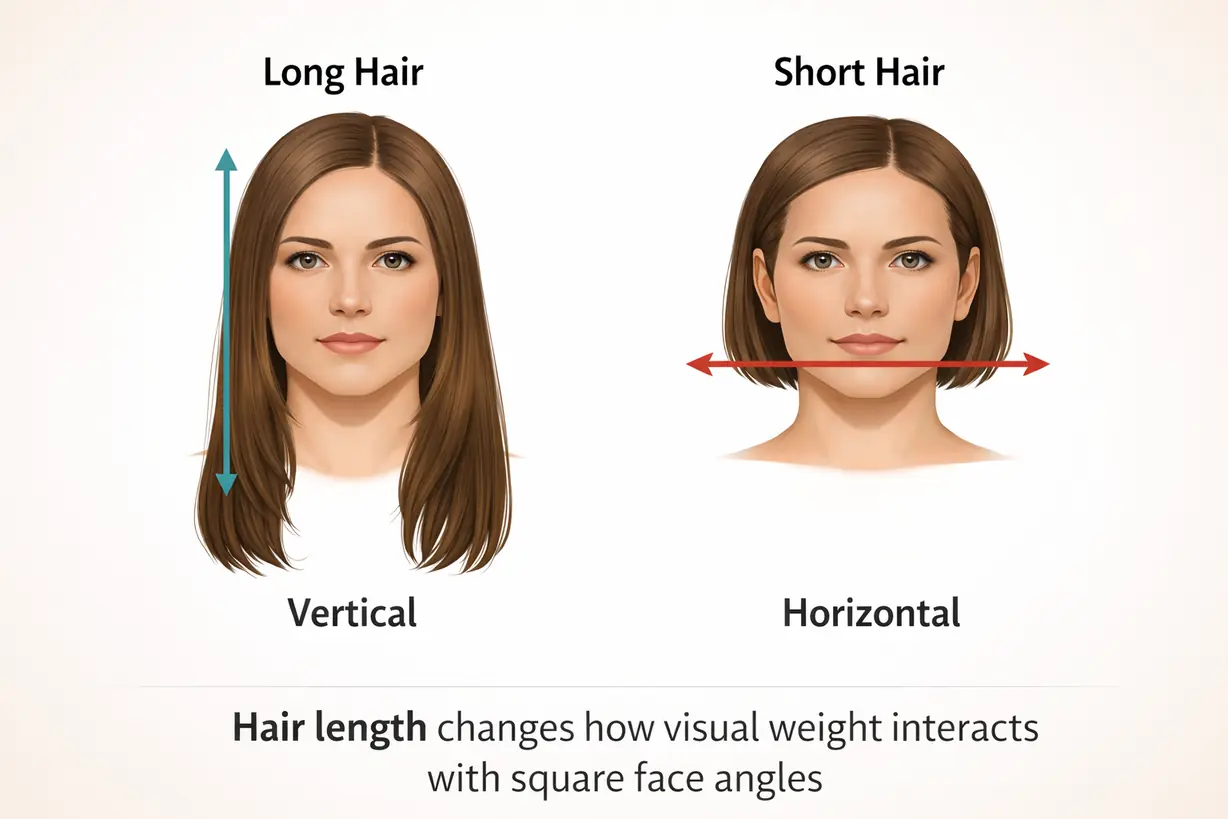
Hair length changes visual balance around the jawline
Why Some Short Haircuts Balance Square Faces
Short haircuts can work well for square faces when they introduce movement that softens angular structure.
Several design mechanisms contribute to this effect.
- Layering that breaks rigid horizontal lines
- Texture that diffuses the jaw outline
- Volume placed above the cheekbone level
These elements create visual complexity, preventing the haircut from repeating the same square geometry already present in the face.
Design approaches that rely on structural balance rather than trends are explained further in
haircut vs hairstyle: structure vs temporary form.
When Short Haircuts Emphasize Angular Features
Short haircuts can also exaggerate square face characteristics if the design repeats the same lines found in the jaw.
Several situations often produce this effect:
- Blunt horizontal perimeters ending exactly at the jaw
- Heavy volume concentrated at the lower sides of the face
- Flat shapes that mirror the jaw width
When these elements align with the natural jaw structure, the haircut reinforces angularity instead of balancing it.
This problem is similar to the structural limitations discussed in
blunt haircuts and their structural limitations.
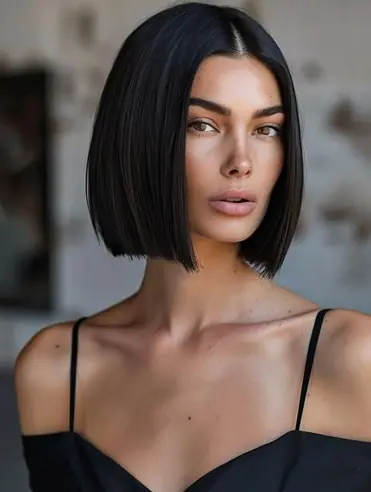
Horizontal perimeters can emphasize square jawlines
The Importance of Volume Placement
For square faces, where hair volume is placed often matters more than the haircut length itself.
Balanced designs usually shift visual weight away from the jawline.
This can be achieved by redistributing volume toward:
- The crown
- The upper sides of the head
- Textured layers above the cheekbones
Layered haircuts often perform well because they interrupt rigid outlines and create movement within the haircut structure.
A deeper explanation of this mechanism appears in
layered haircuts and structural weight distribution.
Why Face Shape Alone Is Not Enough
Face shape is only one variable in haircut design.
Hair texture, density, and lifestyle requirements all influence how a haircut behaves over time.
Two people with identical face shapes may experience completely different results from the same haircut because their hair structure interacts differently with the design.
This broader perspective is discussed in
how face shape affects haircut choices.
Conclusion: Short Haircuts Depend on Structural Balance
Short haircuts for square faces are not automatically flattering or unflattering.
The outcome depends on whether the haircut repeats or softens facial geometry.
Haircuts that introduce movement, layering, and elevated volume often balance square faces effectively.
Haircuts that mirror the jawline through blunt horizontal shapes tend to emphasize angular features.
Understanding these structural relationships allows haircut decisions to be guided by proportion rather than trends.
FAQ
Do short haircuts make a square face look more angular?
They can, depending on the haircut structure.
Blunt perimeters at jaw level often emphasize angles, while layered or textured designs can soften them.
Is a bob suitable for square face shapes?
Some bob variations work well, especially those that include layering or asymmetry.
Blunt bobs ending exactly at the jawline are more likely to emphasize angular structure.
Should square faces avoid short hair completely?
No.
Short hair can work well when the haircut introduces movement, texture, or crown volume that offsets strong jawlines.
This article was written and optimized with the assistance of AI, then reviewed and refined to maintain a clear, educational, non-commercial tone.