


Understanding how short haircuts interact with long face proportions.
Short haircuts for long face shapes are often misunderstood, especially when people assume longer hair is always safer for elongated face proportions.
Many people believe that longer hair automatically balances a vertically elongated face.
The reasoning seems intuitive: long hair appears to match the vertical length of the face.
However, haircut design rarely works through simple matching.
In many situations, short haircuts for long face proportions can actually improve facial balance when the structure of the haircut changes how vertical proportions are perceived.
Hair functions as a visual frame around the face.
Changing hair length alters where this frame begins, ends, and distributes visual weight.
This article explains the structural logic behind short haircuts for long face shapes and why certain designs reduce facial length while others exaggerate it.
In This Guide
What Defines a Long Face Structurally
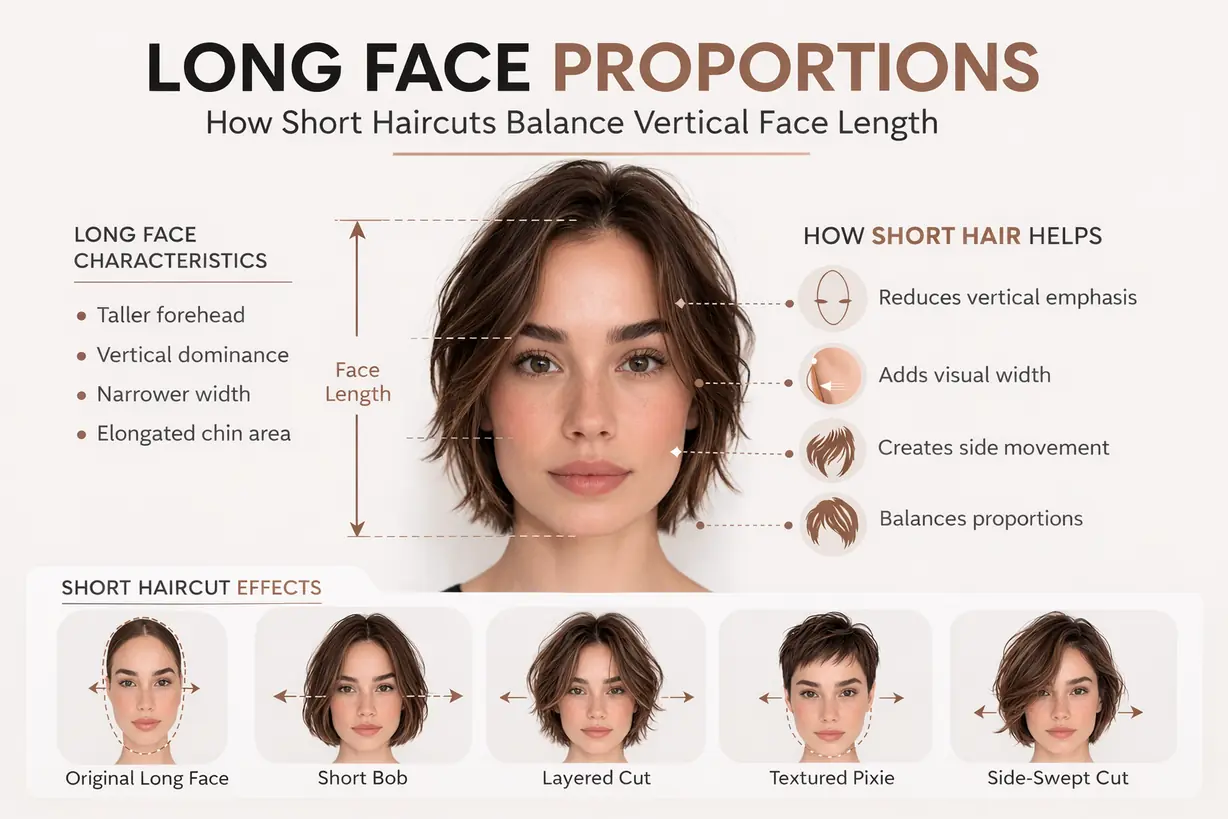
A long face shape is primarily defined by vertical dominance.
The face appears noticeably longer than it is wide, creating an elongated silhouette.
Typical characteristics include:
- A taller forehead
- Cheekbones positioned along a vertical line
- A longer distance between forehead, nose, and chin
Instead of strong angles or width, the defining feature is simply proportion.
The vertical measurement of the face becomes visually dominant compared to horizontal width.
Facial morphology research often describes these proportions through geometric classification.
For additional reference, see the overview of
facial shape classification.
If you are unsure whether your face falls into this category, the method explained in
how to identify your face shape at home can help clarify the underlying structure.
How Hair Length Changes Facial Proportion
Hair length directly influences how the eye measures the face.
Long hair tends to extend the visual frame downward.
This extension reinforces the same vertical direction already present in long faces.
Short hair interrupts this visual extension.
When the haircut ends above the shoulders, the visual frame becomes shorter, which can help balance elongated proportions.
This effect is explained in more detail in
how hair length changes face proportions.
Because of this relationship, many short haircuts for long face structures are intentionally designed to interrupt vertical proportion and restore visual balance.
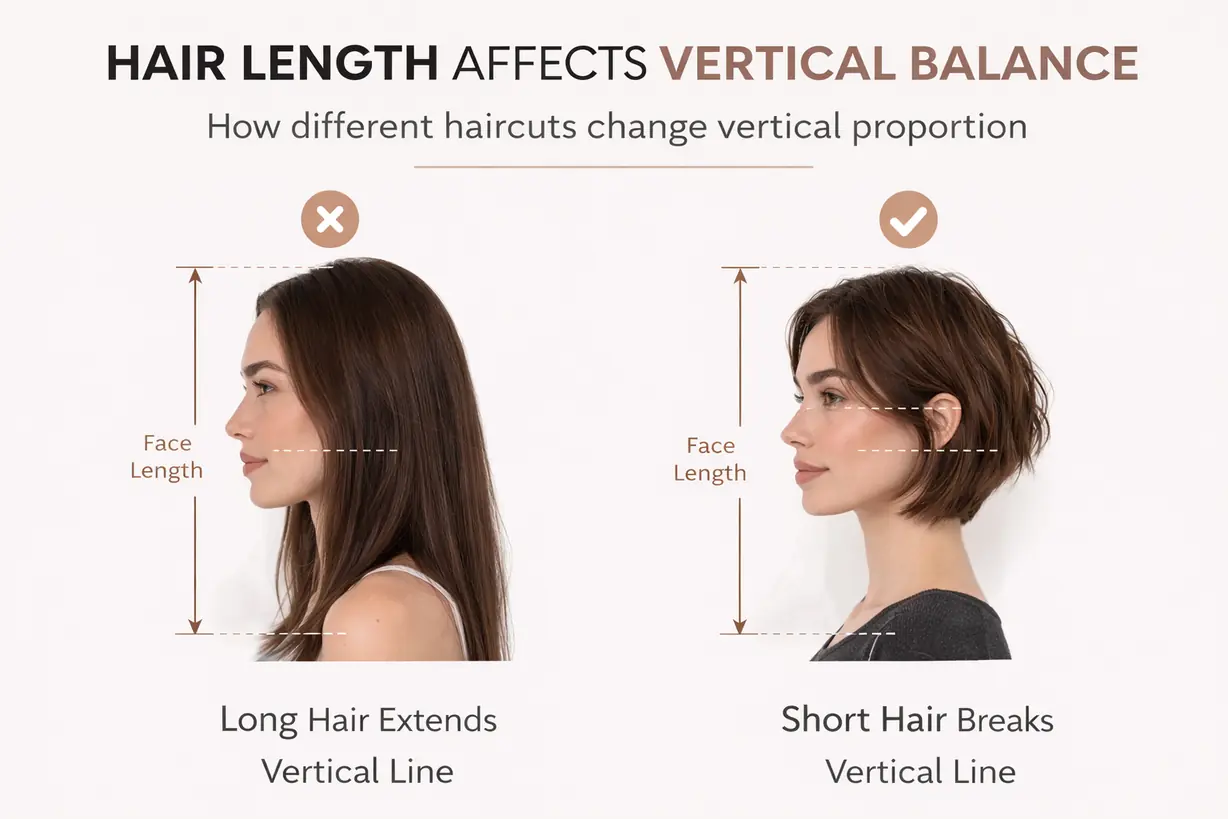
Hair length changes how vertical proportions are perceived
Why Some Short Haircuts Reduce Facial Length
Short haircuts for long face shapes often succeed when they introduce horizontal movement and visual width.
Several structural mechanisms contribute to this effect.
- Layering that interrupts vertical lines
- Side movement that increases perceived width
- Volume distributed near cheekbone level
These elements shift visual attention away from vertical length.
Instead of reinforcing an elongated outline, the haircut redistributes visual weight across the face.
Haircuts designed through structural logic rather than trend imitation are explained further in
haircut vs hairstyle: structure vs temporary form.
When Short Haircuts Make Long Faces Look Longer
Not every short haircut improves proportion.
Certain designs unintentionally reinforce vertical emphasis and make short haircuts for long face structures less balanced.
Common examples include:
- Very flat hairstyles with minimal side volume
- Haircuts with height concentrated only at the crown
- Extremely tapered sides that narrow the face
When these elements align with the natural vertical structure of the face, the haircut may make the face appear even longer.
This structural limitation is similar to the design problems discussed in
blunt haircuts and their structural limitations.
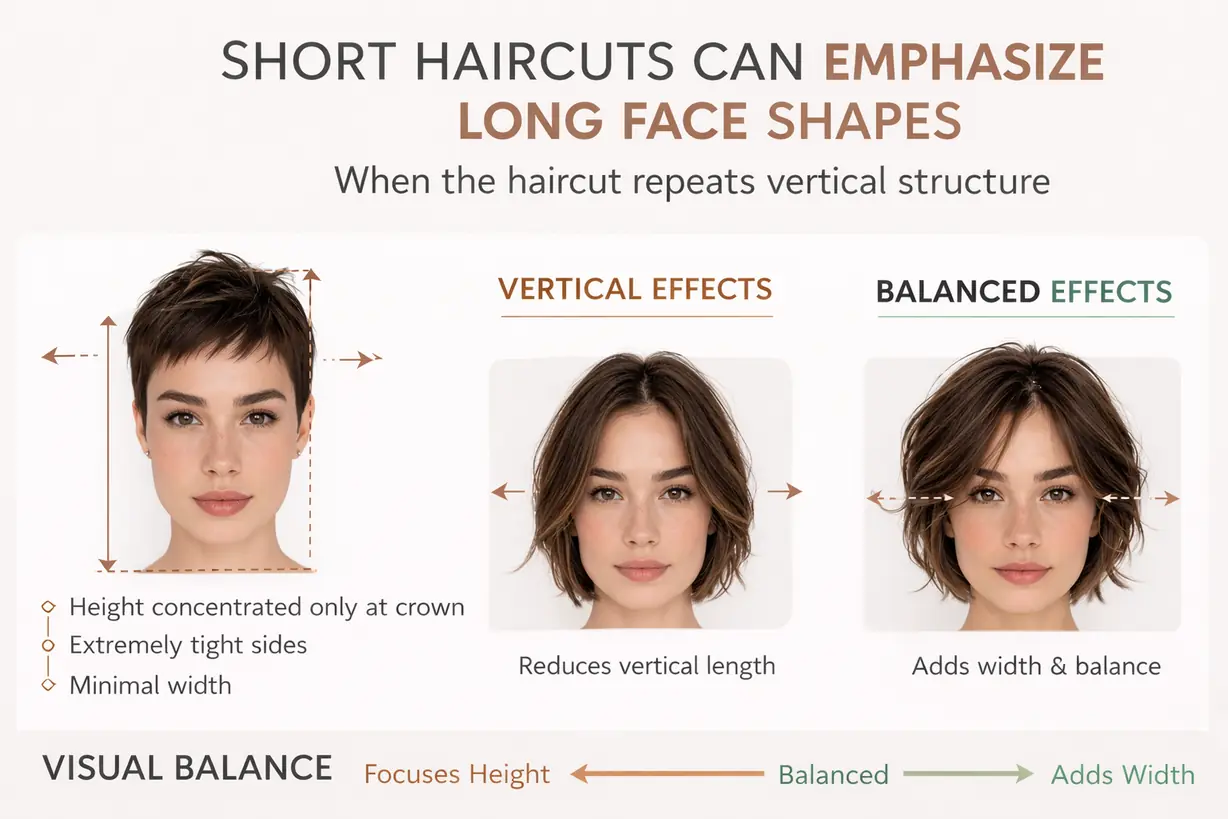
Excess vertical lines can exaggerate long face proportions
The Role of Volume Placement
For long face shapes, where volume appears often matters more than haircut length itself.
Balanced short haircuts usually shift visual weight toward the sides of the face rather than concentrating height at the crown.
This redistribution visually shortens the perceived length of the face.
Common structural approaches include:
- Layered shapes around cheekbone level
- Side movement that widens the silhouette
- Soft texture that prevents rigid vertical outlines
Layered haircuts often perform well because they distribute visual weight more evenly throughout the haircut structure.
A deeper explanation of this mechanism appears in
layered haircuts and structural weight distribution.
Why Face Shape Alone Is Not Enough
Face shape is only one variable in haircut design.
Hair density, natural texture, and styling habits all influence how a haircut behaves over time.
Two people with identical face proportions may experience completely different results from the same haircut.
Because of this interaction, short haircuts for long face structures must consider both face shape and hair structure.
This broader perspective is discussed in
how face shape affects haircut choices.
Conclusion: Short Haircuts Can Balance Long Faces
Short haircuts for long face shapes are not automatically risky.
When designed with structural balance in mind, short haircuts for long face proportions can significantly improve facial harmony.
Haircuts that introduce horizontal movement, layering, and side volume often reduce the appearance of facial length.
Haircuts that concentrate height at the crown or remove side volume tend to exaggerate vertical proportions.
Understanding these structural relationships allows haircut decisions to be guided by proportion rather than fashion trends.
FAQ
Do short haircuts make long faces look longer?
They can, depending on the haircut structure.
Short haircuts that remove side volume and emphasize vertical height may increase the appearance of facial length.
Is a bob suitable for long face shapes?
Some bob variations work well, especially those that create width near the cheekbones.
Very long or extremely flat bobs may emphasize vertical length.
Do bangs help balance long face shapes?
Yes.
Bangs can shorten the visible height of the forehead and interrupt vertical facial length.
A deeper explanation can be found in
bangs for long face: structural geometry and proportion control.
This article was written and optimized with the assistance of AI, then reviewed and refined to maintain a clear, educational, non-commercial tone.