


Short hair is unforgiving. It exposes the reality of how hair naturally behaves.
When length is removed, the weight that once stretched the hair downward is gone.
Without that weight, a haircut can no longer hide behind gravity.
The result is entirely dependent on structural control.
Short haircuts respond immediately to texture, density, and natural growth patterns.
This article does not catalog trending short styles.
It explains the mechanics of short haircuts, how they interact with underlying hair structure,
and why understanding the material is more important than selecting a reference photo.
In This Guide
The Mechanics of Short Hair: Weight and Expansion
Every haircut is an exercise in managing weight.
On long hair, weight pulls the hair flat against the head.
On short hair, removing length removes weight, which encourages the hair to expand.
If the hair is straight and fine, removing weight might cause it to lay perfectly flat.
If the hair is dense and wavy, removing weight will cause the hair to expand outward.
A successful short haircut anticipates this expansion.
It cuts the hair not just for where it falls when wet,
but for where the structure will force it to sit once it dries and expands.
Density, Texture, and Internal Balance
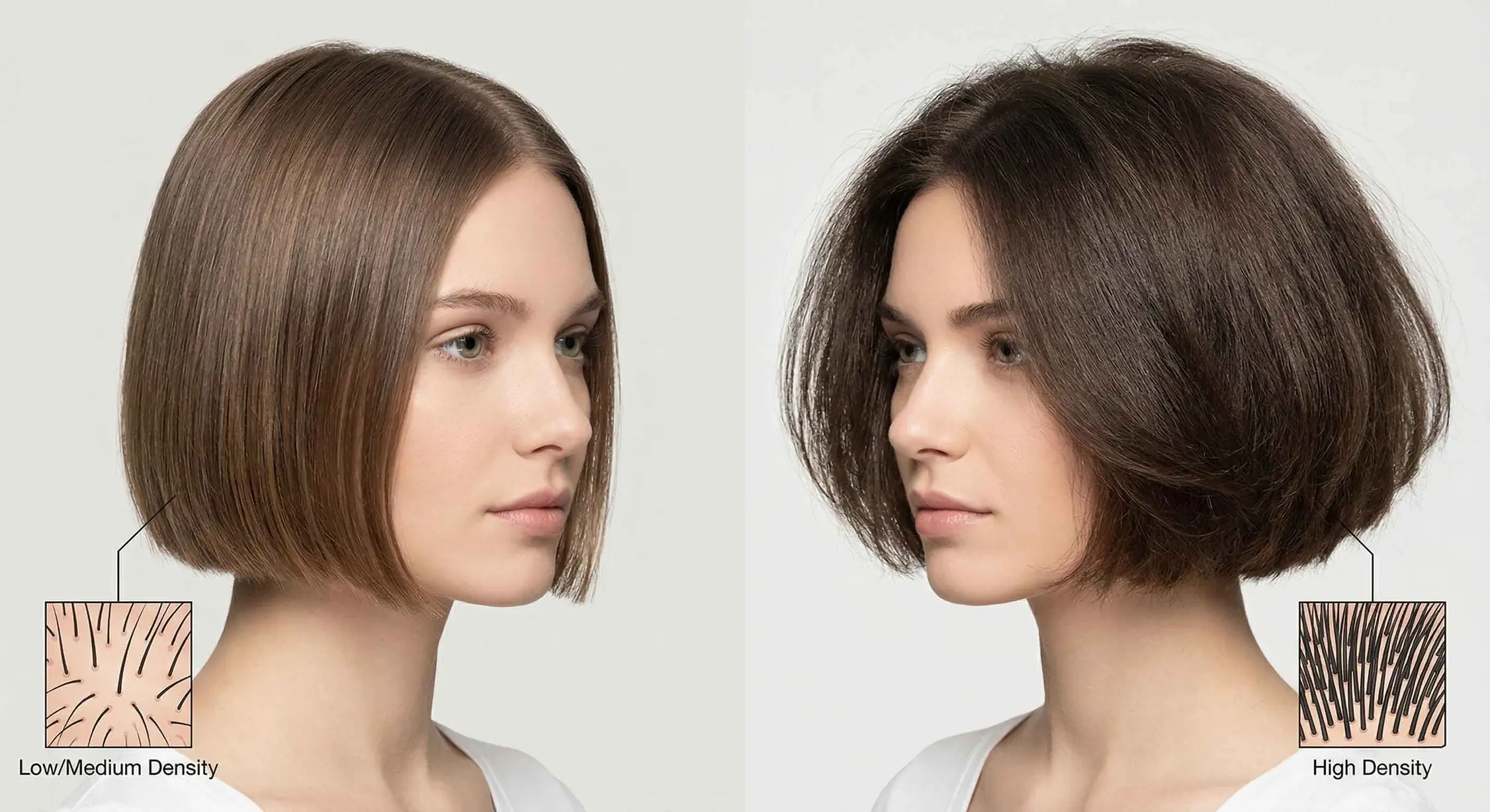
Hair structure is a combination of texture (the diameter of a single strand) and density (the amount of hair on the head).
Both variables dictate how a short haircut must be built.
Fine, low-density hair requires blunt lines and minimal internal layering to preserve mass.
Coarse, high-density hair requires strategic internal debulking to prevent the shape from becoming a helmet.
Just as you must assess your face shape to understand external proportions, you must assess density to understand internal volume.
If you apply a high-elevation layered technique to fine hair, the perimeter will collapse.
If you apply a blunt, zero-elevation technique to dense, wavy hair, the silhouette will widen unmanageably.
Growth Patterns: The Hidden Architecture
Short haircuts reveal what long hair conceals: cowlicks, whorls, and irregular hairlines.
These natural growth patterns dictate the direction hair naturally wants to travel.
You cannot force short hair to lay against its natural growth pattern without daily chemical or thermal manipulation.
A structurally sound haircut works with these patterns, leaving enough length and weight over strong cowlicks to hold them down, or cutting them short enough that they seamlessly blend into the texture.
Failing to respect a growth pattern at the crown or the nape will ruin the balance of a short cut, regardless of how face shape affects haircut choices. The structural mechanics will always override the aesthetic goal.
Precision at the Perimeter
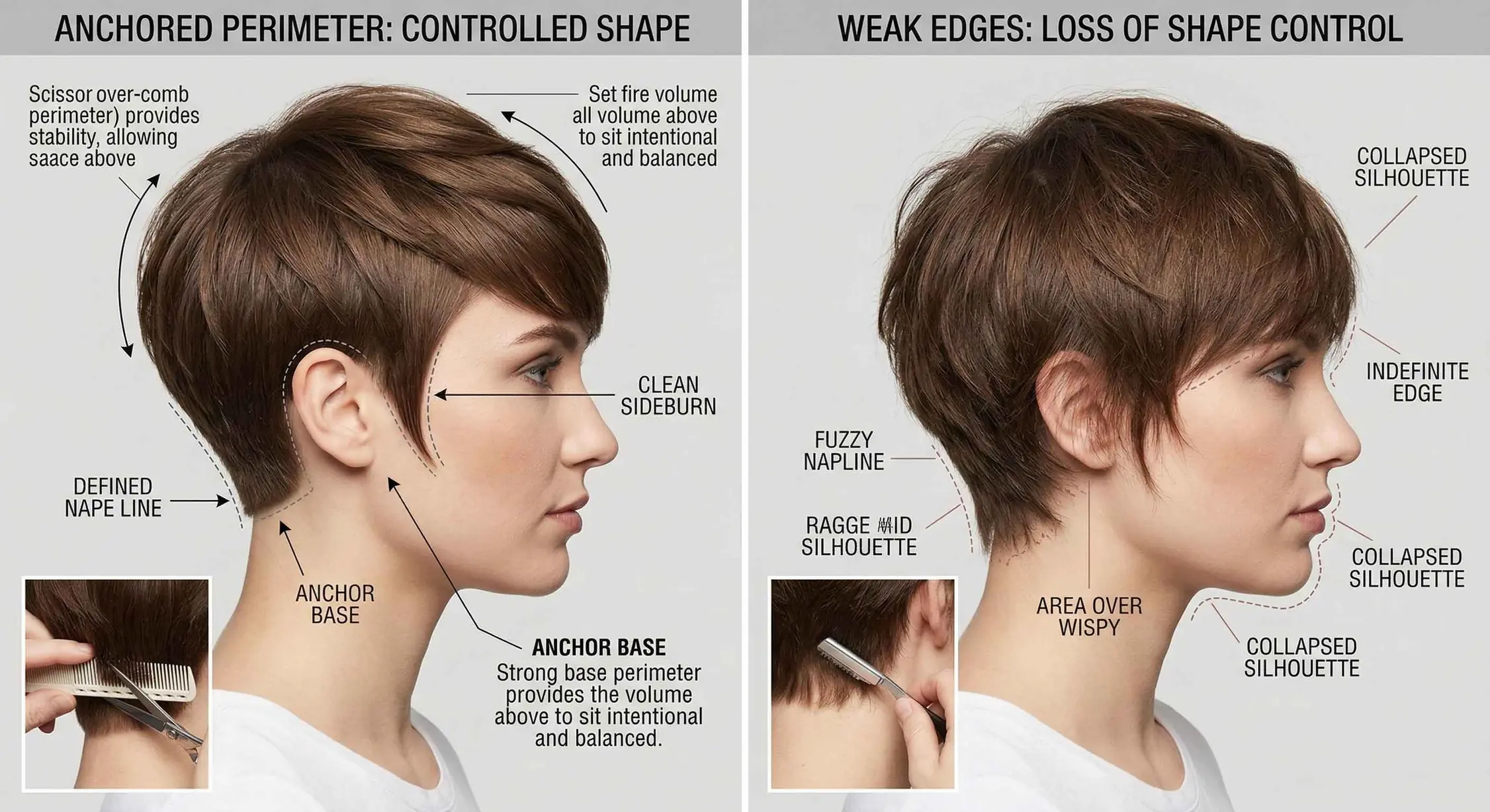
In short haircuts, the perimeter—the outer boundary of the haircut—acts as the foundation.
Because there is less hair to work with, the edges must be deliberate.
A strong, clean perimeter anchors a short shape, giving it deliberate boundaries.
A heavily textured or shattered perimeter softens the shape but removes stability.
If the internal hair structure is highly active (curly or coarse), a structured perimeter provides necessary visual control. If the internal structure is weak (fine or thin), a blunt perimeter provides the illusion of density.
FAQ: Short Haircuts and Structure
Will cutting my hair short make it thicker?
No. Cutting hair short changes the geometry of the hair shaft, making the ends blunt rather than tapered.
This creates the physical illusion of thickness, but it does not change your actual hair density or texture.
Can coarse, wavy hair be cut into a pixie?
Yes, but it requires precise internal weight removal.
The cut must rely on undercutting or channel cutting to remove mass from the interior so the surface hair can lay flat without expanding outward.
Why does my short haircut lose its shape so quickly?
Short hair loses its shape quickly because the proportional change in length is drastic.
Half an inch of growth on a two-inch haircut alters the structure by 25%.
On long hair, that same growth is proportionally insignificant.
Closing Perspective: Honesty in Short Lengths
Short hair does not lie.
It is an exact reflection of the hair’s natural structure and the cutter’s technical control.
When the structure is respected, a short haircut requires minimal styling and holds its shape gracefully as it grows.
When the structure is ignored, the hair will constantly fight the haircut.
Success in short hair is not about finding the perfect style.
It is about understanding the material you are working with.