
Medium-length hair is often treated as a safe compromise. It is neither a demanding short cut nor a high-maintenance long length.
However, structurally, it is the most difficult length to balance.
A haircut that sits anywhere between the chin and the collarbone exists in a transitional zone. It lacks the defining gravity of long hair, which pulls volume down, and it lacks the self-supporting architecture of short hair. Instead, it interacts constantly with the body’s natural pivot points: the neck, the jawline, and the shoulders.
This guide breaks down the physical mechanics behind proper medium-length haircuts structure and explains why achieving a balanced shape at this length requires precise planning.

In This Guide
The Shoulder Interference Zone
Hair relies on uninterrupted space to fall naturally. Medium-length hair is routinely interrupted.
When the perimeter of a haircut reaches the collarbone or shoulders, the hair cannot hang straight. The physical barrier of the body forces the hair to bend, flip, or kick outward. This is not a styling failure; it is basic physics.
If the haircut is not designed to accommodate this interference, you will spend your routine fighting it.
There are two structural approaches to managing shoulder interference:
- Clearance: Cutting the perimeter strictly above the shoulder line so it swings freely.
- Intentional Disruption: Allowing the hair to rest past the collarbone, using internal layering to soften the inevitable bend.
The Density Problem: The Triangle Effect
Gravity affects hair horizontally as much as vertically.
When hair is long, weight is distributed over a larger surface area. When hair is cut to a medium length, all of that bulk suddenly stops at the widest part of the lower face or neck.
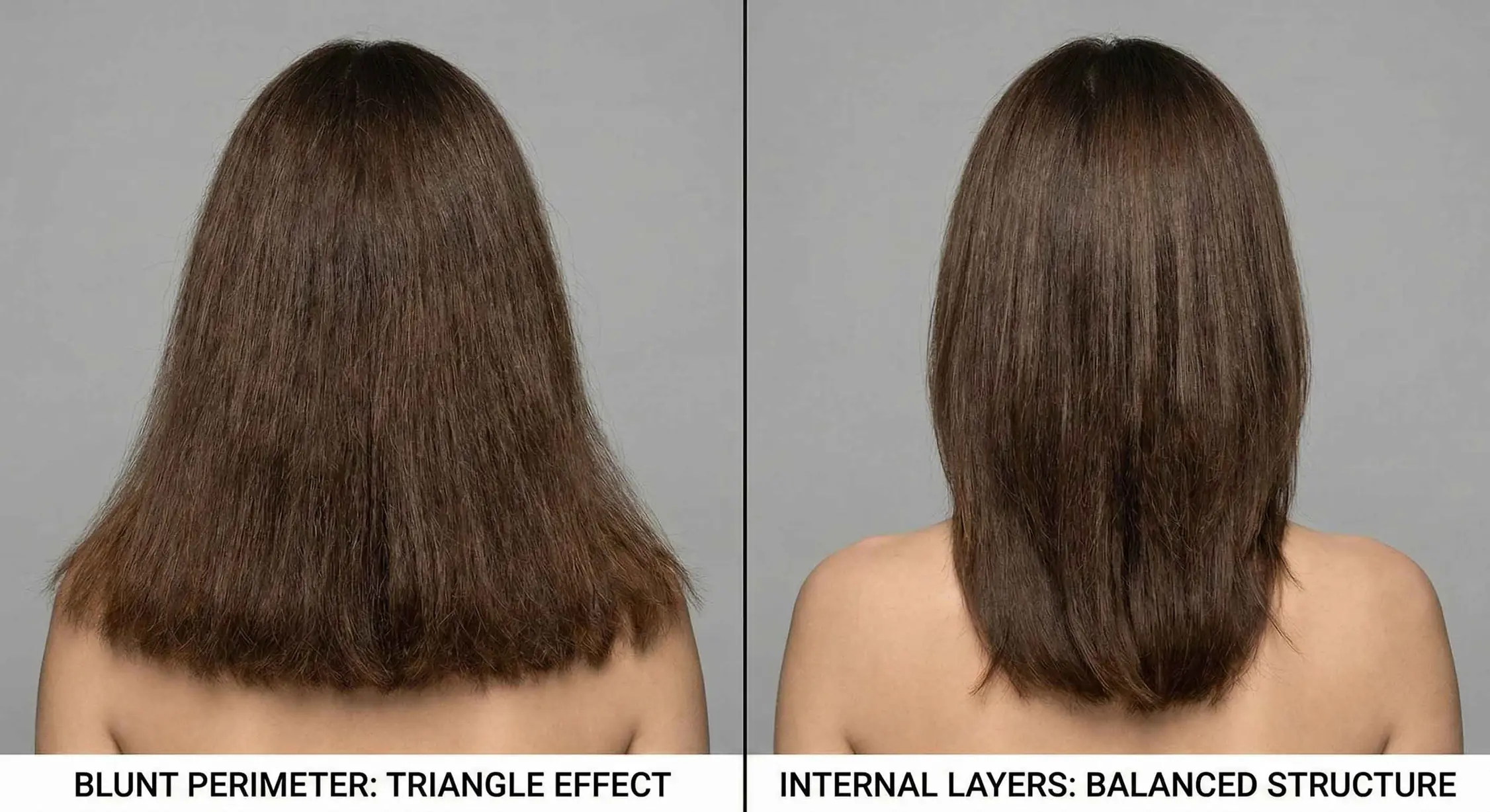
If a medium-length cut is created with a heavy, un-layered perimeter, the hair will expand outward at the bottom as it dries. This creates a highly unbalanced, triangular silhouette. This is a primary example of when blunt haircuts fail structurally. The shorter the hair, the more aggressive the horizontal expansion becomes.
Internal Structure: Distributing the Weight
To prevent the triangle effect and control shoulder interference, medium-length hair requires internal structure.
This does not necessarily mean visible, choppy layers. It means internal weight removal. By cutting the hair shorter on the inside (underneath) or subtly graduating the surface, a stylist removes the bulk that pushes the perimeter outward.
Proper weight distribution allows the hair to curve inward toward the neck rather than flaring out. Understanding the structural logic of layered haircuts is mandatory if you want medium-length hair to fall correctly without daily heat styling.
Proportion and the Neckline
A haircut does not just frame the face; it frames the neck.
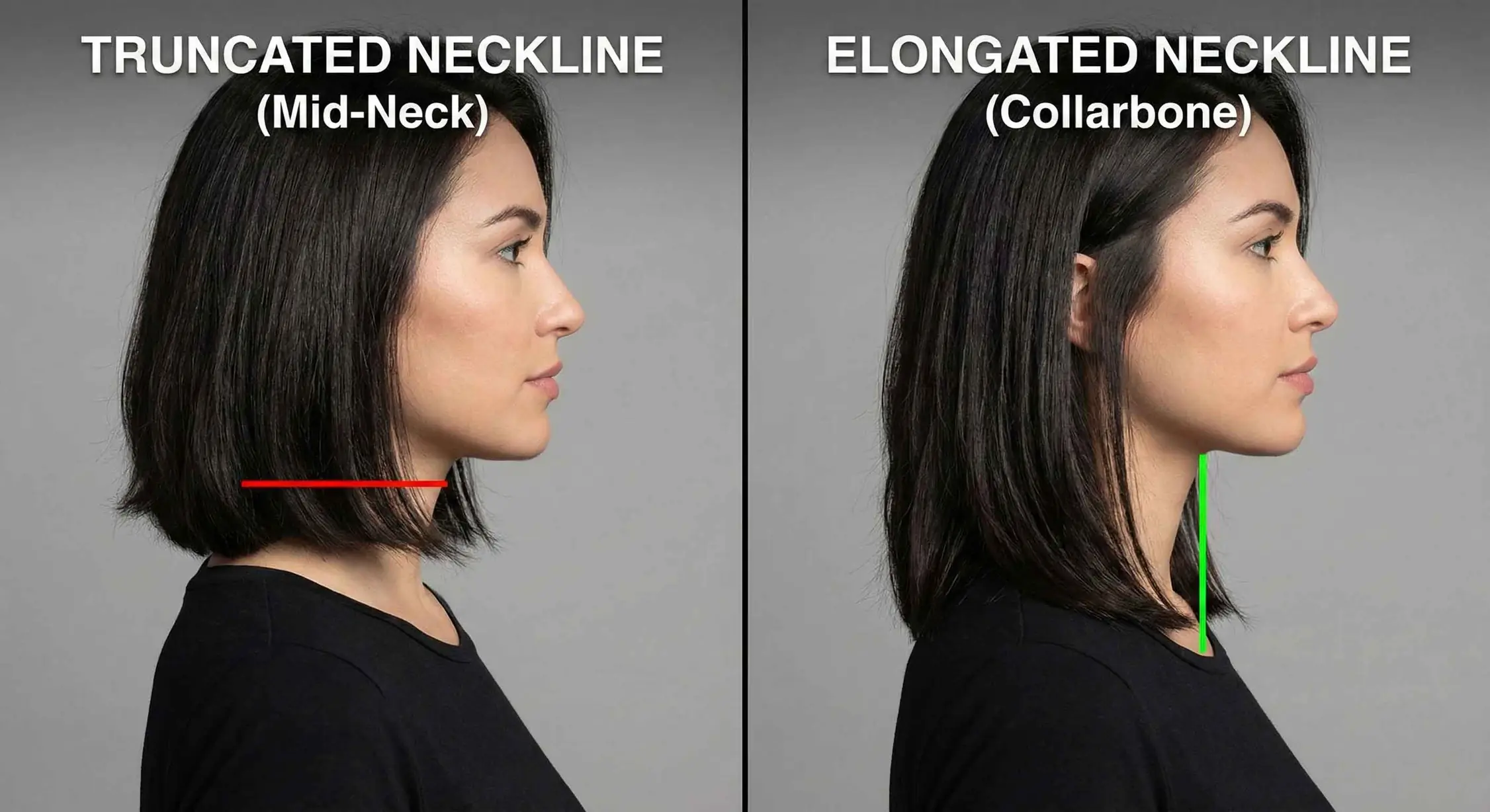
Medium-length hair visually interacts with the neck more than any other length. A perimeter that stops directly at the mid-neck will visually widen and truncate the neckline. A perimeter that drops to the collarbone will elongate the neck.
Before deciding on the exact stopping point of your medium cut, you must analyze how that horizontal line will bisect your anatomy. For a deeper understanding of this visual mechanic, review how hair length changes face proportions.
FAQ
Why does my medium-length hair always flip out at the ends?
Your hair is hitting your shoulders or collarbone. This physical barrier forces the hair outward. You can either cut the hair above the shoulders to clear the barrier, grow it past the shoulders so gravity pulls it down, or use styling tools daily to force the hair to bend inward against its natural resting position.
Can I have a blunt, medium-length haircut if my hair is thick?
It is highly discouraged. Thick hair cut bluntly at a medium length will expand horizontally, creating a bulky, triangular silhouette. You must incorporate internal weight removal to allow the hair to lay flat against the head and neck.
Is medium hair actually low-maintenance?
Rarely. Because it sits in the shoulder interference zone and lacks the gravity of long hair, it typically requires more directional blow-drying and weight management than very short or very long hair.
Conclusion
Designing a functional medium-length haircuts structure is not a default setting. It is a highly specific choice that requires careful calculation of weight, density, and physical anatomy.
If your medium-length haircut feels impossible to manage, it is likely because the internal structure is fighting your natural shoulder line and density. Balance at this length is not achieved through styling products; it is built through precise weight distribution.