


Thick hair is often described as a blessing. It looks full, it holds shape, and it photographs well.
That reputation hides a quieter truth: thickness amplifies mistakes.
A haircut that works on medium or fine hair can feel bulky, heavy, or unmanageable when density is high.
The issue is not style selection—it is structural control.
Thick hair responds strongly to lines, weight distribution, and internal balance.
This article is not a style catalog.
It explains how haircuts interact with thick hair, why some approaches succeed,
and where common pitfalls appear.
In This Guide
What “Thick Hair” Actually Means (And Why It Matters)
Thick hair is defined by density—the number of strands per square inch—not by strand diameter.
Many people confuse thick hair with coarse hair, but they are different variables.
Understanding this distinction matters just as much as correctly identifying your face shape, since both factors influence how a haircut ultimately behaves.
High density means weight accumulates quickly.
Volume appears without effort.
Shape errors become obvious faster.
Because of this, thick hair does not tolerate vague cutting logic.
Every layer, angle, and length decision affects how mass sits on the head.
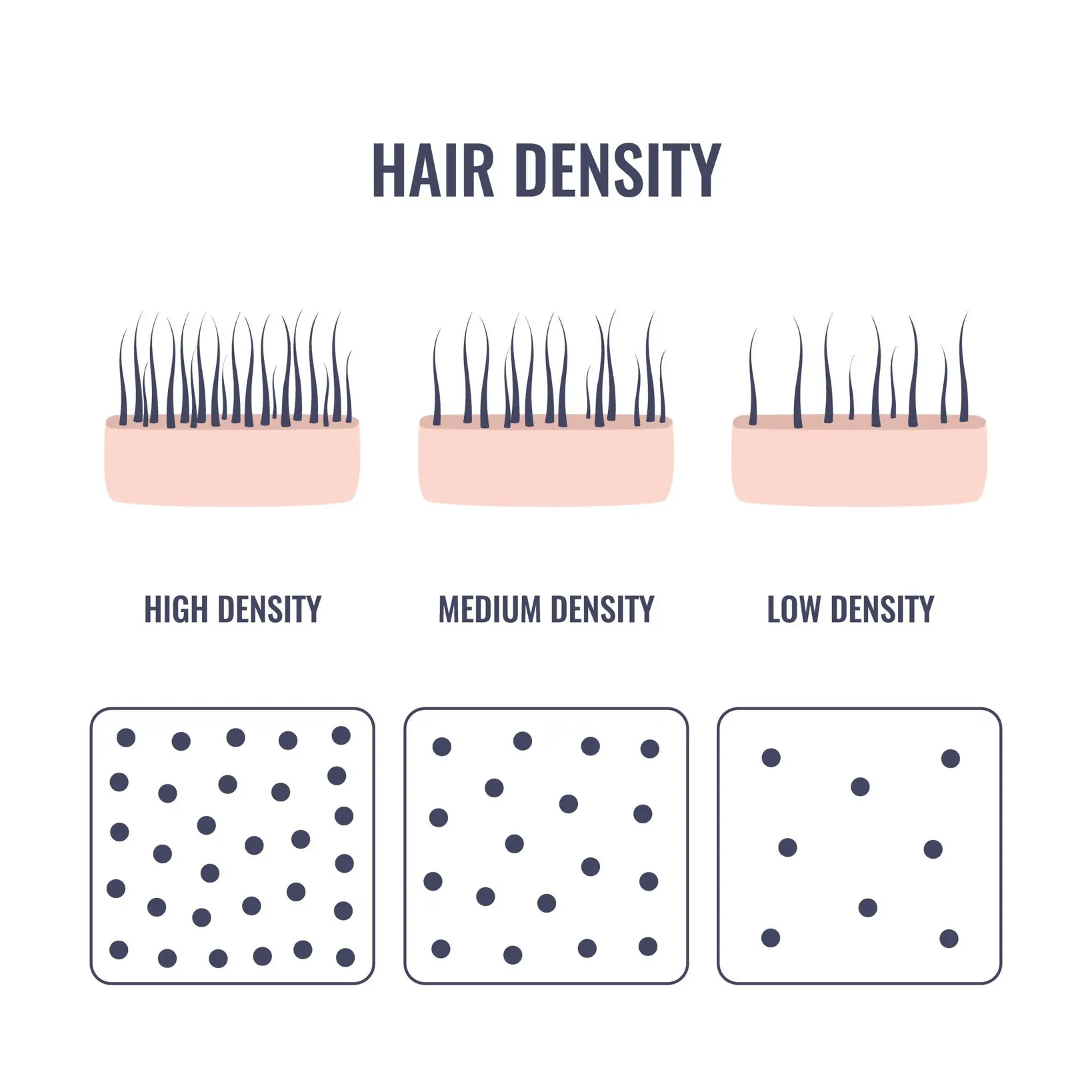
Why Structure Comes Before Style on Thick Hair
Haircuts that succeed on thick hair share one principle:
they manage mass before they decorate shape.
This usually involves controlling where weight is removed,
where it is intentionally left behind,
and how the hair moves when it settles naturally.
These decisions are closely related to the broader idea of how face shape affects haircut choices, but density determines whether those choices actually hold up in daily wear.
When structure is clear, thick hair becomes flexible instead of overwhelming.
When structure is vague, even a fashionable style can collapse into bulk.
Layering Thick Hair: Helpful Tool, Not a Default Solution
Layering is often prescribed as a universal fix for thick hair.
That advice is incomplete.
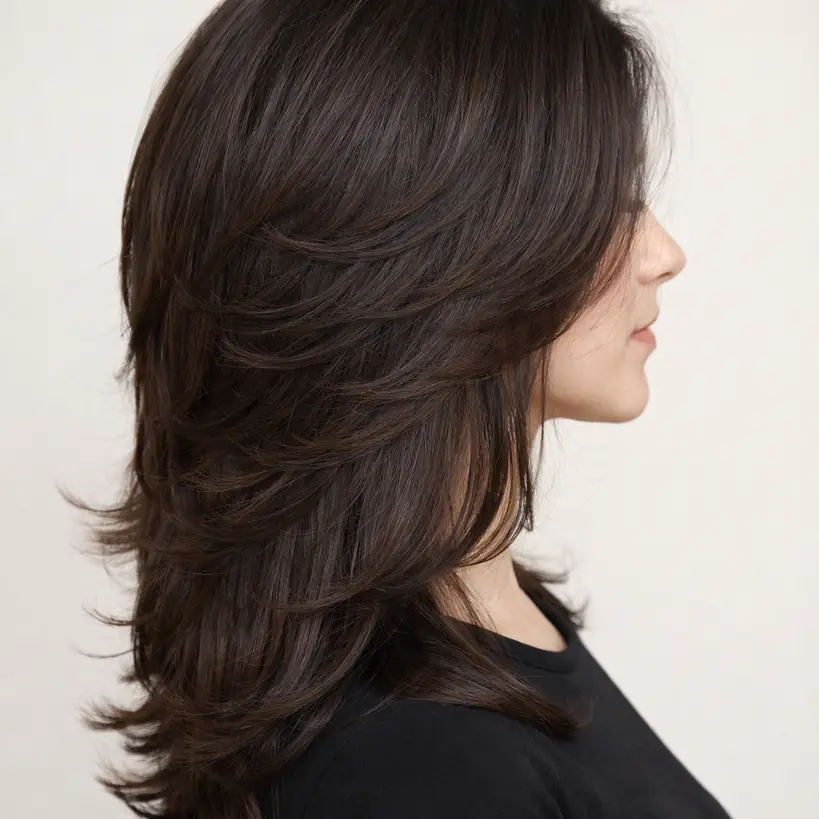
Layers can reduce visual heaviness and improve movement,
but only when their purpose is structural rather than decorative.
Poorly planned layers often create triangle shapes,
surface frizz, or unpredictable volume.
On thick hair, layers must follow the natural fall pattern
and respect where weight wants to live.
Perimeter Control: Why Blunt Edges Often Work Better
Blunt cuts are often avoided for thick hair out of fear they will look heavy.
In reality, a controlled perimeter can stabilize dense hair.
A clean edge anchors the haircut,
prevents puffing at the ends,
and allows internal shaping to do its job.
Removing too much weight at the perimeter often causes thick hair
to expand outward rather than settle inward.
Thinning Techniques: Where Most Mistakes Happen
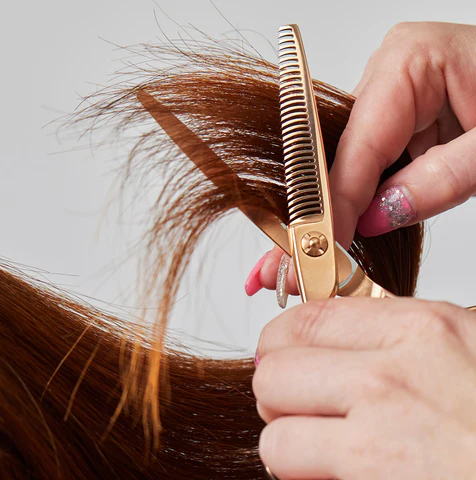
Thinning scissors and razors are powerful tools—and frequently misused on thick hair.
Over-thinning can create uneven density,
increase frizz,
and shorten the lifespan of a haircut.
Thick hair usually needs strategic internal debulking,
not aggressive surface thinning.
If a haircut looks lighter but behaves worse,
the thinning was incorrect.
Length and Proportion: Why Short Is Not Always Easier
Short haircuts are often recommended as a way to control thick hair.
That logic works only in specific cases.
Short lengths can expose bulk at the sides or crown
and often require more frequent maintenance.
Medium to longer lengths sometimes allow thick hair
to use its own weight to settle naturally.
The key variable is not length,
but where the bulk is positioned.
Styling Expectations Matter More Than the Cut Alone
Even the best haircut assumes realistic styling behavior.
Some cuts require blow-drying or heat tools to maintain balance.
Others are designed to fall into place with minimal effort.
Thick hair is cooperative,
but it responds best when expectations and structure align.
FAQ: Haircuts for Thick Hair
Is thick hair the same as coarse hair?
No. Thick hair refers to density,
while coarse hair refers to strand width.
They are independent variables and behave differently.
Should thick hair always be layered?
No. Some thick hair benefits more from controlled blunt structure
with minimal internal shaping.
Layering is a tool, not a rule.
Do thinning scissors damage thick hair?
They do not damage hair physically,
but incorrect use can damage shape and manageability.
The issue is design, not the tool itself.
Closing Perspective: Thick Hair Rewards Precision
Thick hair is not difficult—it is honest.
It shows exactly what a haircut is doing, without disguise.
When structure is clear, thick hair looks intentional and balanced.
When structure is vague, it becomes heavy and unruly.
Understanding this difference matters more than choosing any particular style.