

In This Guide
Understanding a Round Face Before Choosing a Haircut
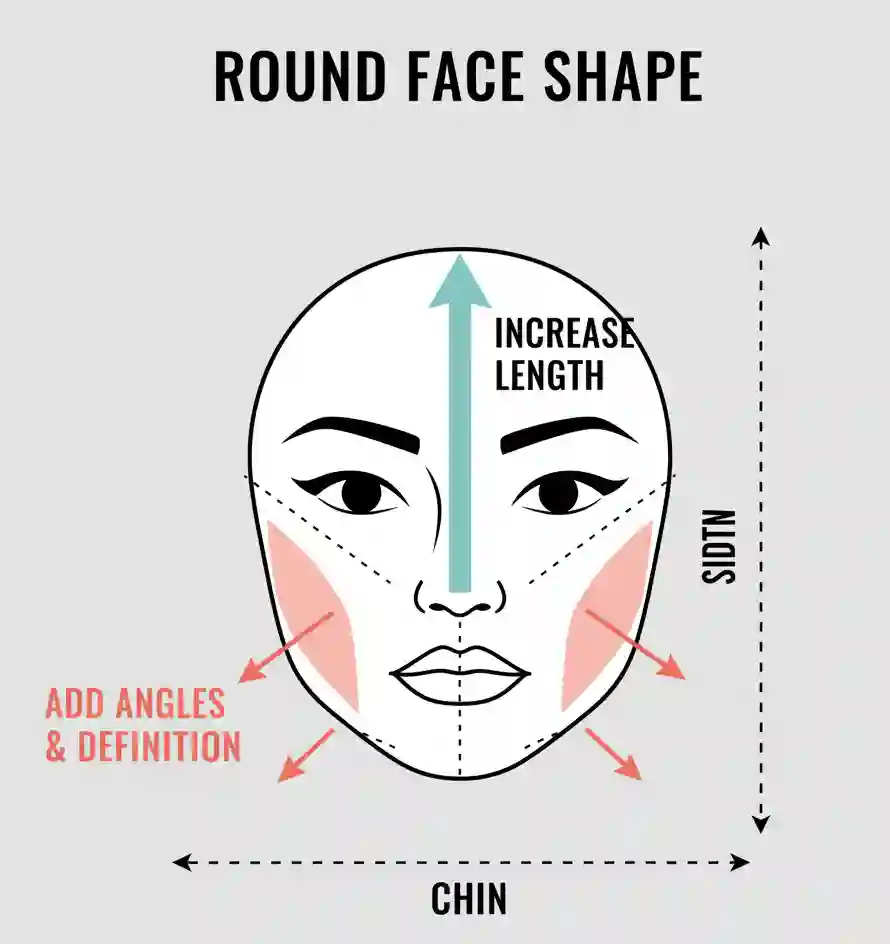
A round face is defined less by “fullness” and more by proportions.
Typically, the width and length of the face are close to equal, with softer curves and fewer sharp angles.
The cheeks are often the widest point, and the jawline transitions smoothly rather than sharply.
From a haircut perspective, this leads to one key observation:
small changes in volume placement matter more than the haircut name itself.
Many people search for a “round face haircut” expecting a list of styles.
That approach often fails in real life.
What actually determines whether a haircut works is
where visual weight is added or removed, not what the style is called.
Why Some Haircuts Make a Round Face Look Rounder
A round face does not need to be “fixed,” but certain haircut structures can unintentionally
concentrate volume at the widest areas.
This usually happens when:
- Volume sits directly at cheek level
- Lines are blunt and horizontal
- The haircut ends at the jaw or cheek without vertical continuation
These elements visually widen the face, even when the haircut itself is technically well executed.
This is why two people with the same haircut can look completely different:
the haircut is not necessarily wrong — the proportions are mismatched.
The Core Principle: Shift Emphasis, Not Face Shape
The most reliable way to choose a haircut for a round face is to think in terms of
visual emphasis.
Instead of asking “What haircut suits a round face?”, a more useful question is:
“Where does this haircut place height, width, and lines?”
For round faces, balance often improves when:
- Vertical lines are introduced
- Weight is lifted slightly above the cheeks
- The sides are controlled rather than expanded
This does not mean the face must look longer or thinner.
It means the visual flow is redistributed, so no single area dominates.
Length, Layers, and Parting: How Structure Does the Work
Haircut success for a round face often comes down to
structure choices, not style trends.
Length
Very short or very blunt lengths can expose width.
Medium to longer lengths tend to offer more flexibility because they allow vertical movement and weight control.
Layers
Layers are not automatically helpful or harmful.
What matters is where they start.
Layers that begin below the cheekbone usually preserve balance better than layers that add bulk at cheek level.
Parting
A strict center part emphasizes symmetry, which may highlight roundness.
Slightly offset partings introduce natural asymmetry that softens the overall impression without trying to hide the face.
These are principles, not rules.
The goal is control, not disguise.
Choosing a Haircut in Real Life (Not on a Chart)
Charts and face-shape diagrams are useful for learning, but real people bring additional variables:(If you are unsure about your face shape, start by identifying it accurately first.)
- Hair density
- Natural wave or curl
- Growth patterns
- Styling habits
A haircut that theoretically suits a round face can fail if it requires constant styling that the person will not maintain.
When choosing a haircut, it helps to evaluate:
- Where your hair naturally holds volume
- Whether your styling routine supports the haircut’s structure
- How the haircut behaves after several weeks of growth
This is where understanding principles beats memorizing styles.
Frequently Asked Questions
Does a round face always need longer hair?
No.
Length alone does not determine balance.
Short hair can work if it introduces vertical structure and avoids excess width at the cheeks.
Are bangs bad for round faces?
Not inherently.
Heavy, straight-across bangs add horizontal emphasis, while softer or angled bangs often redirect visual flow more effectively.
Can styling alone fix a poorly balanced haircut?
Styling can help, but it cannot fully compensate for structural issues.
If a haircut places weight in the wrong area, daily styling becomes a constant correction rather than support.
Final Thought: Haircuts Are About Distribution, Not Labels
The most useful insight for a round face is this:
a haircut does not suit a face shape — its structure does.
Once you understand how volume, length, and lines interact with your proportions,
choosing a haircut becomes more predictable and less frustrating.
This article serves as a foundation.
Specific haircut examples only make sense after these principles are clear.
This article was written and optimized with the assistance of AI, then reviewed and refined to maintain a clear, educational, non-commercial tone.