


In This Guide
The Concept of Subtractive Architecture: The Haircut
A haircut is the permanent alteration of the hair’s physical length and internal weight distribution. In structural terms, it is a form of subtractive architecture.
When cutting hair, a professional is not simply shortening it. They are controlling how hair responds to gravity. By removing mass at specific elevations and angles, the stylist determines where the hair will collapse (creating visible weight) or expand (creating volume).
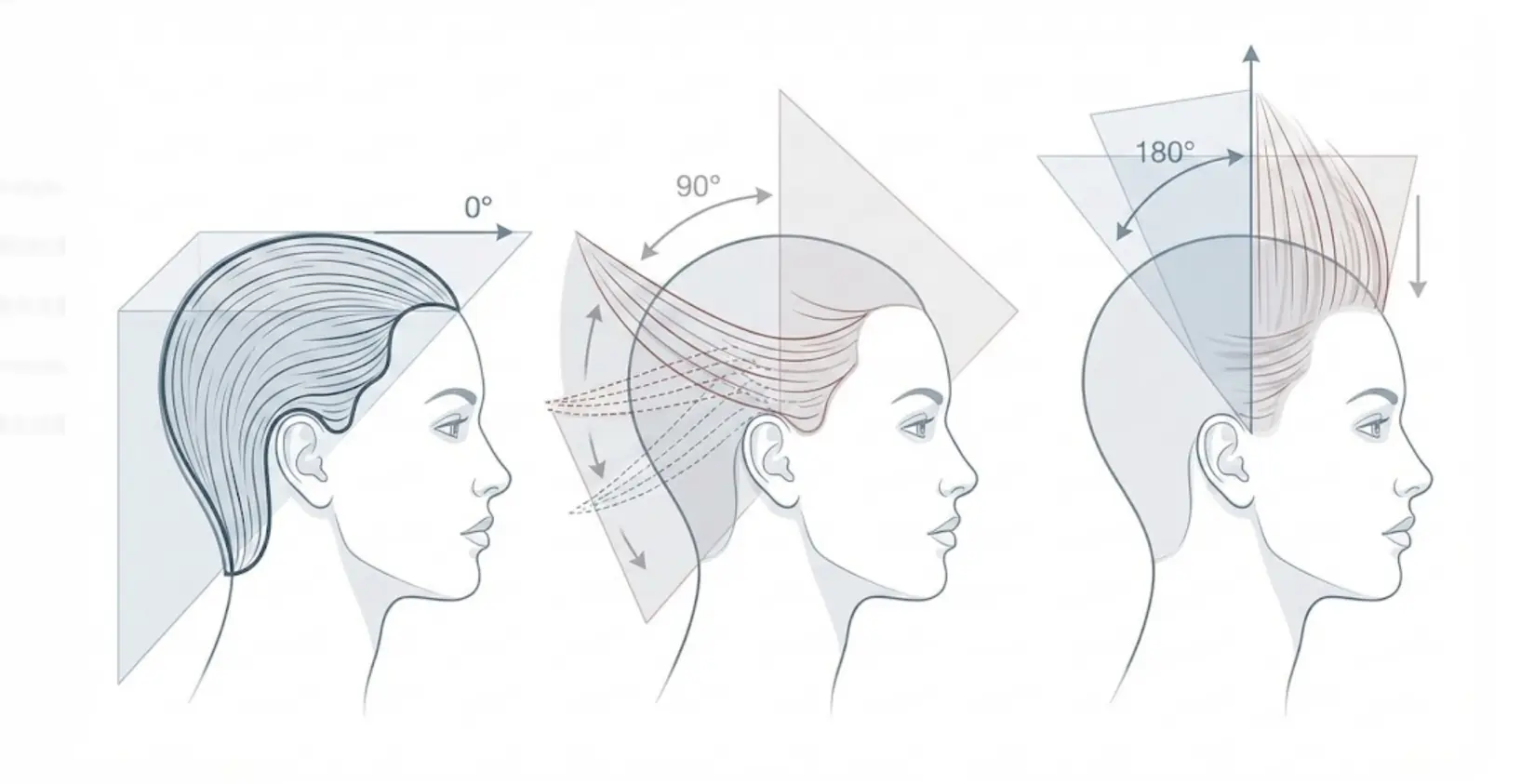
- Geometry and Physics: Every haircut follows geometric principles — circles create roundness, squares create weight, triangles create forward or backward movement. Once cut, this three-dimensional blueprint remains fixed until biological growth alters it.
- Structural Permanence: When the hair’s cortex is severed by shears or a razor, the change is irreversible. Even the choice of tool affects the outcome. Understanding how different tools influence the cuticle exit angle and edge finish helps predict how the perimeter will move and soften over time.
Technical Principle: A well-executed haircut should retain its shape even without styling products. If a cut collapses without product support, the issue is usually structural rather than cosmetic.
Explore the logic of sectioning and elevation in more depth.
The Concept of Transient Form: The Hairstyle
A hairstyle is the temporary reshaping of existing hair through thermal, mechanical, or moisture-based manipulation. If a haircut builds the structure, styling modifies its presentation.
Styling does not change the architectural blueprint. Instead, it temporarily rearranges the internal bonds that hold the hair fiber in place.
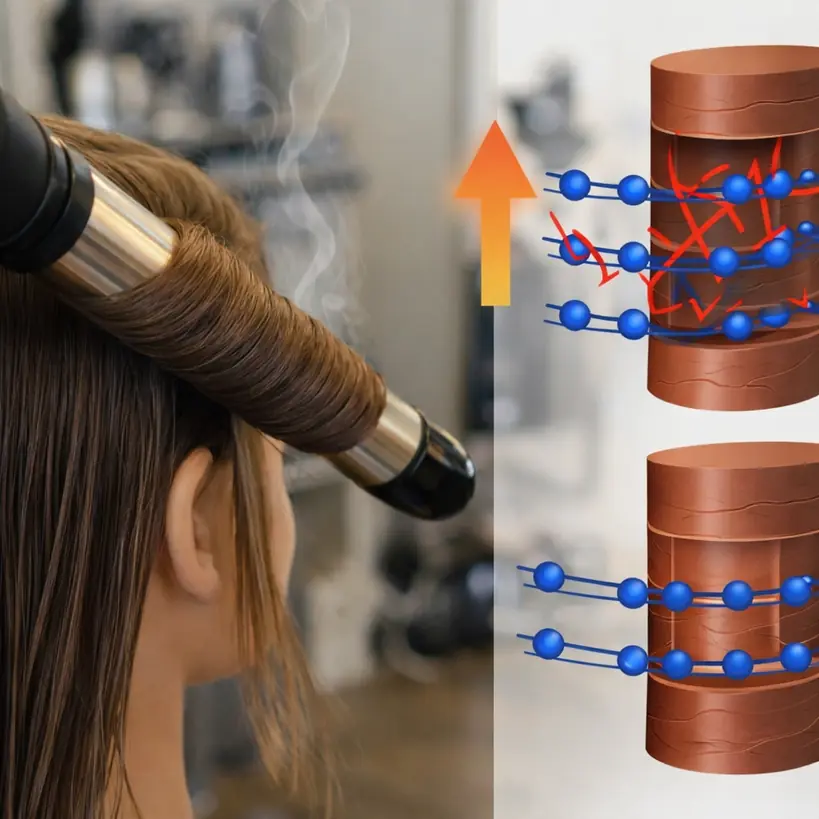
- Hydrogen Bond Manipulation: Hair contains hydrogen bonds that are easily broken by heat or moisture and reformed as hair cools or dries. This allows straight hair to become curly, or curly hair to be stretched smooth.
- Transience: These bonds are weak and reset when exposed to humidity or washing. This is why styles “fall out.” For a deeper technical explanation of how heat interacts with keratin proteins, see our guide on maintaining structural integrity during thermal styling.
The Interdependence of Structure and Styling
A hairstyle can only work within the limits of the haircut beneath it. For example, a bob is a structural blueprint. Adding beach waves to that bob is a temporary surface modification.
If the underlying weight distribution is uneven, styling must compensate with excess heat or product. This creates tension, frizz, or collapse later in the day. Professional mastery lies in designing a haircut that looks balanced with minimal styling effort.
Over time, hair grows. As follicles cycle through growth phases, the original geometry gradually shifts. This is why understanding growth cycles and maintenance timing is essential to preserving the intended silhouette.
In practical terms: structure determines effort. The better the cut, the less daily manipulation is required.
Frequently Asked Questions
Does a trim count as a haircut or a hairstyle?
A trim is a haircut. Even removing a small amount of length changes the structural perimeter and redistributes weight. It is a subtractive process.
Can a hairstyle change the appearance of a haircut?
Yes. Blow-drying directionally or adding curls can visually mask imbalances. However, this is temporary camouflage rather than structural correction.
Why does my style fall out after a few hours?
This usually happens when the hairstyle conflicts with the haircut’s natural weight distribution, or when hydrogen bonds were not properly set during the cooling phase. Humidity accelerates bond reset.