


In This Guide
How Hair Length Changes Facial Proportion (The Geometry Behind It)
Why does the same haircut length make one face look sharper, and another look heavier?
Hair length is not just a style preference. It is a structural variable. When length changes, the visual weight of the design shifts, and the focal points of the face move with it.
To apply length intentionally, you must first identify your face shape and understand the underlying proportions of the bone structure.
The Geometric Relationship
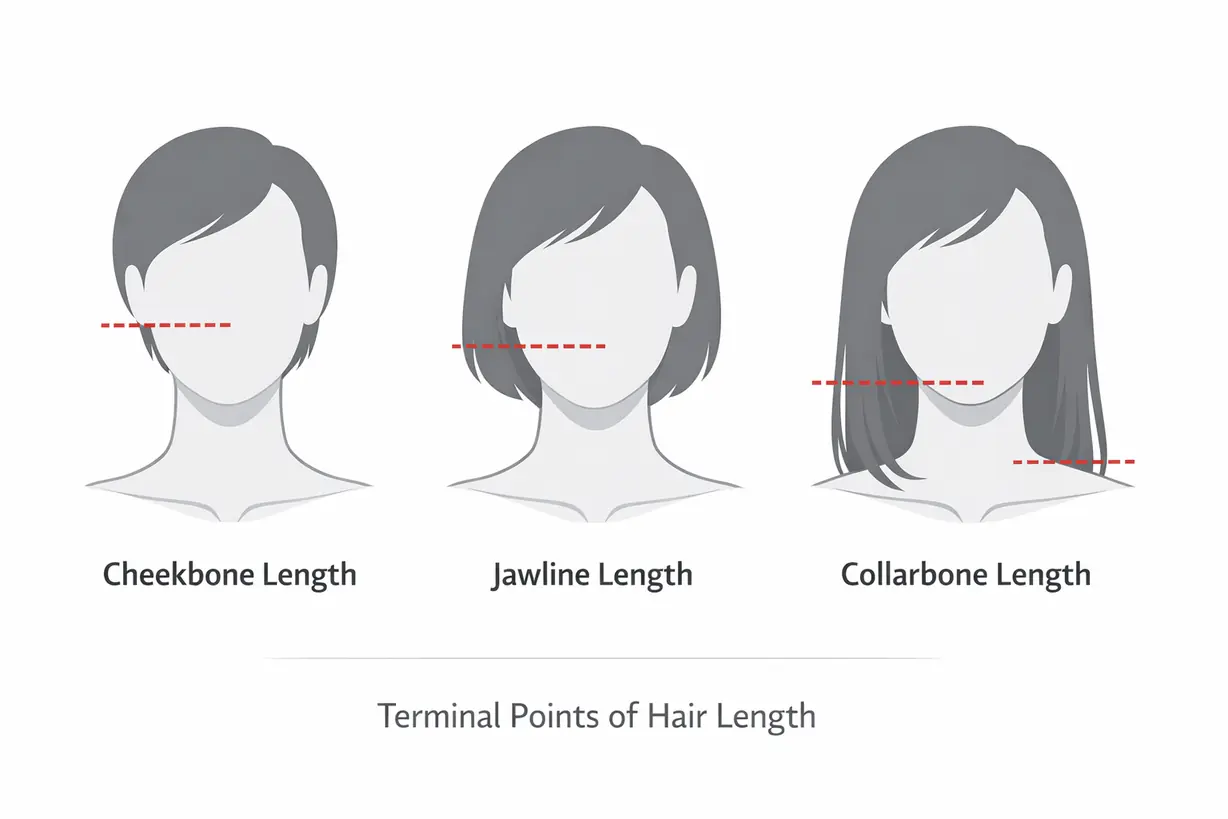
Hair design operates on applied geometry. The perimeter length establishes a visual boundary. That boundary determines where the viewer’s eye stops — this is known as the terminal point of the design line.
When the stopping point moves, the perceived proportion of the face changes. Length does not simply shorten or extend hair. It redistributes balance.
Vertical Axis and Visual Gravity
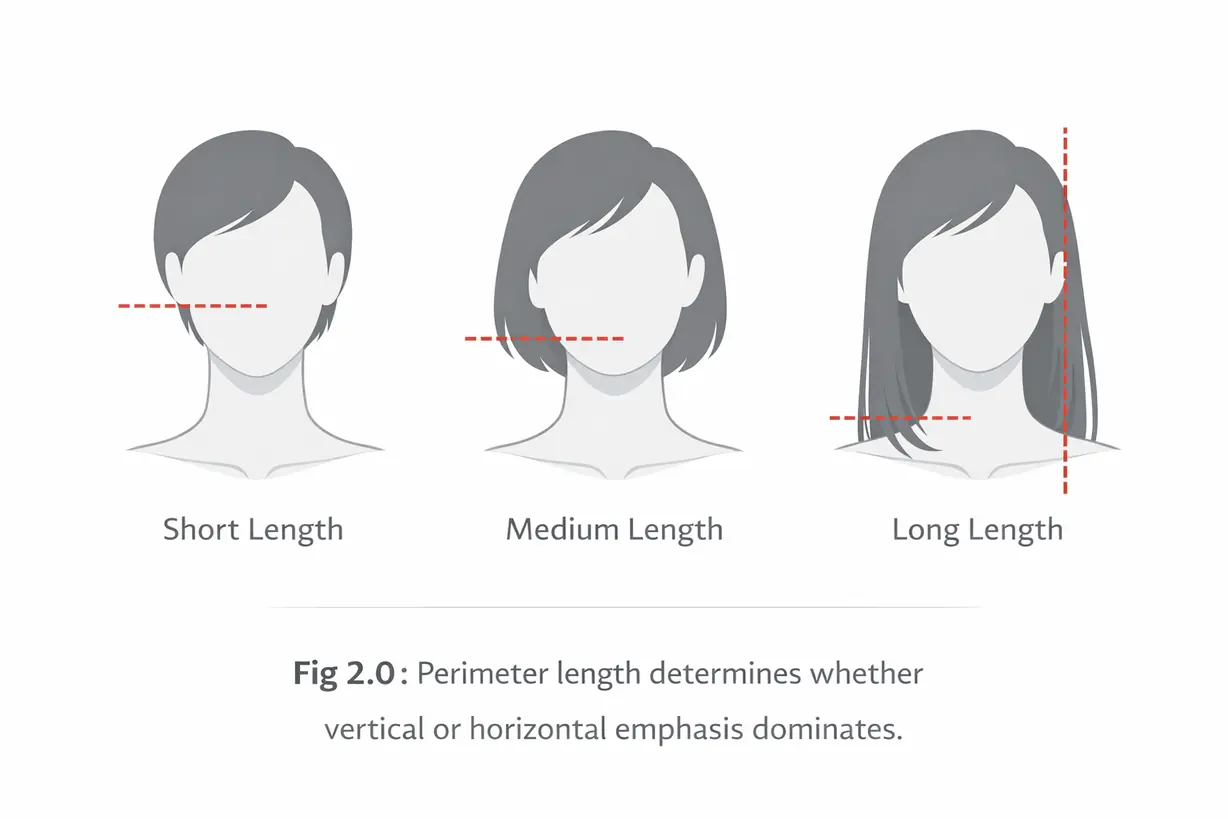
The human eye naturally follows continuous lines. Vertical lines elongate perception. Horizontal lines widen it.
Short Lengths (Above the Jawline)
Hair ending above the jaw exposes the neck and lifts visual weight upward. The eye is drawn toward the cheekbones and eyes. This strategy is often used in haircuts for long faces to reduce vertical elongation.
Medium Lengths (Shoulder Level)
Shoulder-length hair creates a horizontal resting line across the collarbone. This visual stop can widen narrow faces, but on already broad jawlines it may reinforce width. This length requires careful evaluation of proportion.
Long Lengths (Below the Shoulders)
Long hair forms uninterrupted vertical lines. The eye follows these lines downward, visually elongating the face. This effect is often recommended in haircuts for round faces to create a narrowing illusion.
Design Principle: Length should counterbalance dominant facial proportions, not repeat them. Repetition exaggerates. Counterbalance corrects.
The Principle of Volume Displacement
Length and weight are directly connected. In structural design, length equals weight. As hair grows longer, gravity pulls volume downward and reduces lift at the roots.
Short hair lifts weight upward. Long hair shifts weight downward.
A chin-length bob concentrates volume at the jawline. Longer hair moves that visual mass below the jaw and toward the ends. The perimeter determines where the heaviest concentration appears.
Length determines where the eye stops. Density and layering determine how heavy that stop feels. Before deciding on length, it is essential to identify your hair density and texture, because density changes how strong or soft the design line appears.
The Jawline as a Structural Pivot
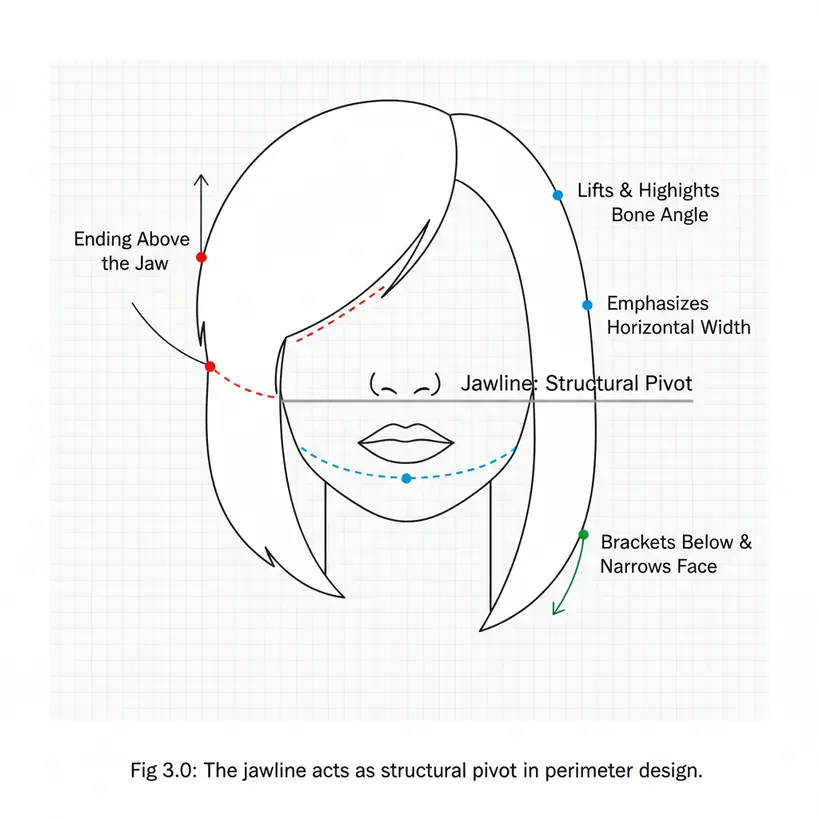
The jawline functions as the primary anchor point in most hair designs. Where the perimeter intersects the jaw determines how the lower face is perceived.
- Ending Above the Jaw: Highlights the bone’s angle and creates a lifting effect.
- Ending At the Jaw: Emphasizes horizontal width, especially on square or already broad lower faces.
- Ending Below the Jaw: Allows the hair to frame or “bracket” the face, softening width through downward flow.
For a broader structural overview, see How Face Shape Affects Haircut Choices. Length works best when it supports — rather than competes with — the natural architecture of the face.
FAQ
How does hair density affect length choice?
High-density hair at short lengths creates a strong, blunt horizontal line. Low-density hair at longer lengths may collapse and lose structural clarity. The same perimeter length reads differently depending on how much internal mass supports it.
Can layers override the effects of length?
Layers redistribute weight within a given length. While the external perimeter sets the visual stopping point, internal layering can move volume higher or lower. However, the outer length remains the dominant factor in facial elongation.
Why does long hair make some faces look tired?
Excessive length without structural shaping creates downward diagonal movement. This mimics gravitational pull on facial features and can highlight nasolabial folds or drooping eyelids.