


Common haircut mistakes are rarely caused by poor technique alone.
Most failures happen at the design level, where structure, hair behavior, and expectations do not align.
A haircut may look correct in theory, but if it ignores how hair actually behaves, the result becomes unstable, difficult to maintain, or visually unbalanced.
This article explains common haircut mistakes from a structural perspective, focusing on why they happen and how to avoid them.
In This Guide
Haircuts Fail When Structure Is Ignored
A haircut is not just a shape. It is a structure built on material.
That material—your hair type—has limitations:
- Density controls visual weight
- Texture controls direction and movement
- Growth pattern controls natural flow
Ignoring these factors leads to unstable results.
This is explained in more detail in
how hair type changes the way a haircut looks.
Mistake One: Designing for Appearance Instead of Behavior
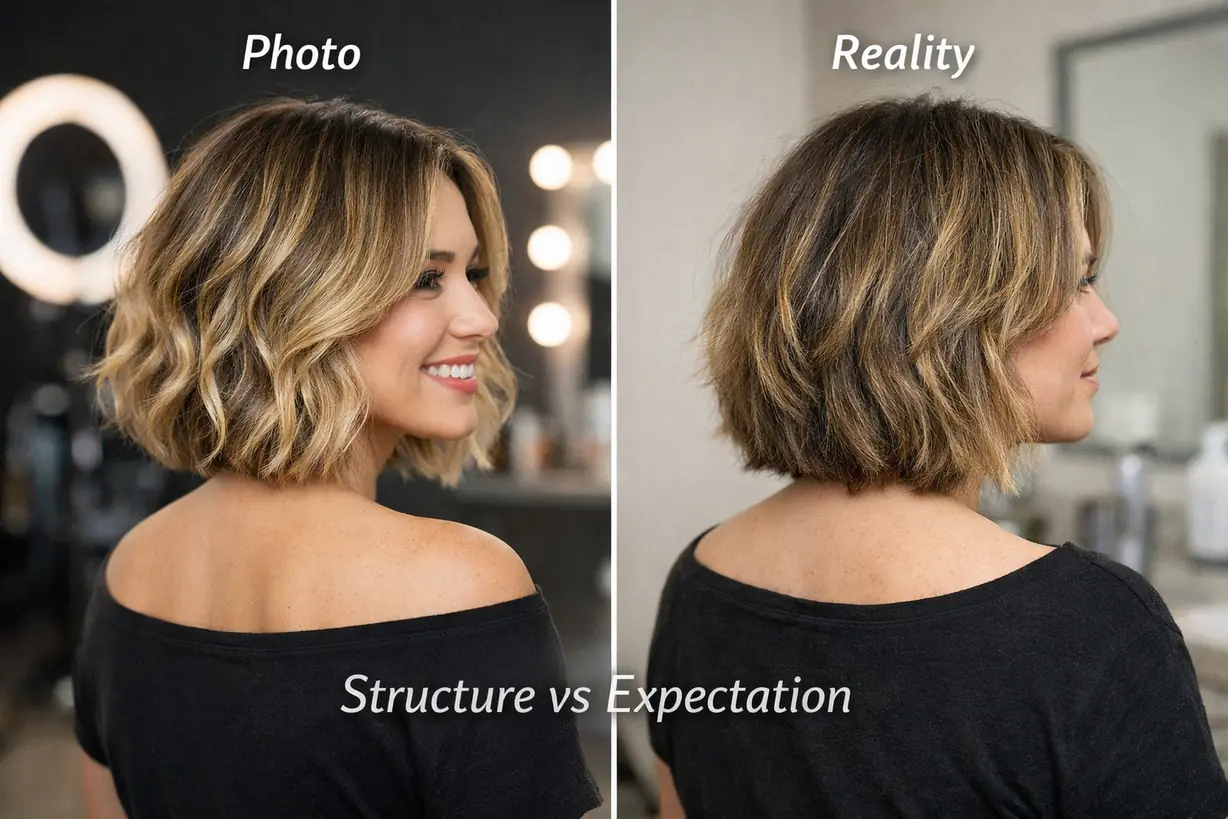
Many people choose a haircut based on how it looks in photos.
However, photos capture a moment, not a system.
A design that looks balanced in a controlled setting may collapse in daily conditions:
- Volume disappears without styling
- Shape expands unpredictably
- Lines lose definition over time
This mismatch is explained in
why some haircuts only look good in photos.
Mistake Two: Treating Face Shape as the Only Variable
Face shape defines visual goals, but it does not guarantee execution.
For example:
- A round face may need elongation
- A long face may need width
But whether these adjustments work depends on hair type.
This relationship is explained in
how face shape affects haircut choices.
Ignoring hair type creates a structural conflict between intention and reality.
Mistake Three: Using the Wrong Cutting Strategy for Hair Density
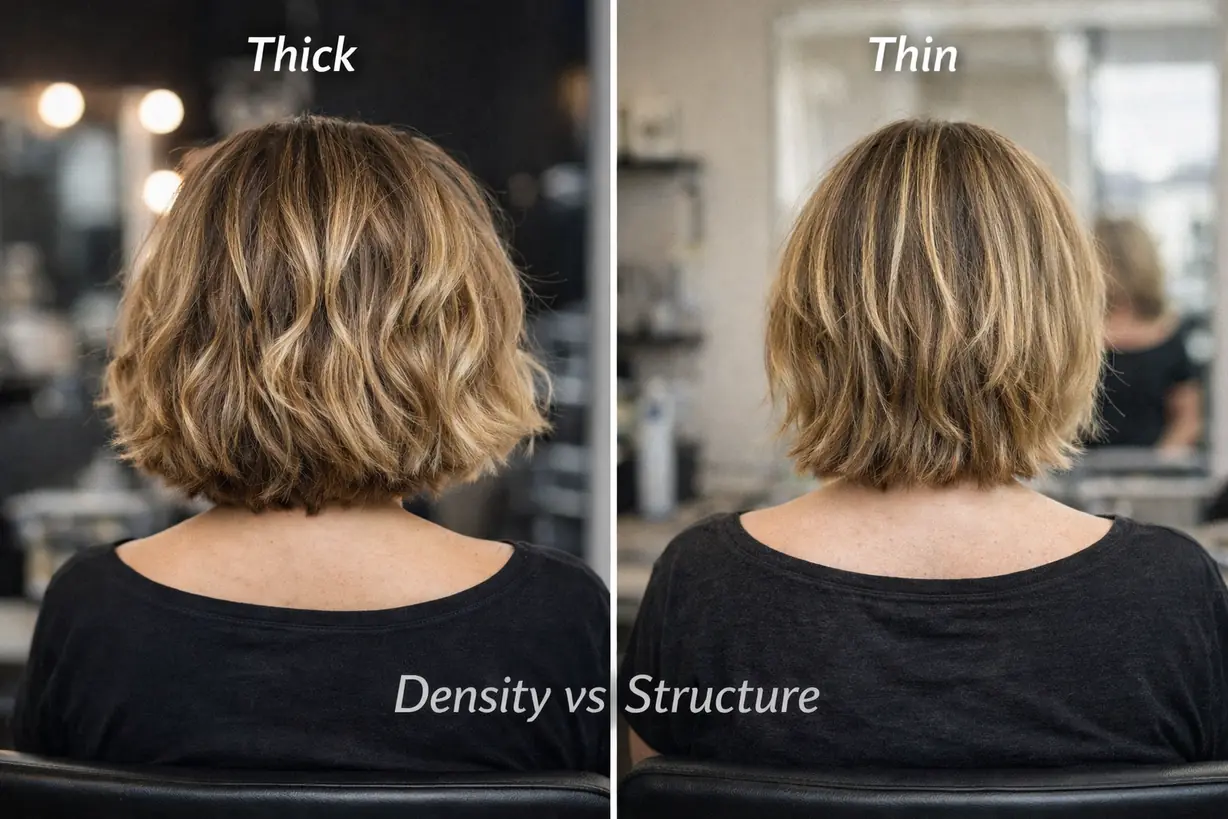
Density determines how much visual weight a haircut carries.
Common errors:
- Blunt cuts on thick hair → excessive bulk
- Over-layering thin hair → loss of structure
These are not styling issues, but structural mismatches.
For deeper analysis:
Mistake Four: Ignoring Maintenance Reality
A haircut is not finished when you leave the salon.
It must remain stable over time.
Common issues:
- Requires daily styling to look correct
- Loses shape quickly as it grows
- Becomes unbalanced within weeks
This is why structure matters more than styling.
See:
haircut longevity and structural stability.
Mistake Five: Confusing Haircut with Hairstyle
A haircut is permanent structure.
A hairstyle is temporary adjustment.
Many mistakes happen when people expect a haircut to behave like styling.
This difference is explained in
haircut vs hairstyle structural difference.
How to Avoid These Mistakes
Instead of focusing on trends or visuals, evaluate three core factors:
- Structure: Does the haircut support itself without styling?
- Compatibility: Does it match your hair type?
- Longevity: Will it still work after weeks of growth?
If one of these fails, the haircut becomes unstable.
FAQ: Common Haircut Mistakes
Why does my haircut look good at first but not later?
Because initial styling hides structural issues. Once removed, the haircut reveals its true behavior.
Can the same haircut work for everyone?
No. Hair type changes how a structure behaves, so results vary even with identical designs.
How do I know if a haircut is structurally correct?
If it holds shape with minimal styling and grows out evenly, the structure is working.
Closing Perspective: Haircuts Are Structural Systems
Common haircut mistakes are not random.
They come from ignoring how structure, material, and behavior interact.
A good haircut is not defined by trends or images, but by whether it remains stable in real conditions.
If you are unsure where to start, begin with:
how to identify your hair type
Then evaluate structure before choosing style.