


A structural explanation of how bob haircuts interact with different face shapes.
Bob haircuts are often treated as a universal solution in haircut design.
This assumption comes from their moderate length and perceived versatility.
However, in structural haircut logic, bob haircuts by face shape behave very differently depending on proportion, volume placement, and internal weight distribution.
A bob is not a single haircut.
It is a length range with multiple structural variations.
This article explains how bob haircuts interact with face shapes from a proportion and geometry perspective, rather than trends or style categories.
In This Guide
What Defines a Bob Structurally
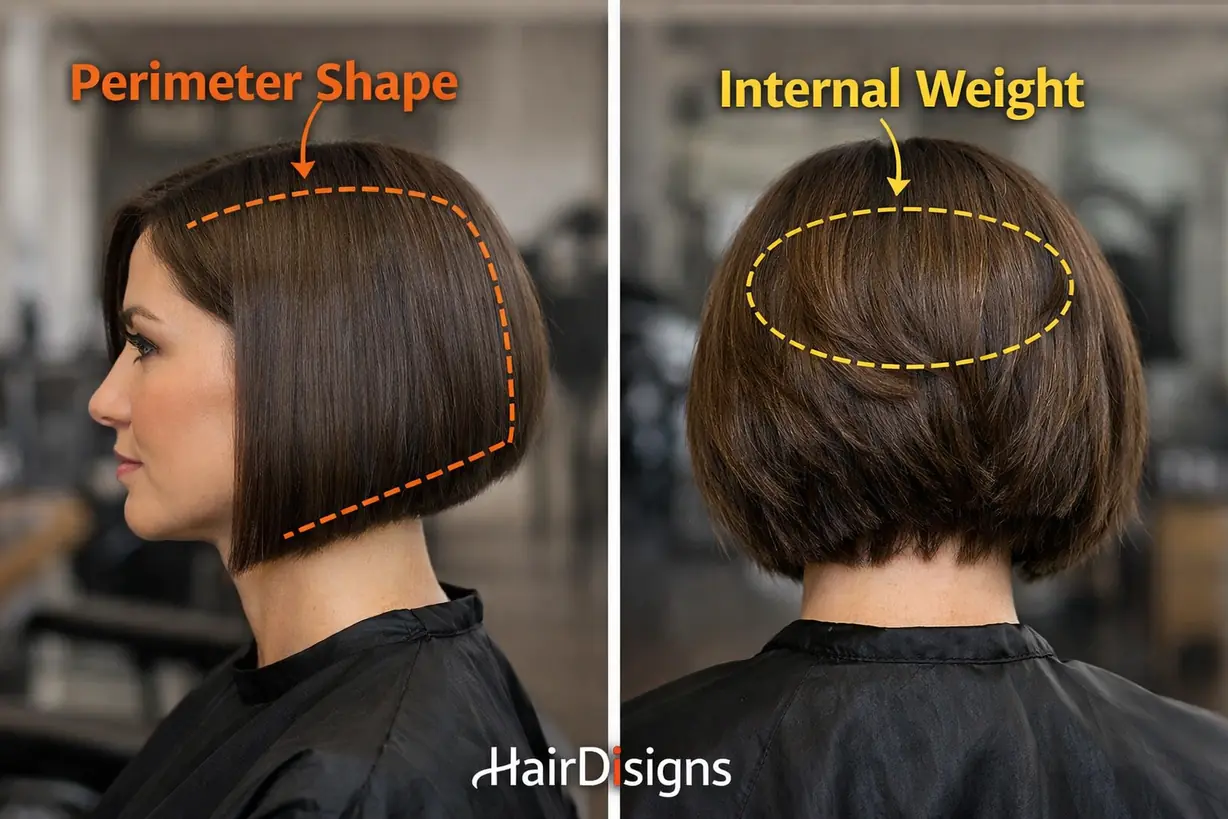
A bob haircut is defined by controlled length and perimeter structure.
Typically, the hair falls between the jawline and shoulders.
However, the defining factor is not length alone, but:
- Perimeter shape (blunt vs soft)
- Internal weight distribution
- Volume placement
These structural variables determine how the haircut interacts with facial proportions.
A deeper distinction between structure and appearance is explained in
haircut vs hairstyle: structure vs temporary form.
How Bob Length Affects Face Shape
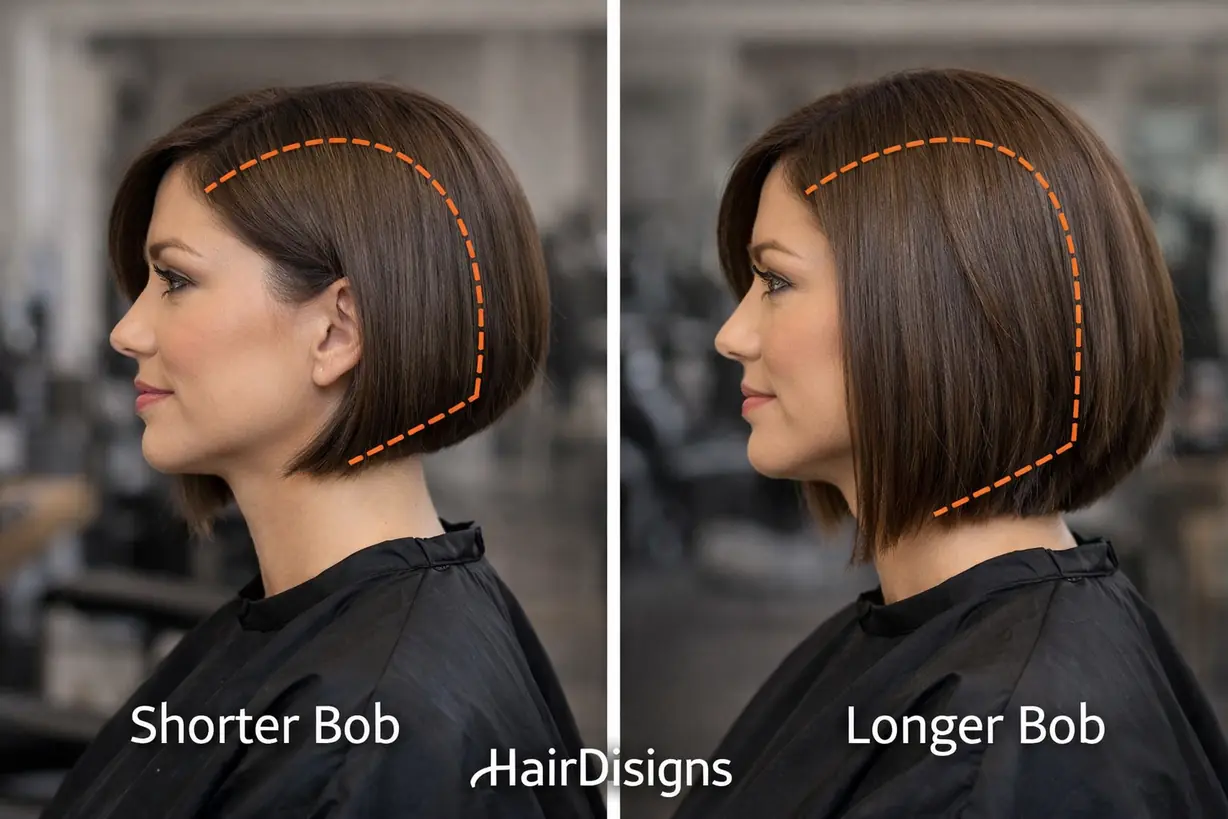
The length of a bob directly changes how the face is visually framed.
Hair acts as a boundary.
Where the haircut ends influences how the eye measures proportion.
- Shorter bobs expose more of the neck and jawline
- Longer bobs extend the vertical frame downward
Because of this, bob haircuts by face shape must be evaluated based on how length reinforces or interrupts facial proportions.
This relationship is explained further in
how hair length changes face proportions.
Round Face: Reducing Width Without Flattening Structure
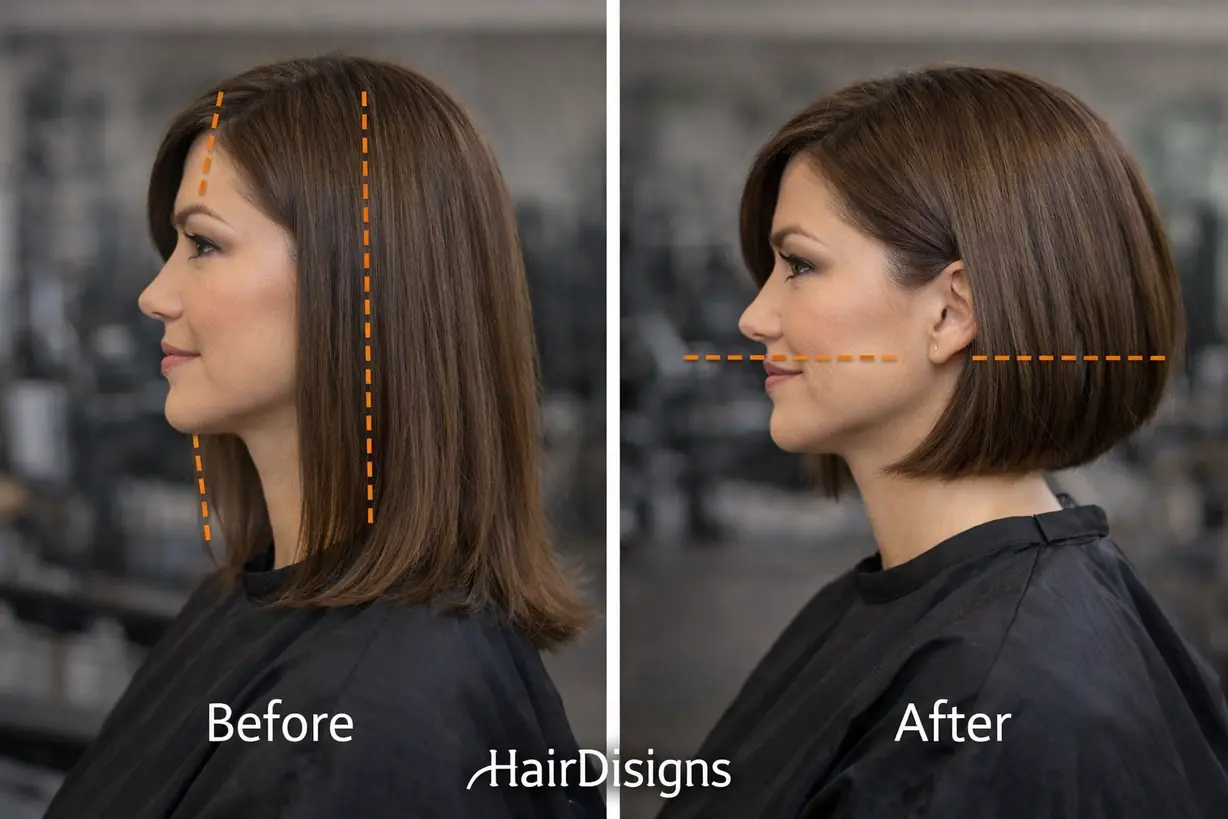
Round faces are defined by horizontal dominance and soft curvature.
The design challenge is not to add width, but to avoid exaggerating it.
Bob haircuts for round faces typically work when they:
- Introduce vertical direction
- Reduce excessive side volume
- Avoid heavy horizontal lines at cheek level
Flat designs, however, can remove necessary structure and make the face appear wider.
A more detailed breakdown appears in
haircuts for round face: structural logic.
Long Face: Interrupting Vertical Proportion
Long faces are characterized by vertical dominance.
In this case, the bob must reduce vertical emphasis rather than extend it.
Effective structures often:
- Add width near cheekbone level
- Introduce side movement
- Avoid excessive length below the shoulders
Without these adjustments, bob haircuts by face shape can unintentionally reinforce vertical length.
A deeper explanation can be found in
long face haircut structural mistakes.
Square Face: Softening Angular Structure
Square faces have strong jawlines and defined angles.
The objective is not to hide structure, but to soften its visual impact.
Bob haircuts tend to work when they:
- Reduce sharp perimeter lines
- Introduce texture instead of rigidity
- Avoid blunt cuts at jaw level
Blunt bobs often fail here because they align directly with the jaw structure.
This limitation is explained in
blunt haircut structural failure analysis.
Oval Face: Why Balance Is Easier but Still Conditional
Oval faces are often considered balanced.
However, this does not mean all bob structures will work equally.
The risk lies in:
- Over-elongating the face with long bobs
- Flattening structure with overly minimal layering
Because of this, bob haircuts by face shape still require structural adjustment even for oval proportions.
Further explanation:
oval face haircut logic.
The Role of Internal Weight in Bob Haircuts
Internal weight determines how the haircut behaves after cutting.
Two bobs of the same length can produce completely different results depending on weight distribution.
- Heavy internal weight creates compact shapes
- Removed weight allows expansion and movement
This is why bob haircuts by face shape cannot be defined by outline alone.
Internal structure must match both face shape and hair type.
For deeper understanding:
layered haircut structural logic.
Why Face Shape Alone Is Not Enough
Face shape provides a starting framework, but not a complete solution.
Hair density, texture, and daily styling habits influence how a bob performs over time.
Two identical face shapes can produce different outcomes with the same haircut.
Because of this, bob haircuts by face shape must be evaluated together with hair structure.
Related reading:
how face shape affects haircut choices.
Conclusion: Bob Haircuts Are Structural, Not Universal
Bob haircuts are not universally suitable or unsuitable.
Their effectiveness depends on how structure interacts with proportion.
- Length controls vertical framing
- Volume placement adjusts perceived width
- Internal weight defines movement and shape
Understanding these variables allows bob haircuts by face shape to be designed with precision rather than assumption.
FAQ
Are bob haircuts suitable for every face shape?
They can be, but only when structural adjustments are made.
Length, volume, and weight distribution must align with facial proportions.
Do shorter bobs always make the face look wider?
Not necessarily.
It depends on how volume is distributed.
Side-heavy volume increases width, while vertical structure can reduce it.
Is layering necessary in bob haircuts?
Not always.
However, layering often helps adjust internal weight and improve balance depending on hair density and face shape.
This article was written and optimized with the assistance of AI, then reviewed and refined to maintain a clear, educational, non-commercial tone.