
In This Guide
The Mechanics of Solid Weight: Blunt Bangs
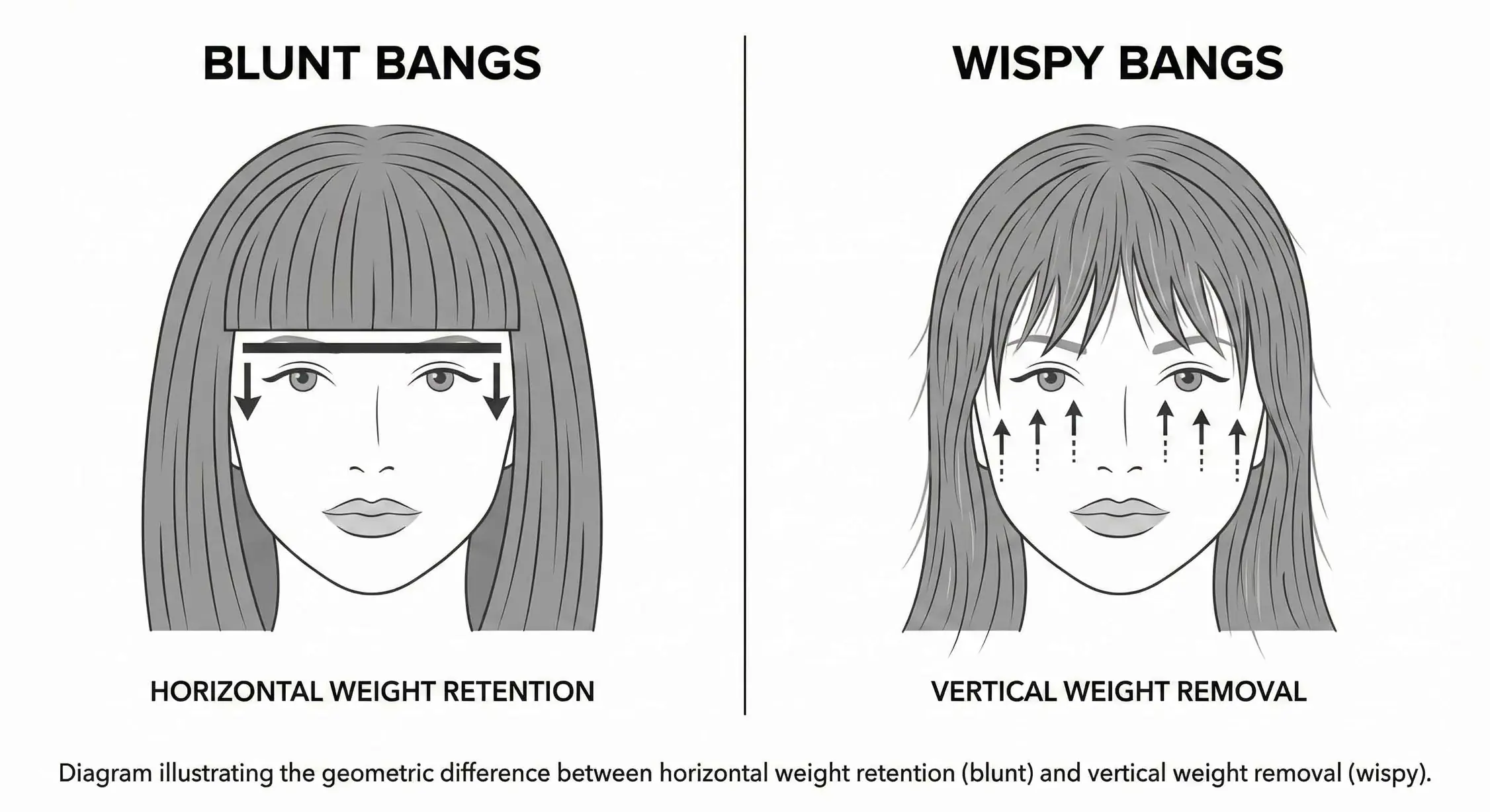
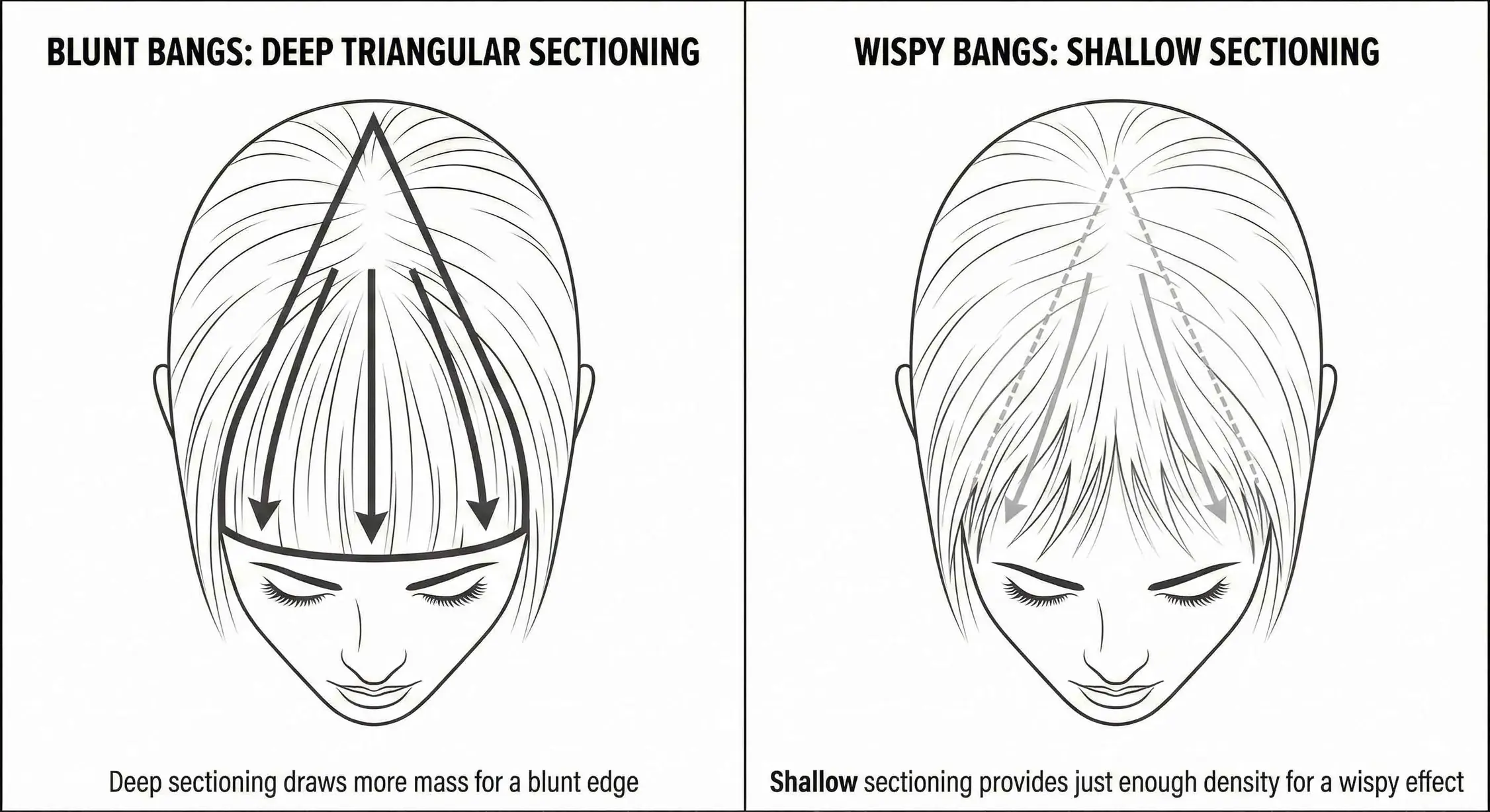
A blunt bang is created by pulling a triangular section of hair forward and cutting it at a zero-degree elevation. This means the hair is cut straight down without lifting, ensuring every strand falls to the exact same perimeter line.
This technique retains 100% of the hair’s mass at the ends, creating a heavy, solid structure. Because it requires a significant amount of hair to look opaque, it draws heavily from the density of the top and front sections of the head. If the hair is highly dense and naturally straight, this geometric line holds its shape effortlessly. For a deeper understanding of handling dense structures, review haircuts for thick hair structure.
If blunt bangs are cut on low-density hair, the section will lack the mass required to look solid, resulting in an unintentional stringy appearance where the forehead is visible through the gaps.
The Mechanics of Weight Removal: Wispy Bangs
Wispy bangs are engineered through intentional fragmentation. Instead of a solid horizontal line, the stylist uses point-cutting (cutting vertically into the ends of the hair) or texturizing shears to remove bulk.
This technique creates varied lengths at the perimeter, allowing air and light to pass through the fringe. Because wispy bangs require less mass to function, they take a smaller, shallower triangular section from the front hairline. This structure relies on separation to look intentional. If you have low density, this technique mimics the hair’s natural tendency to separate, making it a highly compatible choice. To see how low-density structures benefit from specific techniques, read how structure creates volume for thin hair.
Hair Density and Texture Compatibility
The success of either structure is dictated by how individual hair strands interact with each other.
Straight hair strands lay flat against one another, making straight textures ideal for the sharp geometry of blunt bangs. However, if hair has a strong wave pattern, a blunt horizontal cut will become distorted as the wave expands laterally. Wispy bangs absorb natural movement better because the textured ends allow individual strands to bend without disrupting a harsh geometric line.
To understand how your natural wave pattern dictates the cut’s final silhouette, explore how hair structure changes the right cut for straight vs wavy hair.
Structural Degradation and Maintenance
Both structures require maintenance, but they degrade differently over time.
Because blunt bangs rely on precise geometry, a millimeter of growth alters the visual balance. As they grow, the heavy weight line quickly presses into the eyes and loses its sharp aesthetic, requiring frequent trims (often every few weeks) to maintain the intended structure.
Wispy bangs degrade more gracefully. Because the perimeter is already uneven and textured, hair growth blends more naturally into the surrounding layers. However, they are highly susceptible to forehead oils. Because the sections are thin, they absorb moisture and oil quickly, which causes the wispy pieces to clump together and lose their airy separation.
It is vital to distinguish between the cut itself and how you intend to wear it daily. See the real difference between a haircut and a hairstyle.
Frequently Asked Questions
Why do my blunt bangs curve under instead of laying flat?
Answer: This is a result of thermal styling or a strong natural growth pattern pushing the hair outward before it falls. If the stylist cut the underlying layers slightly shorter than the top layers (a technique called undercutting), it forces the heavier top hair to bevel inward naturally.
Can coarse hair support wispy bangs?
Answer: Coarse hair strands have a wider diameter and strong structural memory, meaning they resist bending and separation. While a stylist can aggressively texturize coarse hair to create a wispy effect, the hair may appear frizzy or rigid rather than soft and airy.
Final Structural Assessment
Choosing between blunt and wispy bangs requires evaluating your base hair metrics rather than visual preference alone.
Assess the following structural realities before cutting:
- Density: Do you have enough mass at the front hairline to support a solid block of hair, or is a lighter, textured approach more realistic?
- Texture: Will your natural strand shape support a straight geometric line, or will it naturally separate and bend?
- Maintenance capacity: Are you prepared for strict trimming schedules (blunt) or managing daily oil absorption (wispy)?
Before deciding on a fringe geometry, take time to accurately identify your hair type at home to ensure the structural math aligns with the haircut.