


Do trends matter when choosing a haircut is a common question, but it is often misunderstood.
Trends influence what people want, but they do not determine what works.
A haircut is not defined by popularity. It is defined by structure, material, and behavior.
This article explains do trends matter when choosing a haircut from a structural perspective, focusing on when trends are useful and when they create problems.
In This Guide
Trends Reflect Preference, Not Function
Haircut trends are visual patterns that become popular over time.
They are based on:
- Aesthetic preference
- Cultural influence
- Media exposure
However, trends do not account for individual variables like hair type or growth pattern.
This is why a trending haircut may look consistent in photos but behave differently in reality.
This gap is explained in haircut photos vs reality.
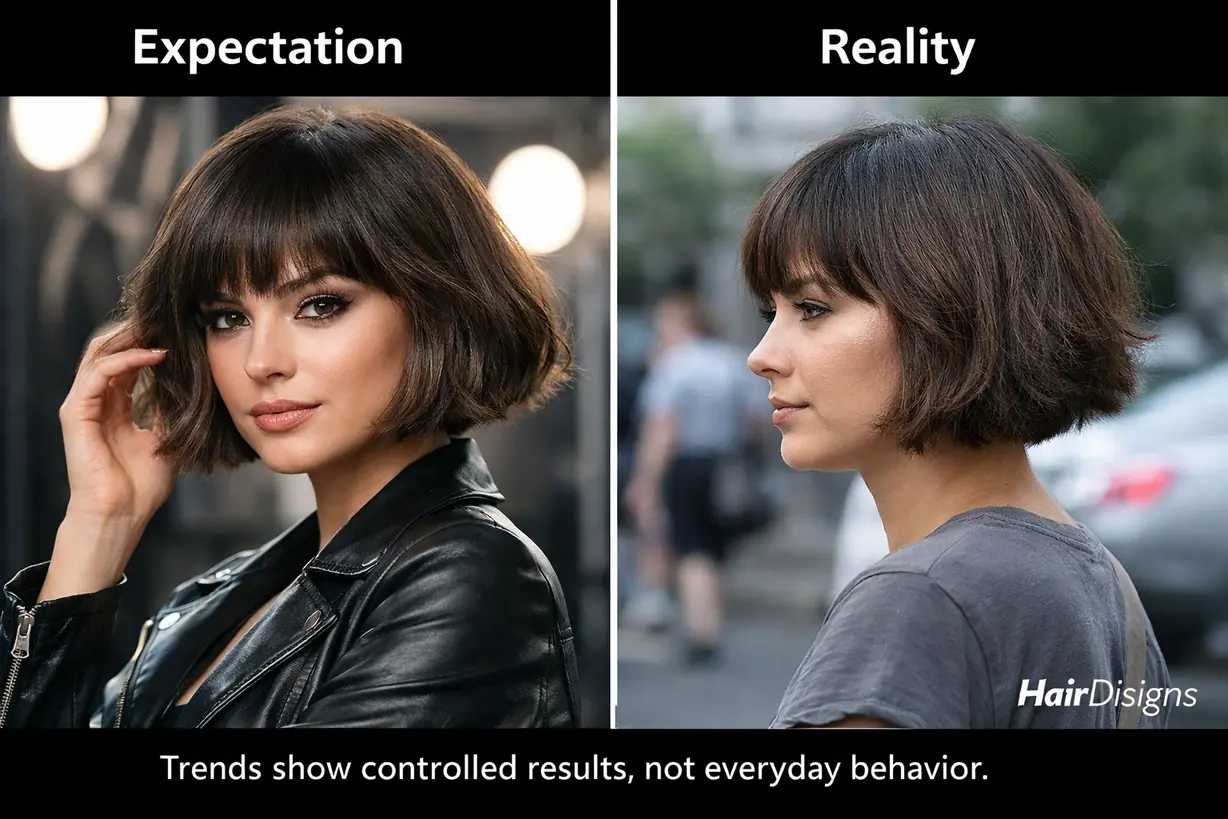
A Haircut Is a Structural System, Not a Trend
A haircut must function as a system.
It depends on:
- Hair density (weight distribution)
- Hair texture (movement and direction)
- Growth pattern (natural flow)
If a trend ignores these variables, the result becomes unstable.
This relationship is explained in how hair type changes the way a haircut looks.
Trends can suggest shape, but structure determines whether that shape is sustainable.
Why Trends Often Fail in Real Conditions
Trendy haircuts are often designed for controlled environments.
In daily life:
- Styling is inconsistent
- Humidity and movement affect shape
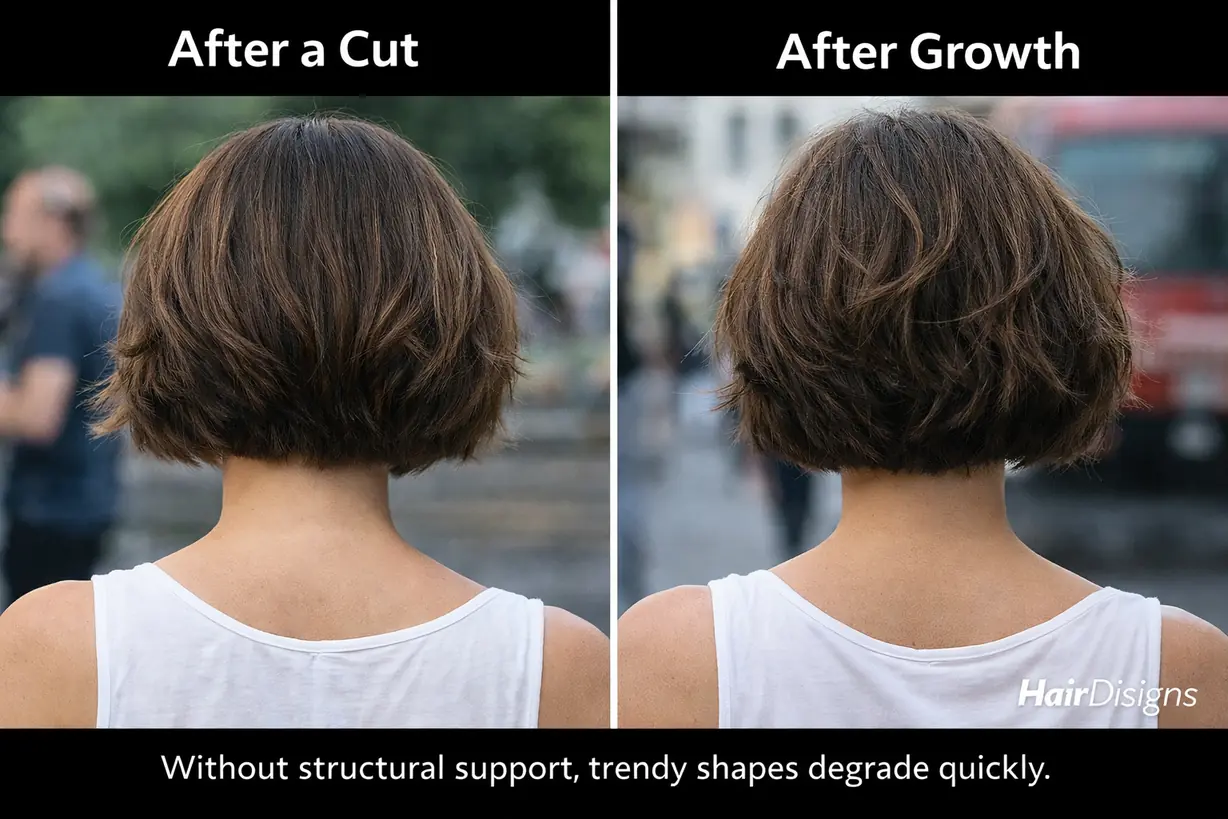
- Hair grows and loses balance
As a result:
- Volume collapses
- Lines blur
- Proportions shift
This is why structural stability matters more than trend alignment.
For long-term behavior, see: haircut longevity and structural logic.
Trends Can Be Useful—If Interpreted Correctly
Trends are not useless.
They can serve as:
- Visual inspiration
- Direction for proportion
- Reference for overall shape
But they must be adapted to individual conditions.
For example:
- A layered trend must adjust to density
- A blunt trend must consider thickness
See structural differences here:
Trends should be translated, not copied.
Face Shape and Trends: A Secondary Relationship
Many trends are promoted based on face shape.
However, face shape defines visual goals, not execution.
This is explained in how face shape affects haircut choices.
A trending haircut may suit a face shape visually, but still fail structurally if hair type does not support it.
For combined logic: how hair type and face shape work together.
When Trends Should Be Ignored
Trends should not guide decisions when:
- The haircut requires heavy daily styling
- The structure does not match your hair type
- The result collapses without maintenance
In these cases, the trend creates a dependency rather than a solution.
A more stable approach is explained in easy to maintain haircuts.
How to Evaluate a Trend Before Choosing It
Instead of asking “Is this trendy?”, ask:
- Does it match my hair type?
- Does it hold shape without styling?
- Will it grow out evenly?
If the answer is no, the trend is not suitable.
A practical starting point: identify your hair type.
FAQ: Do Trends Matter When Choosing a Haircut
Are trendy haircuts always a bad choice?
No. They become a problem only when copied without adapting to hair type and structure.
Why does a trendy haircut not look the same on me?
Because trends do not account for individual variables like density, texture, and growth pattern.
Should I ignore trends completely?
No. Trends can provide direction, but structure should guide the final decision.
Closing Perspective: Trends Influence, Structure Decides
Do trends matter when choosing a haircut depends on how they are used.
Trends are visual ideas.
Haircuts are structural systems.
When trends are applied without structural understanding, results become unstable.
When trends are adapted to hair behavior, they become useful.
If you are unsure how to interpret trends, start with: how to choose a haircut that fits your lifestyle.
Then evaluate structure before following trends.