


How to recover from a bad haircut is often misunderstood as finding a quick fix.
In reality, recovery is not about immediate correction, but about restoring structural balance over time.
A haircut fails when the internal structure—weight distribution, shape, and growth behavior—becomes unstable.
Understanding how to recover from a bad haircut requires recognizing what went wrong structurally, and what can realistically be adjusted now versus later.
This article explains recovery as a process, not a reaction—focusing on control, not panic.
In This Guide
A Bad Haircut Is a Structural Imbalance, Not Just a Visual Problem
A haircut looks wrong because it behaves wrong.
Common signs of structural imbalance include:
- Volume sitting in the wrong area
- Uneven weight distribution
- Shape collapsing or expanding unpredictably
These are not surface issues. They are structural.
Trying to “fix” them with styling often makes the imbalance more visible.
To understand this difference:
haircut vs hairstyle structural difference.
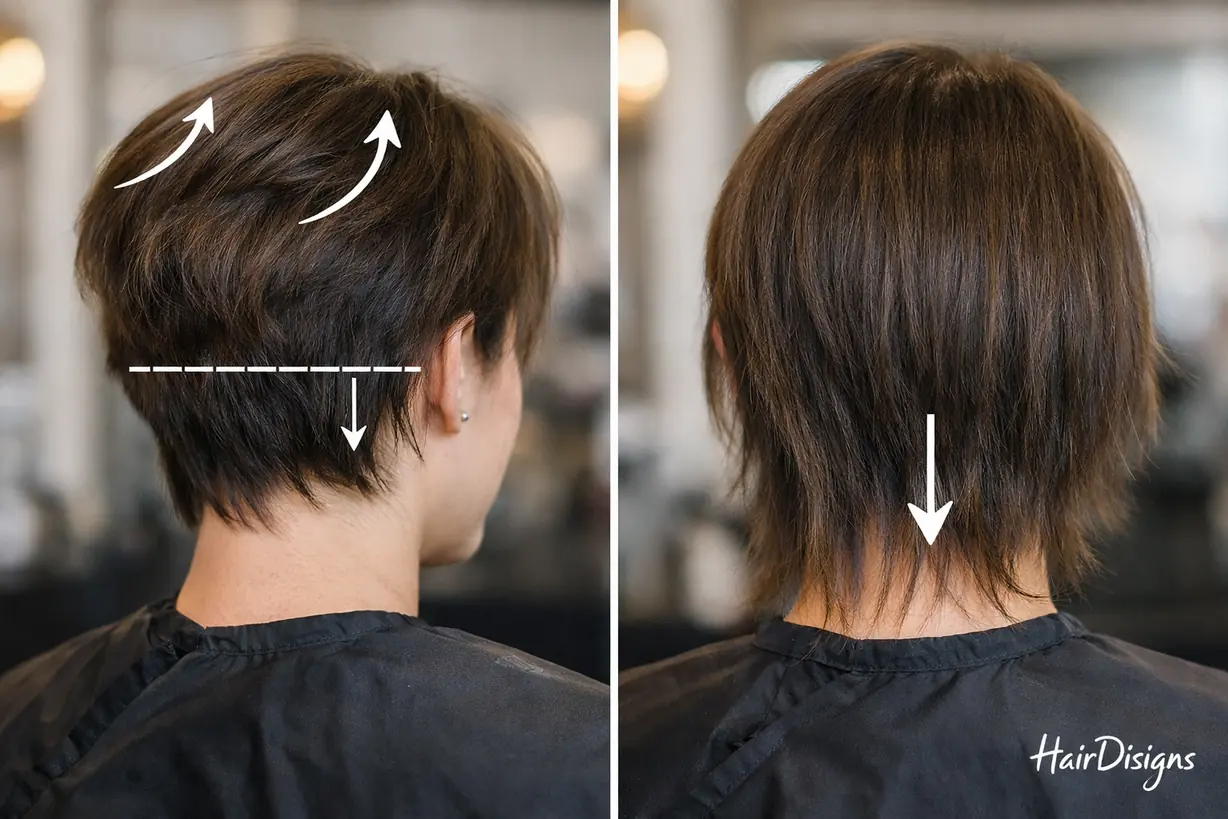
Immediate Correction Has Limits
Not all mistakes can be corrected instantly.
Hair length is a fixed constraint. Removing more hair may reduce imbalance, but it also reduces future options.
There are only three immediate actions available:
- Reduce excessive weight
- Rebalance obvious asymmetry
- Simplify the shape to something stable
Beyond this, recovery depends on growth.
This is why overcorrecting often creates a second problem instead of solving the first.
For common causes of failure:
common haircut mistakes people don’t realize.
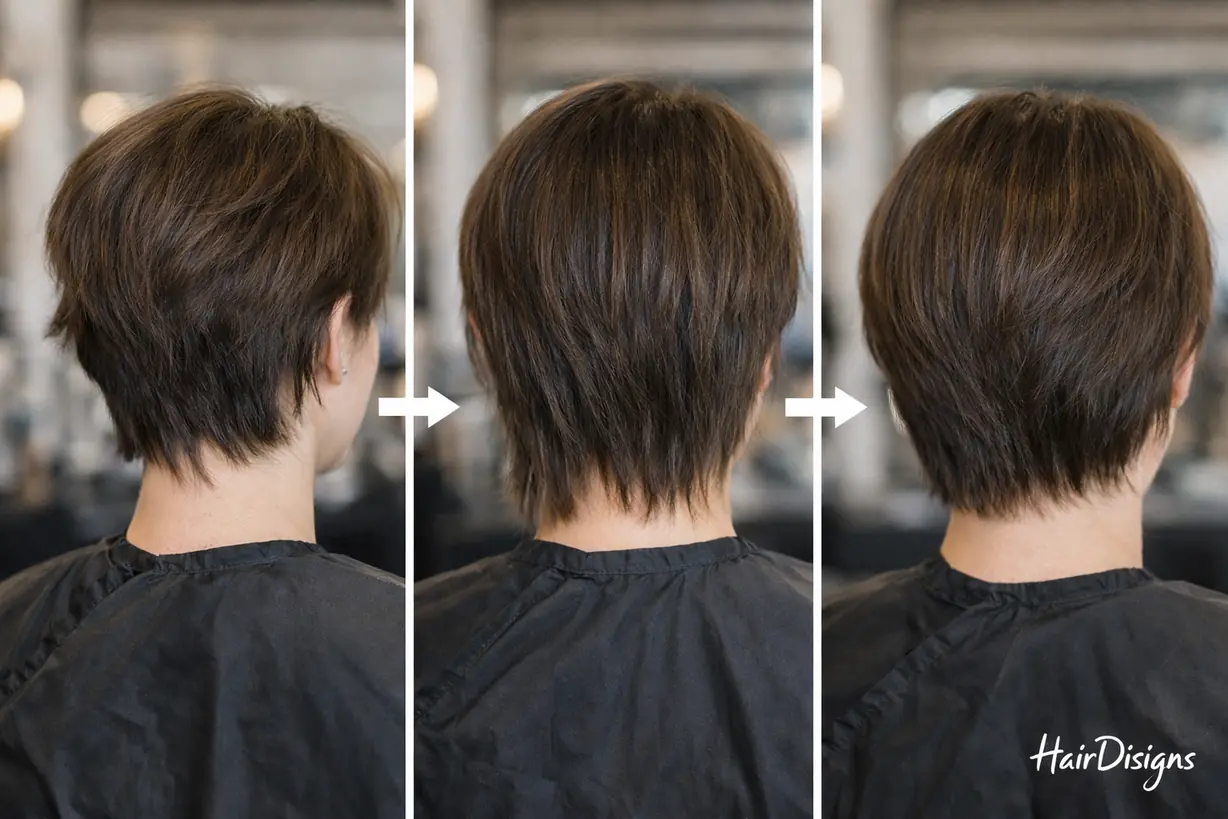
Recovery Is a Controlled Growth Process
Hair growth is not passive. It changes structure over time.
A bad haircut improves when:
- Shorter areas catch up
- Excess weight redistributes
- The overall shape stabilizes
But this only works if the structure is not repeatedly disrupted.
Constant trimming without strategy resets the recovery process.
A better approach is to allow controlled growth, then adjust structure at specific stages.
For maintenance logic:
why structure reduces daily styling.
Stabilize Before You Improve
The first goal is not perfection. It is stability.
A stable haircut:
- Holds its shape after washing
- Does not require constant correction
- Maintains predictable volume
If the haircut is unstable, any improvement will be temporary.
Stability creates a foundation for future refinement.
To understand behavior differences:
how hair type changes the way a haircut looks.
If needed:
identify your hair type.
Avoid Chasing the Original Intention
Trying to “get back” to the intended haircut too quickly often makes things worse.
The original design may no longer be achievable with the current length.
Instead, the process should be:
- Accept the current structural limits
- Move toward a workable intermediate shape
- Rebuild gradually toward the desired structure
This reduces repeated correction cycles.
For decision framework:
how to choose a haircut that fits your lifestyle.
Align Recovery With Face Structure
Even during recovery, proportion matters.
Adjustments should consider:
- Where volume supports facial balance
- Where excess width or length becomes noticeable
This prevents the haircut from looking worse during the transition phase.
For structural alignment:
how face shape affects haircut choices.
FAQ: How to Recover From a Bad Haircut
Can a bad haircut be fixed immediately?
Only partially. Minor imbalances can be adjusted, but full recovery requires time for structure to rebalance through growth.
Should I get another haircut right away?
Only if it improves stability. Cutting again without a structural plan often worsens the problem.
How long does recovery take?
It depends on how much structure needs to change. Most recoveries happen gradually over several growth cycles, not instantly.
Closing Perspective: Recovery Is Structural, Not Cosmetic
How to recover from a bad haircut is not about hiding mistakes.
It is about restoring:
- Balance
- Weight distribution
- Predictable behavior
A bad haircut improves when structure becomes stable again.
Once stability is achieved, refinement becomes possible.
Without that foundation, every correction remains temporary.