


Haircuts are often treated as style decisions. Straight hair gets one set of assumptions, wavy hair another. But most disappointing haircuts don’t fail because of taste or trends. They fail because the cut ignores how different hair structures actually behave.
Straight and wavy hair respond differently to gravity, layering, and length. A haircut that feels balanced on one can collapse or spread on the other. This guide explains those differences from a structural point of view, so haircut choices are based on behavior, not labels.
In This Guide
Straight Hair and Visual Weight
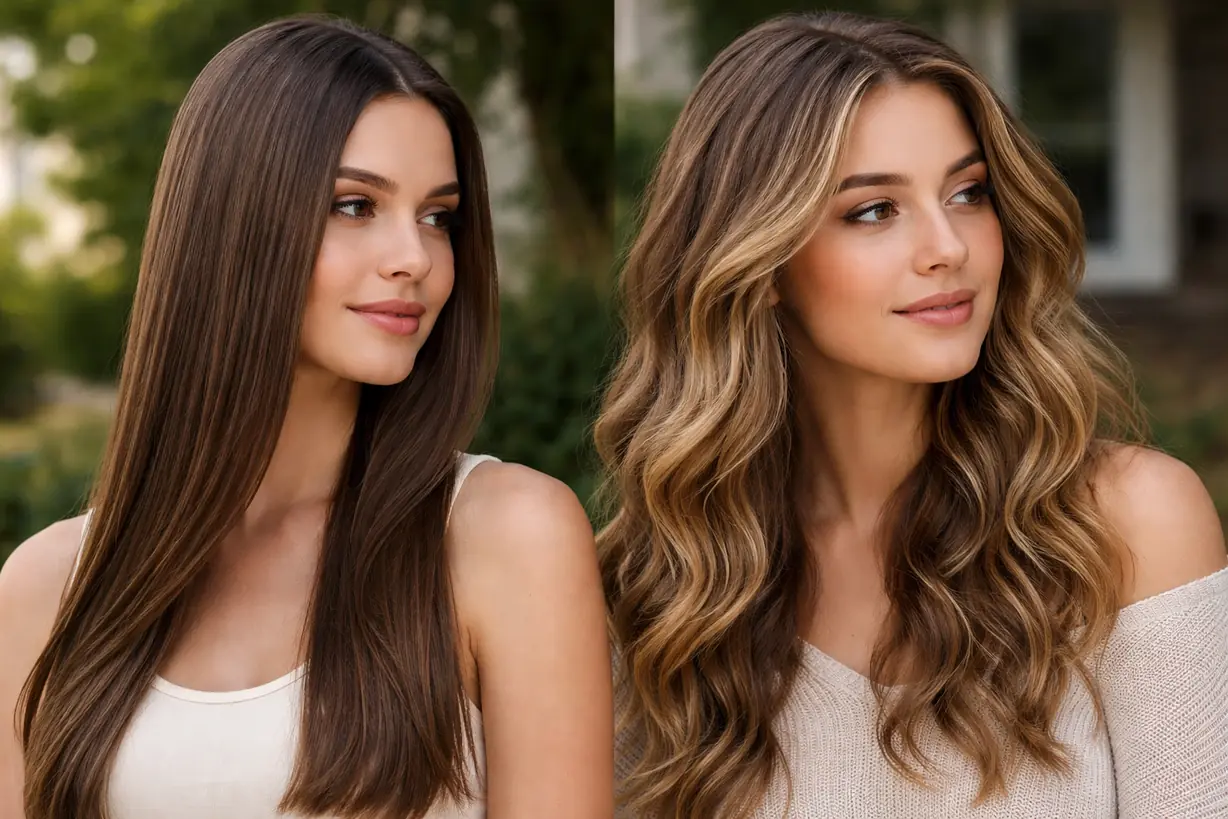
Straight hair reflects light evenly and falls directly downward. That simplicity creates a very specific visual effect: weight gathers at the ends.
Because straight strands don’t bend or twist, length reads clearly. Any line created by the haircut—blunt, tapered, or layered—becomes immediately visible. This precision is a strength, but it also makes straight hair unforgiving.
When a cut assumes volume that straight hair doesn’t naturally create, the result is usually flatness at the crown and heaviness at the bottom. Excessive layering, often intended to “add movement,” frequently removes structure instead.
In straight hair, a haircut succeeds when the shape does the work—not the texture.
Wavy Hair and Distributed Volume
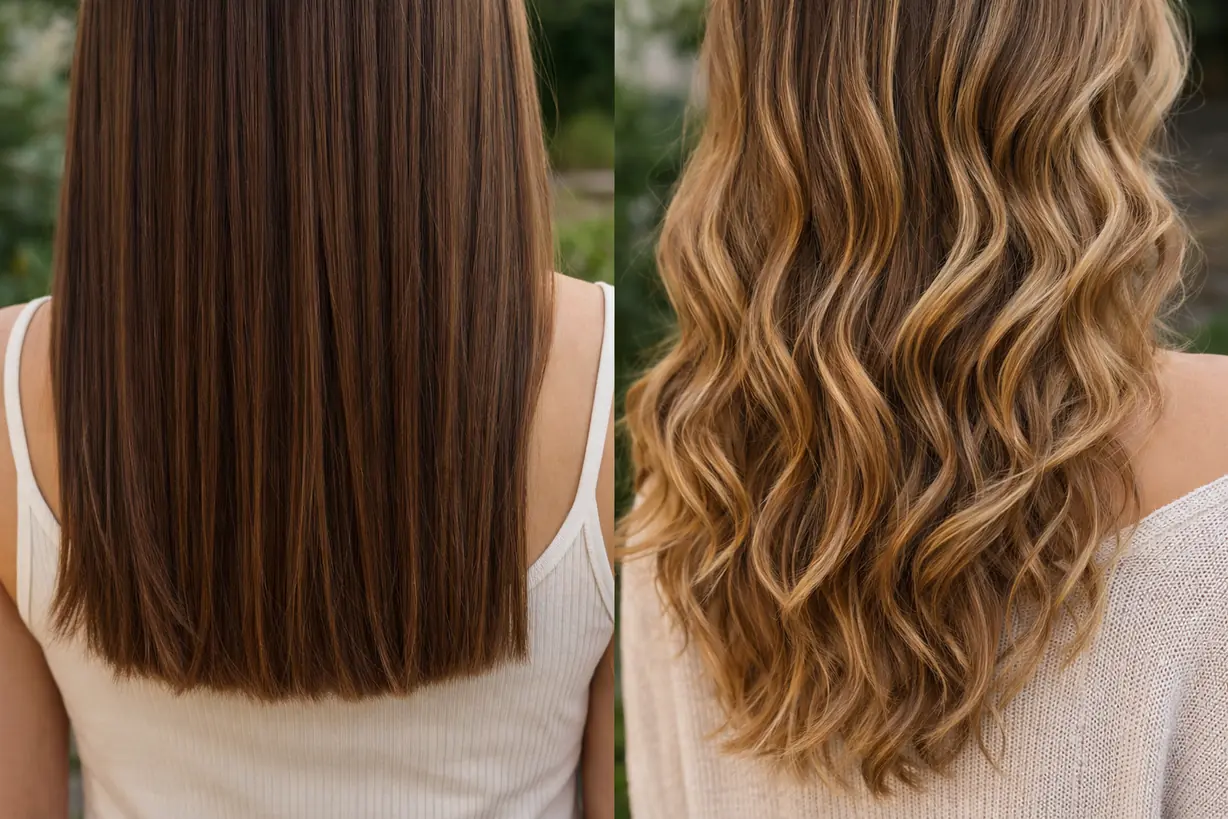
Wavy hair carries its volume along the length rather than concentrating it at the ends. Each bend in the strand interrupts gravity, creating lift without effort.
This makes wavy hair appear fuller than it actually is, but it also changes how weight removal behaves. Layers don’t just alter shape; they affect how waves form, connect, and break.
When a haircut treats wavy hair like straight hair with “extra texture,” it often fails. Blunt precision can block movement, while poorly placed thinning tends to create frizz rather than flow.
For wavy hair, the goal isn’t control. It’s guidance—allowing the wave pattern to settle into a predictable structure.
Why the Same Cut Behaves Differently
Imagine applying the same blueprint to two materials: one rigid, one flexible. The measurements may match, but the outcome won’t.
Straight hair emphasizes a haircut’s outline. Wavy hair emphasizes its internal balance. This difference explains why copying a reference photo without considering hair structure so often leads to disappointment.
The real question isn’t whether a cut “works” for straight or wavy hair. It’s which part of the cut is doing the visual work.
Length, Layers, and Gravity
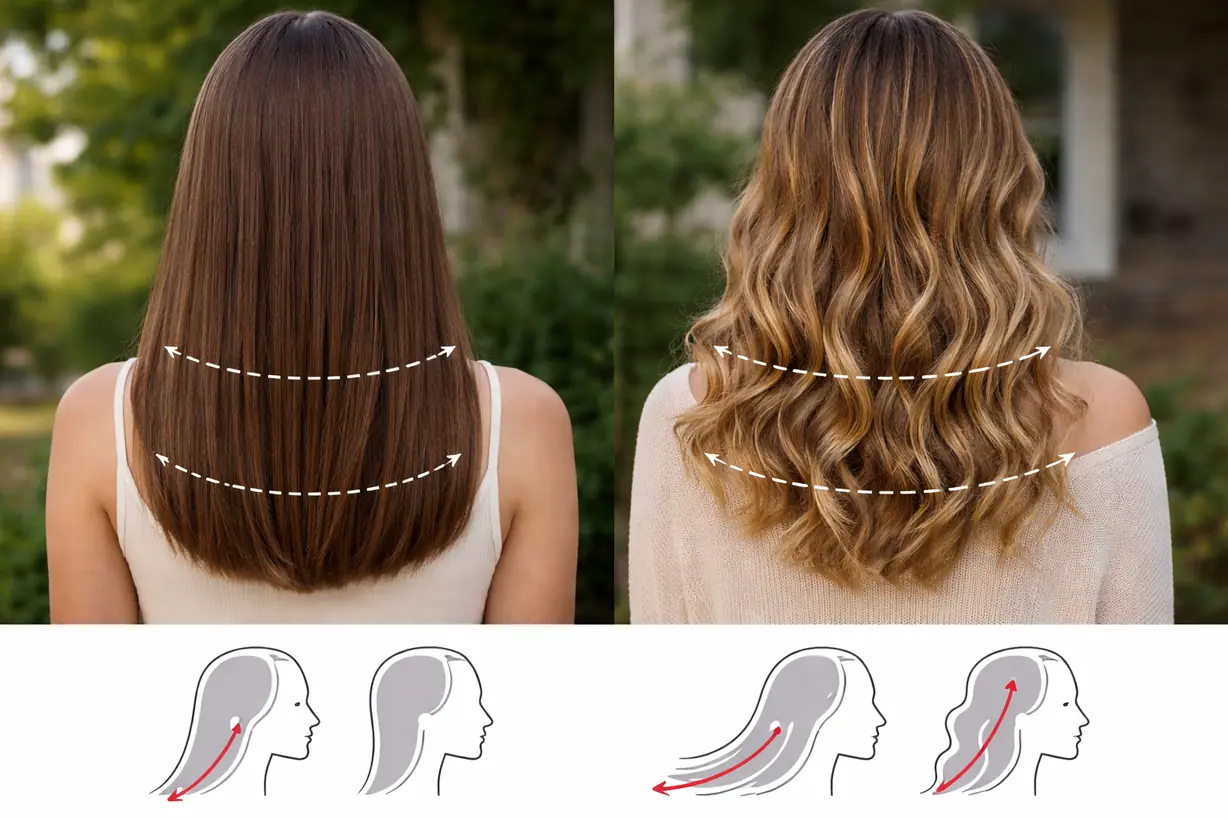
Length interacts with hair structure more than most people expect.
On straight hair, added length increases downward pull. On wavy hair, length can either weigh waves down or allow them to organize into a consistent pattern.
Layers play different roles as well. In straight hair, they primarily alter silhouette. In wavy hair, they alter motion. Confusing these roles is one of the most common haircut mistakes.
Choosing a Cut Based on Behavior, Not Labels
“Straight” and “wavy” are categories, not instructions. Within each, thickness, density, and growth direction still matter.
A reliable approach is to observe how the hair behaves when left alone—air-dried, unstyled, and unforced. That behavior is the baseline a haircut must respect.
When a cut works, it doesn’t fight the hair. It redirects it.
FAQ
Can straight hair benefit from layers?
Yes, when layers support the overall shape rather than replace it. In straight hair, layers work best when they reinforce the outline instead of dissolving it.
Is wavy hair always better with textured cuts?
No. Texture can enhance movement, but too much can disrupt the wave pattern. Balance matters more than softness.
What if my hair is between straight and wavy?
Most hair sits between categories. In those cases, the dominant behavior—how the hair naturally falls and moves—should guide the cut more than the label.
Understanding hair structure doesn’t limit choice. It narrows the gap between expectation and result. And that gap is where most haircut frustration lives.