


Thin hair is often described as a problem that needs fixing. That framing is misleading.
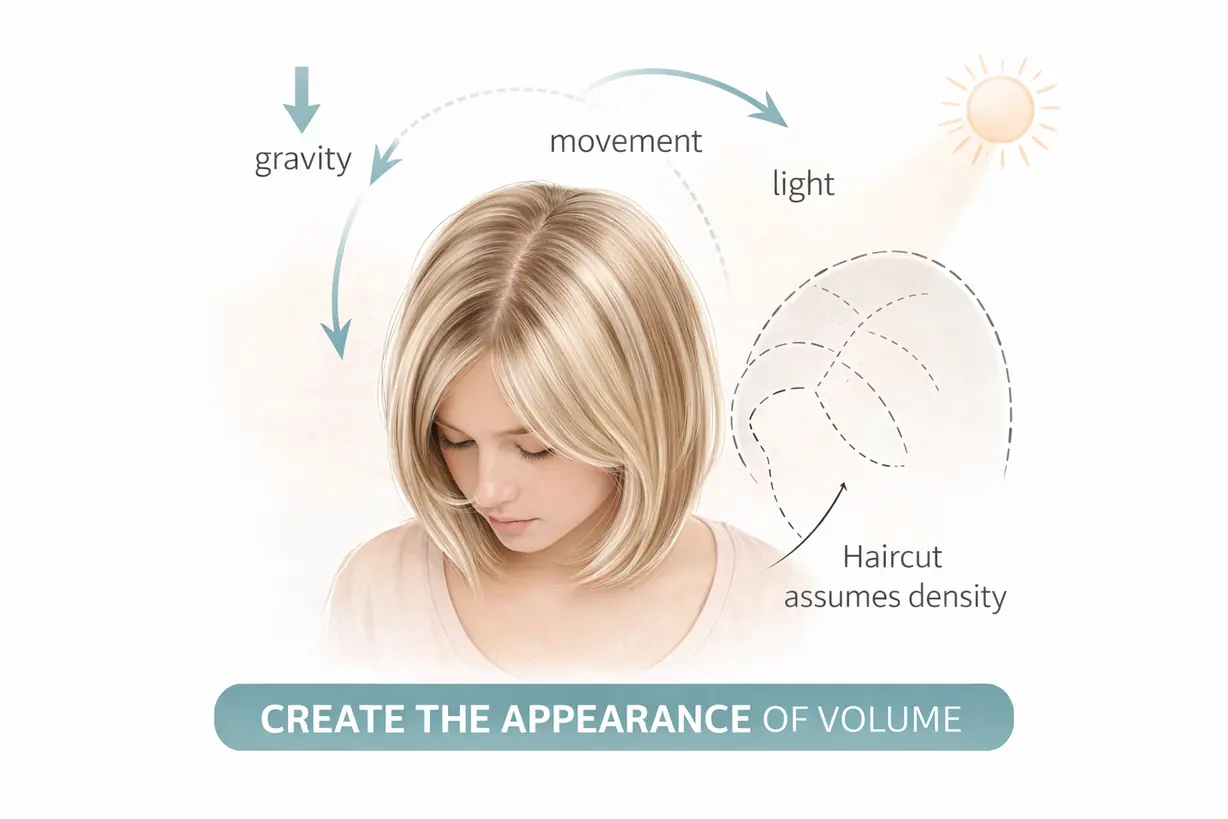
Thin hair is not broken; it simply behaves differently under gravity, movement, and light.
Most disappointing haircuts happen not because the hair is “too thin,” but because the haircut
assumes density that isn’t there.
This guide explains how haircuts create the appearance of volume for thin hair—
without styling tricks, product dependency, or exaggerated promises.
The goal is structural understanding, not chasing styles.
In This Guide
What “Thin Hair” Actually Means
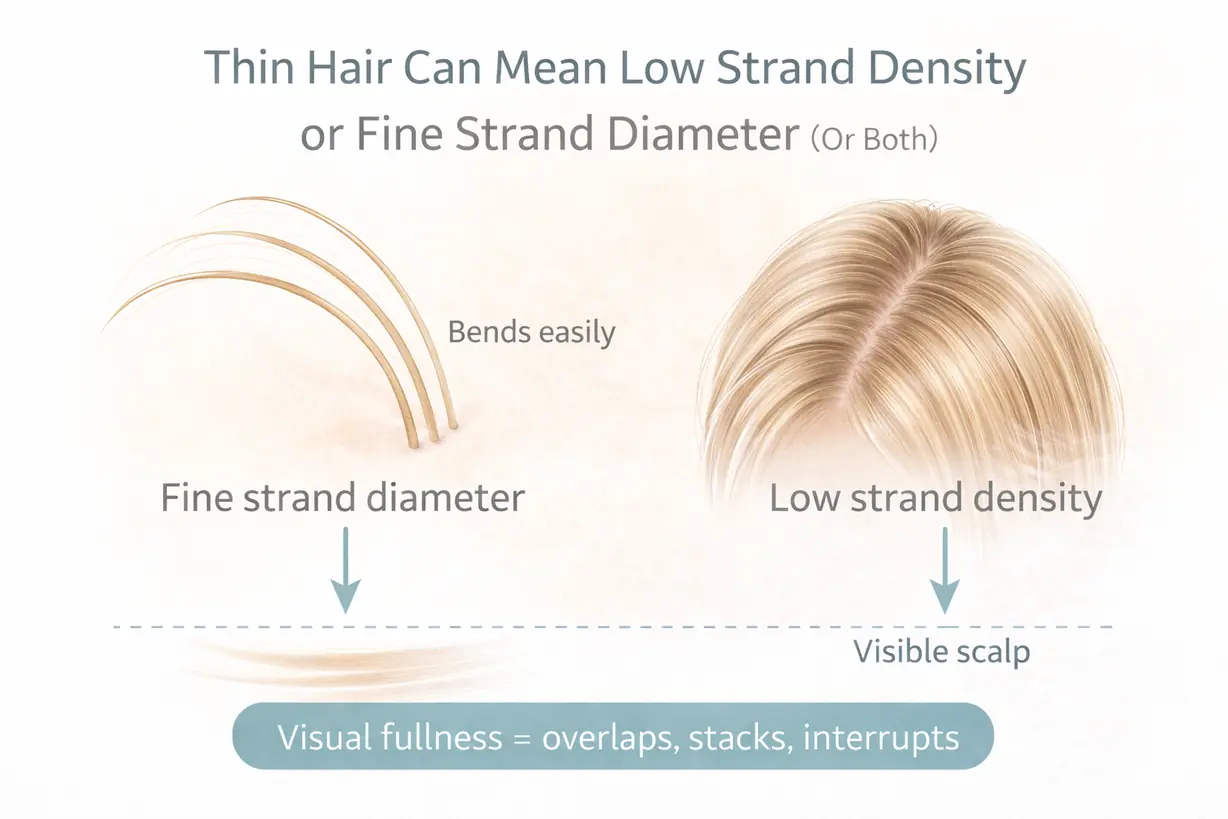
Thin hair can mean low strand density, fine strand diameter, or a combination of both.
These are often confused, but they behave very differently.
Fine strands bend easily and collapse under their own weight.
Low density reveals scalp when sections separate.
A successful haircut responds to which limitation is present.
Cutting thin hair as if it were thick—just shorter—usually makes the issue more visible.
Volume here does not mean height.
It means visual fullness:
how hair overlaps, stacks, and interrupts straight lines.
Why Many Haircuts Fail on Thin Hair
Most failed results come from a few persistent assumptions.
Length is treated as weight.
Layers are assumed to equal fullness.
Styling is expected to compensate for structure.
In reality, removing length can make thin hair cling closer to the scalp.
Excessive layering reduces what little mass exists.
And styling only hides problems temporarily.
A good haircut should remain balanced even when air-dried.
Structural Principles That Create Volume
Haircuts that work on thin hair share a few structural traits.
These are not trends; they are construction choices.
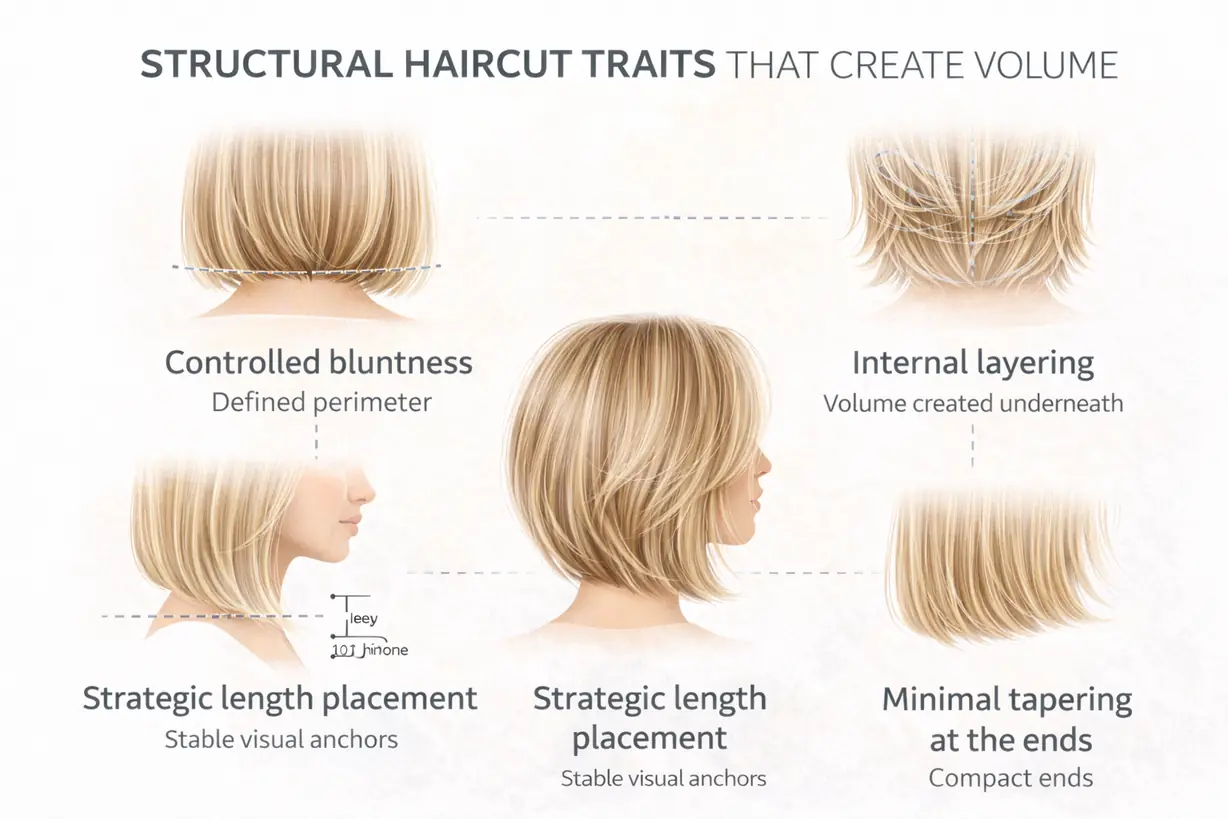
Controlled bluntness creates visual density.
A defined perimeter prevents the ends from feathering apart.
Internal layering reduces bulk without destroying the outer shape.
Volume is created underneath, not carved away on the surface.
Strategic length placement avoids unstable mid-lengths that exaggerate separation.
Lengths that sit near the jaw, collarbone, or above tend to read denser.
Minimal tapering at the ends keeps hair from looking transparent.
Thin hair benefits from slightly compact finishes.
Haircut Shapes That Tend to Work Better
Rather than focusing on named styles, it helps to think in shapes.
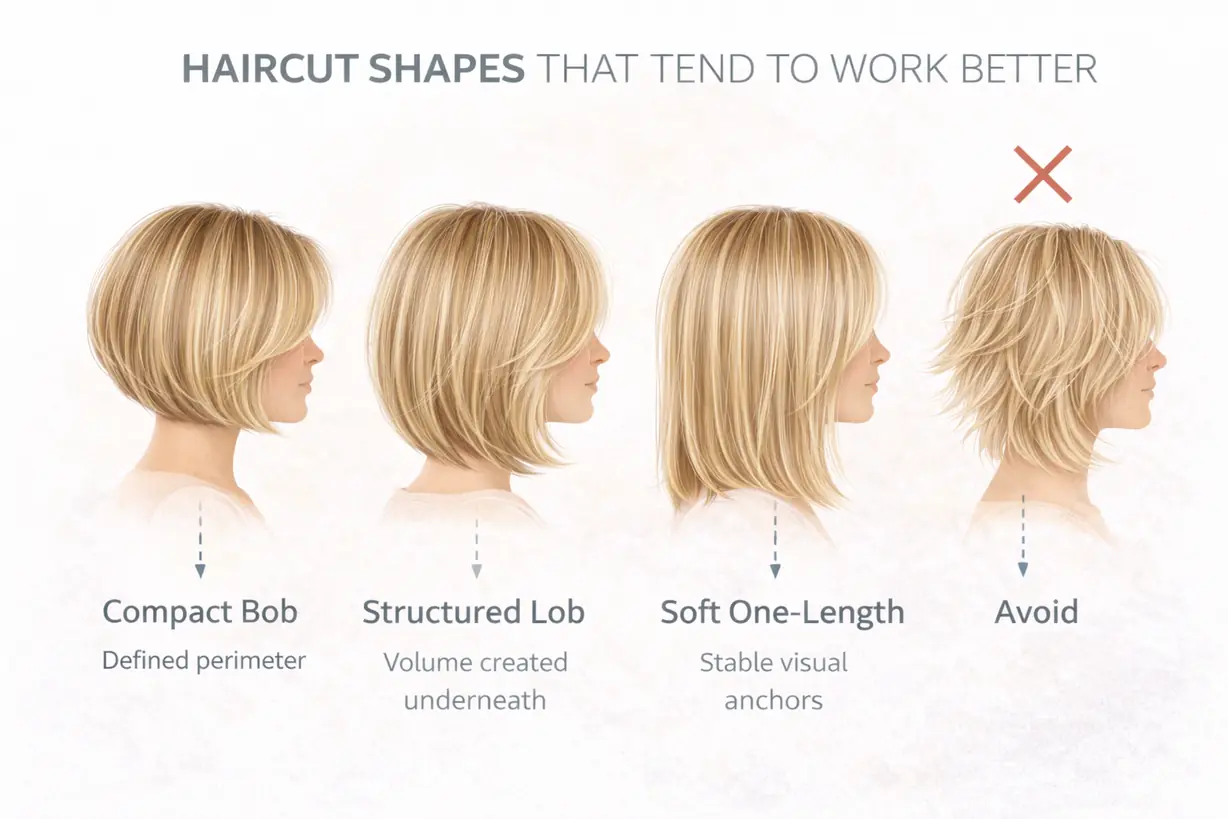
Compact bobs that hold weight at the perimeter often make thin hair look intentional.
Structured lobs work when the baseline stays clear and layering is restrained.
Soft one-length cuts with subtle internal shaping preserve density while allowing movement.
Cuts that rely on heavy texturizing, razors, or dramatic disconnection usually undermine thin hair over time.
If overall balance still feels off, face shape can further influence how these shapes read in practice.
You can see how proportion changes perception in
how face shape affects haircut choices.
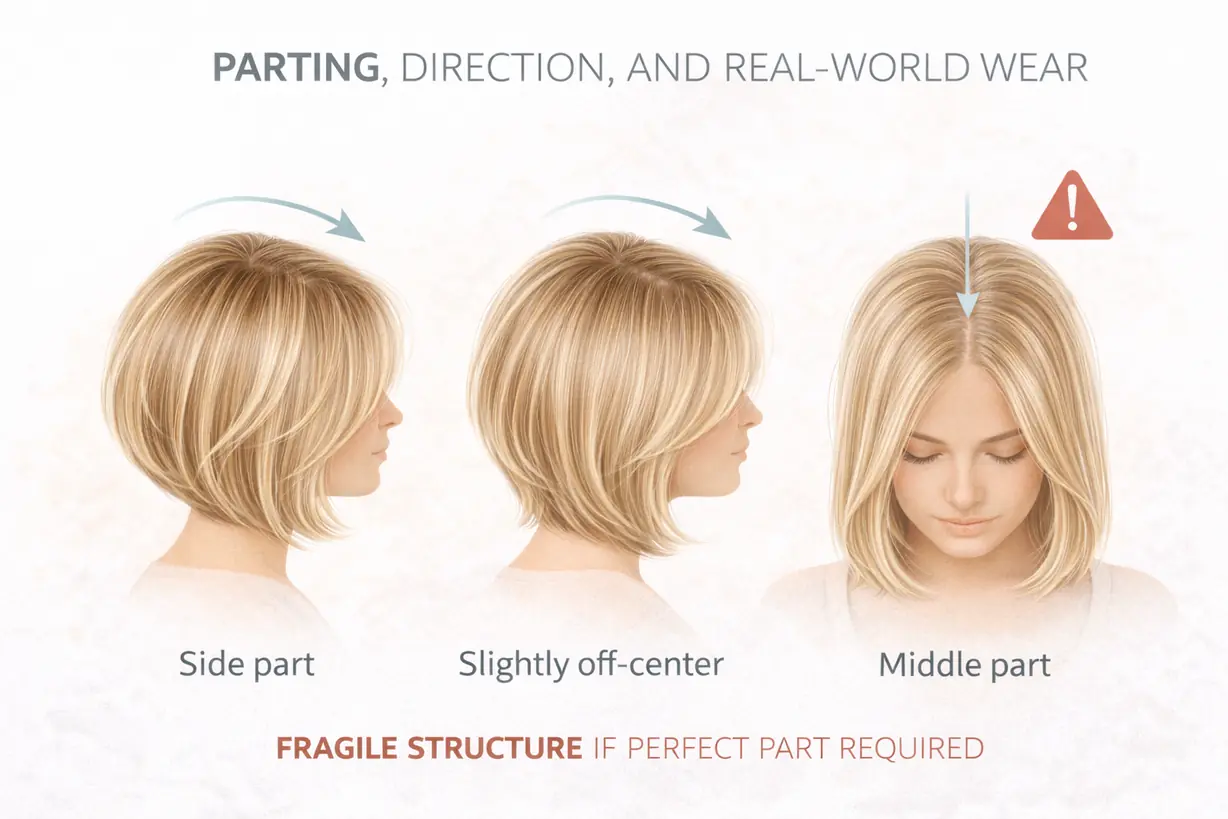
Parting, Direction, and Real-World Wear
Volume perception is directional.
Where hair is asked to fall matters as much as how it is cut.
A thin-hair-friendly haircut should function with slight part changes.
If volume only appears when parted perfectly, the structure is fragile.
Many thin-hair cuts fail at home because they are built for salon angles,
not daily movement.
Maintenance: Why Less Is Usually More
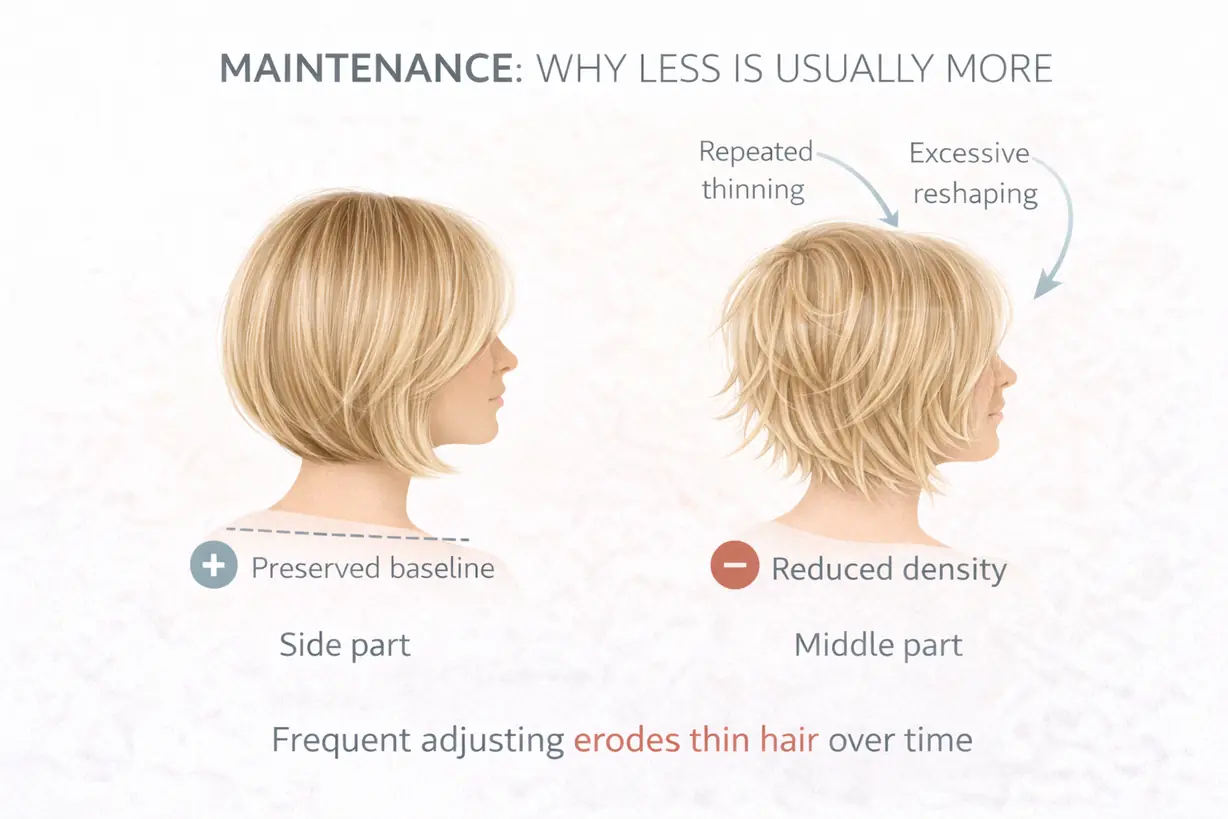
Thin hair benefits from fewer structural changes over time.
Repeated thinning and reshaping erodes density.
Maintaining the baseline and adjusting only collapsed areas
helps preserve fullness.
If a haircut constantly needs fixing, it is compensating for weak structure.
FAQ: Thin Hair Haircuts
Does thin hair need to be short to look fuller?
No.
Length can work if weight is preserved and layering is controlled.
The issue is unsupported length, not length itself.
Are layers bad for thin hair?
Layers are not inherently bad.
Excessive or surface layers are.
Internal layering can add movement without sacrificing density.
Can a haircut alone make thin hair thick?
A haircut can improve visual fullness,
but it cannot change strand count.
Good cuts optimize perception, not biology.
Final Perspective
Thin hair responds best to restraint.
When a haircut respects limited mass and uses structure instead of subtraction,
the result often looks fuller because it stops fighting reality.
This is not about hiding thin hair.
It is about cutting it honestly.