


A haircut is not a static object. It’s a relationship between shape and material.
The same outline—say, a blunt bob or a layered crop—can read crisp on one head,
soft on another, and chaotic on a third.
The difference usually isn’t the cut. It’s the hair type carrying it.
This article builds a clear mental model for why hair type alters outcomes.
No style rankings, no trend chasing.
Just the mechanics that decide whether a haircut behaves as intended once the mirror fog clears.
In This Guide
Haircuts Are Designed on Paper, Worn in Physics
When a stylist sketches a cut (literally or mentally), they imagine lines,
angles, and weight distribution.
Those plans quietly assume a set of physical behaviors.
- How strands bend or resist bending
- How much space hair occupies per centimeter
- How easily hair separates into visible sections
Hair type determines all three.
That’s why “the same haircut” rarely looks the same twice.
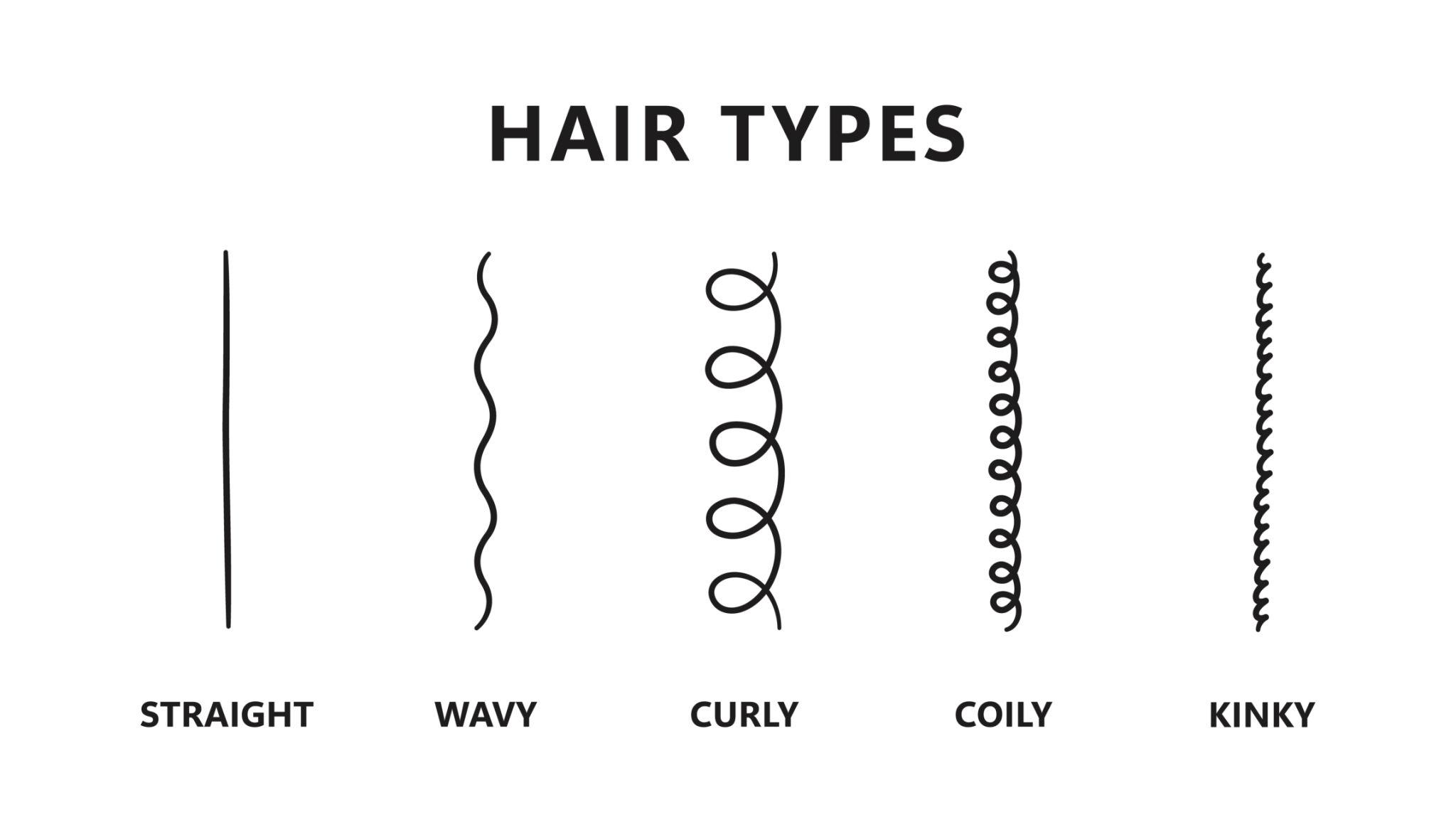
Texture Changes the Shape You Actually See
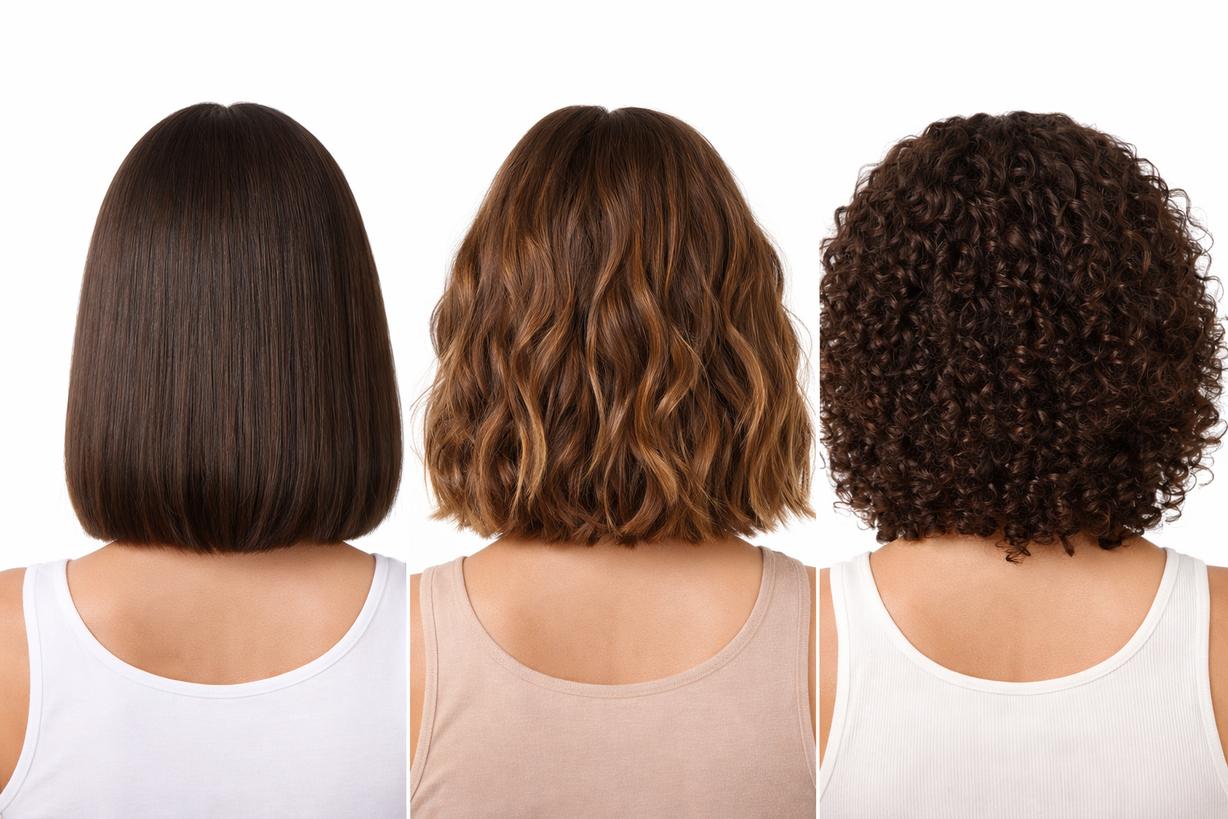
Straight hair reveals structure.
Lines are obvious; mistakes are honest.
A sharp perimeter stays sharp because the strands lie predictably.
Wavy hair negotiates with structure.
It shows movement before it shows geometry.
Layers read as softness, not steps.
Curly and coily hair reinterpret structure entirely.
Length compresses (shrinkage), edges blur,
and volume appears where gravity says it shouldn’t.
The silhouette becomes the haircut’s true language—not the perimeter.
A cut designed for straight hair may exist on curly hair,
but it won’t speak the same visual language.
Density Decides Whether a Cut Feels Heavy or Light
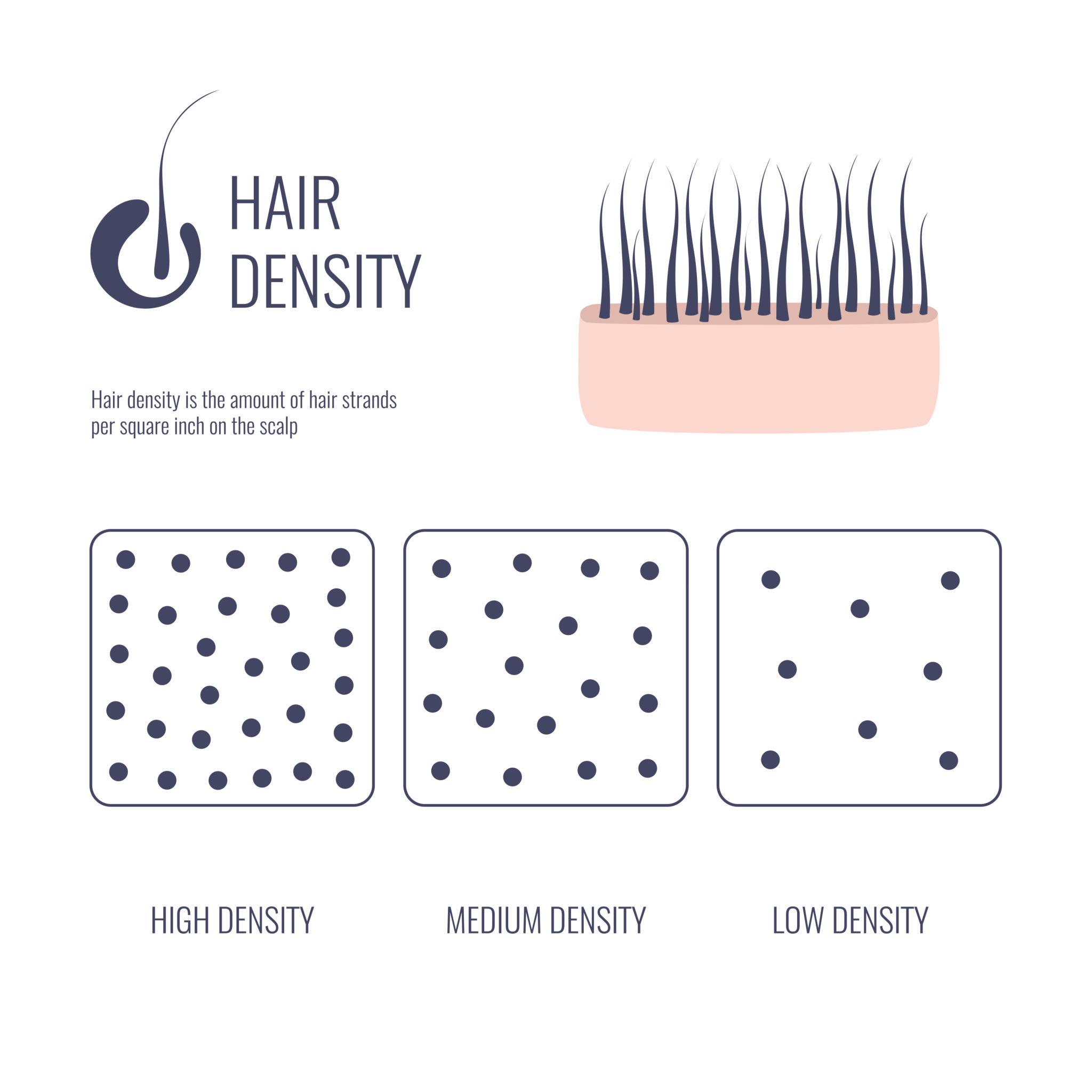
Density—how many hairs grow per square centimeter—controls visual weight.
Low-density hair exposes the scalp sooner.
Remove too much internal weight and the haircut collapses.
High-density hair stacks.
The same layers that feel airy on fine hair can feel bulky
when multiplied by thousands of extra strands.
This is why “thinning” isn’t a universal solution.
On dense hair, it can create flow.
On fine hair, it can erase structure.
Strand Thickness Controls Edge Behavior
Two heads can have identical density but behave very differently.
- Fine strands bend easily.
Edges feather, ends disappear, shapes soften. - Thick strands resist bending.
Edges look blunt, shapes stay architectural.
That resistance is why blunt cuts feel intentional on thick hair
and accidental on fine hair.
The geometry survives contact with air.
Growth Direction Quietly Rewrites the Plan
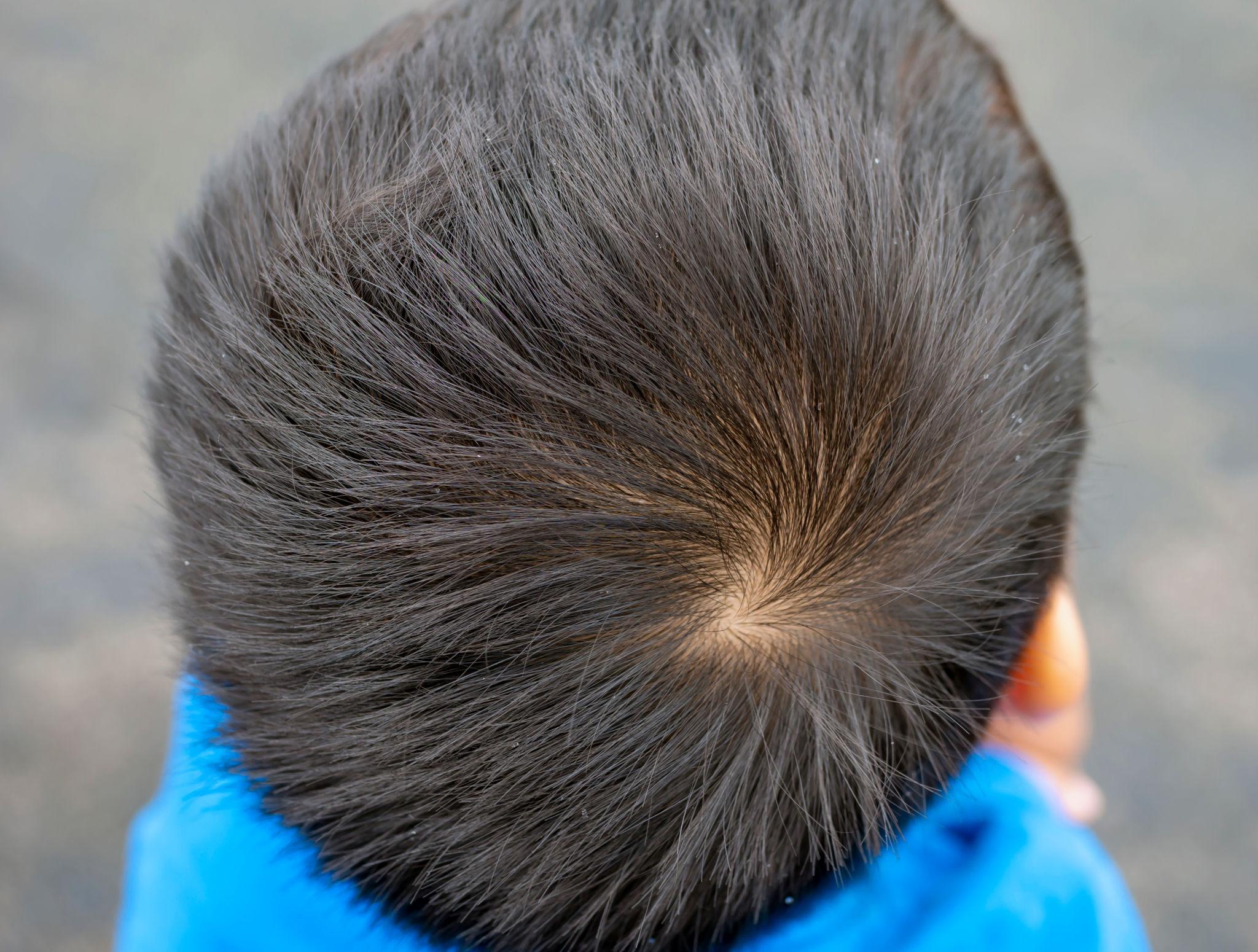
Cowlicks, strong parts, and crown whorls act like hidden joints in the structure.
Ignore them and the haircut fights the head.
Respect them and the cut looks “effortless,” even if it isn’t.
This is also where many haircut guides overpromise.
They assume neutral growth patterns.
Real heads rarely comply.
Why Copying a Haircut Photo Usually Fails
A reference photo captures a moment:
specific hair type, styling method, lighting, and gravity.
When that image is applied to a different hair type,
the blueprint mismatches the material.
A better question than “Can I get this cut?” is:
“What about this cut works on this hair type?”
That reframing turns imitation into translation.
How to Read Haircut Advice More Accurately
When you see haircut guidance online, mentally annotate it.
- Is the model’s hair straightened, diffused, or air-dried?
- Is the volume coming from density or from styling?
- Are edges crisp because of the cut—or because of strand thickness?
Doing this once saves years of disappointment.
For readers who want to go deeper,
this connects directly to how hair texture is classified
and how density affects volume tolerance
(see related guides on hair texture and hair density).
FAQ
Does hair type matter more than face shape?
They solve different problems.
Face shape guides where volume and length sit.
Hair type decides whether those decisions survive reality.
Ignoring either creates imbalance.
Can styling products override hair type?
Products can negotiate, not rewrite.
They temporarily change friction, weight, or hold,
but the underlying behavior returns once conditions change.
Why does a haircut look good at the salon but not at home?
Salon results rely on controlled drying, tension, and product layering.
At home, hair returns to its natural tendencies.
A well-matched haircut should still make sense without choreography.
Closing Thought
A haircut is not universal geometry.
It’s applied physics.
Once you understand how hair type reshapes structure—through texture,
density, strand thickness, and growth—you stop chasing photos
and start choosing designs that cooperate with reality.
That’s when haircuts become reliable, not just attractive.